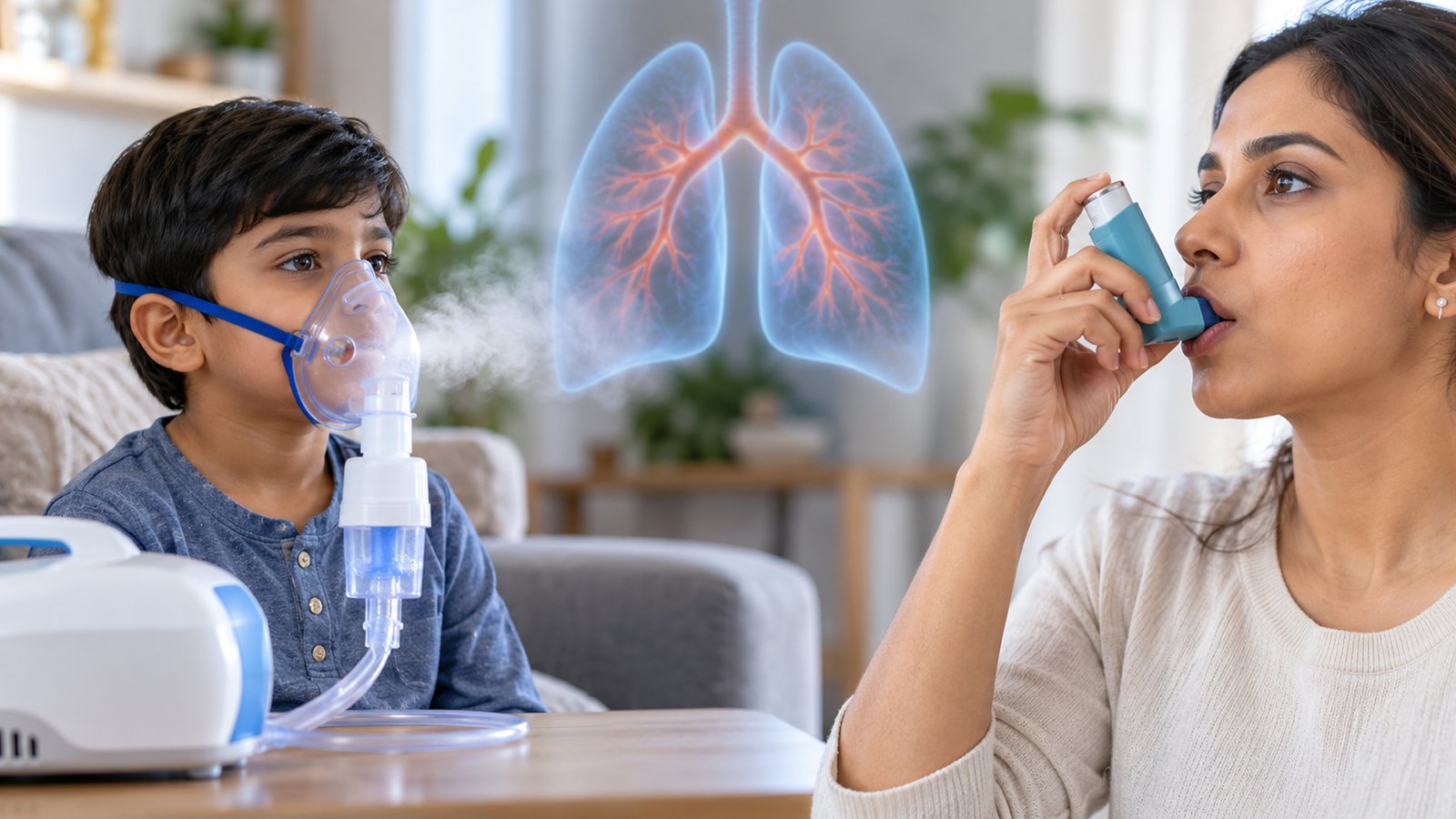
A nebuliser puts on a convincing performance. It hums, fills a mask with visible mist and keeps going for several minutes. An inhaler, by contrast, releases a tiny puff and is back in a pocket within seconds. It is easy to conclude that the machine must be delivering the stronger treatment.
That conclusion confuses theatre with pharmacology. A nebuliser and an inhaler are delivery systems, not grades of medicine. What matters is the correct drug, the correct dose, particles that reach the airways, a device the person can use properly and a clinical situation in which that device makes sense. In many common circumstances, an inhaler used well is at least as effective as a nebuliser — and sometimes more practical, faster and less wasteful.
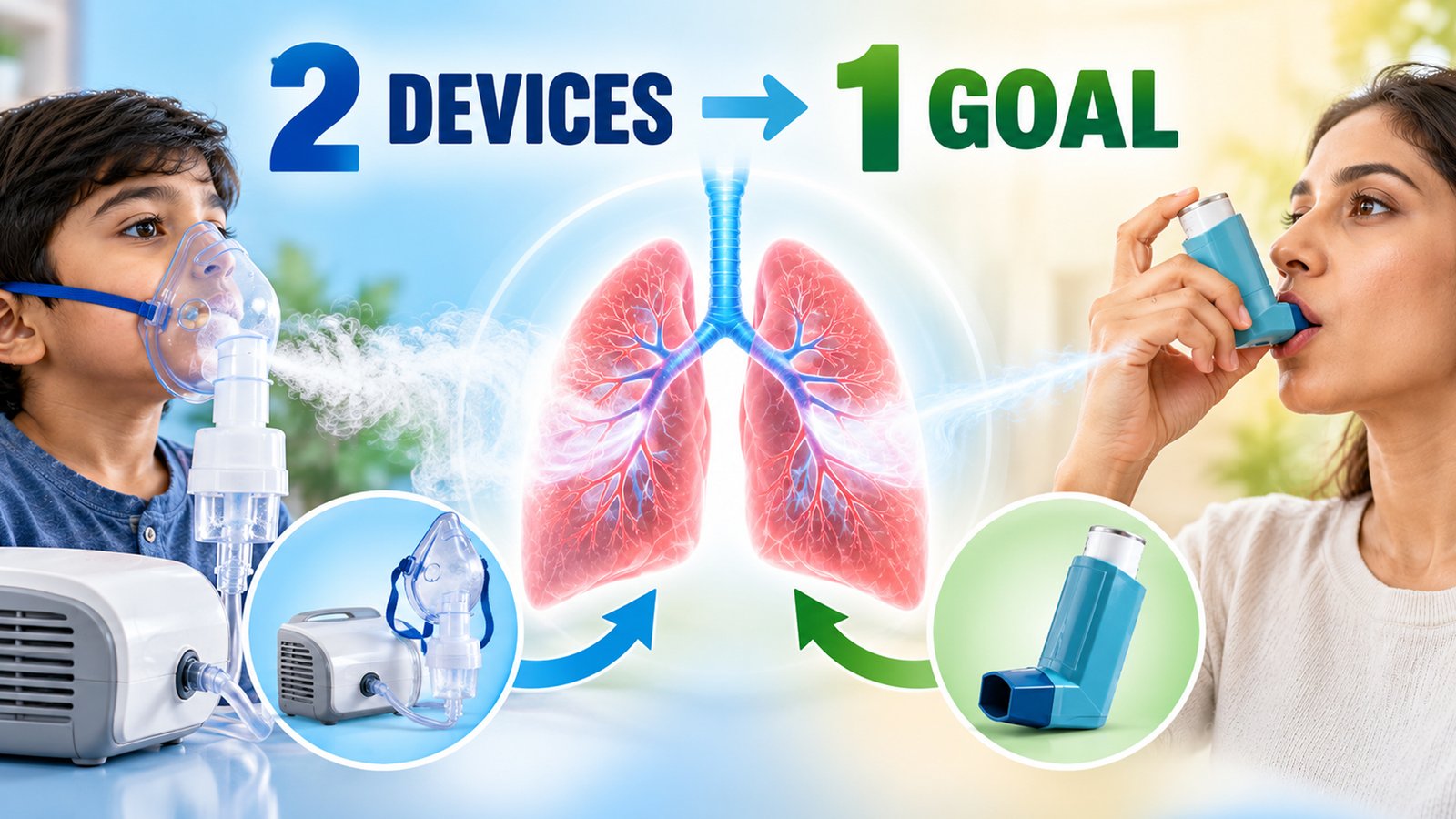
Two routes to the same destination
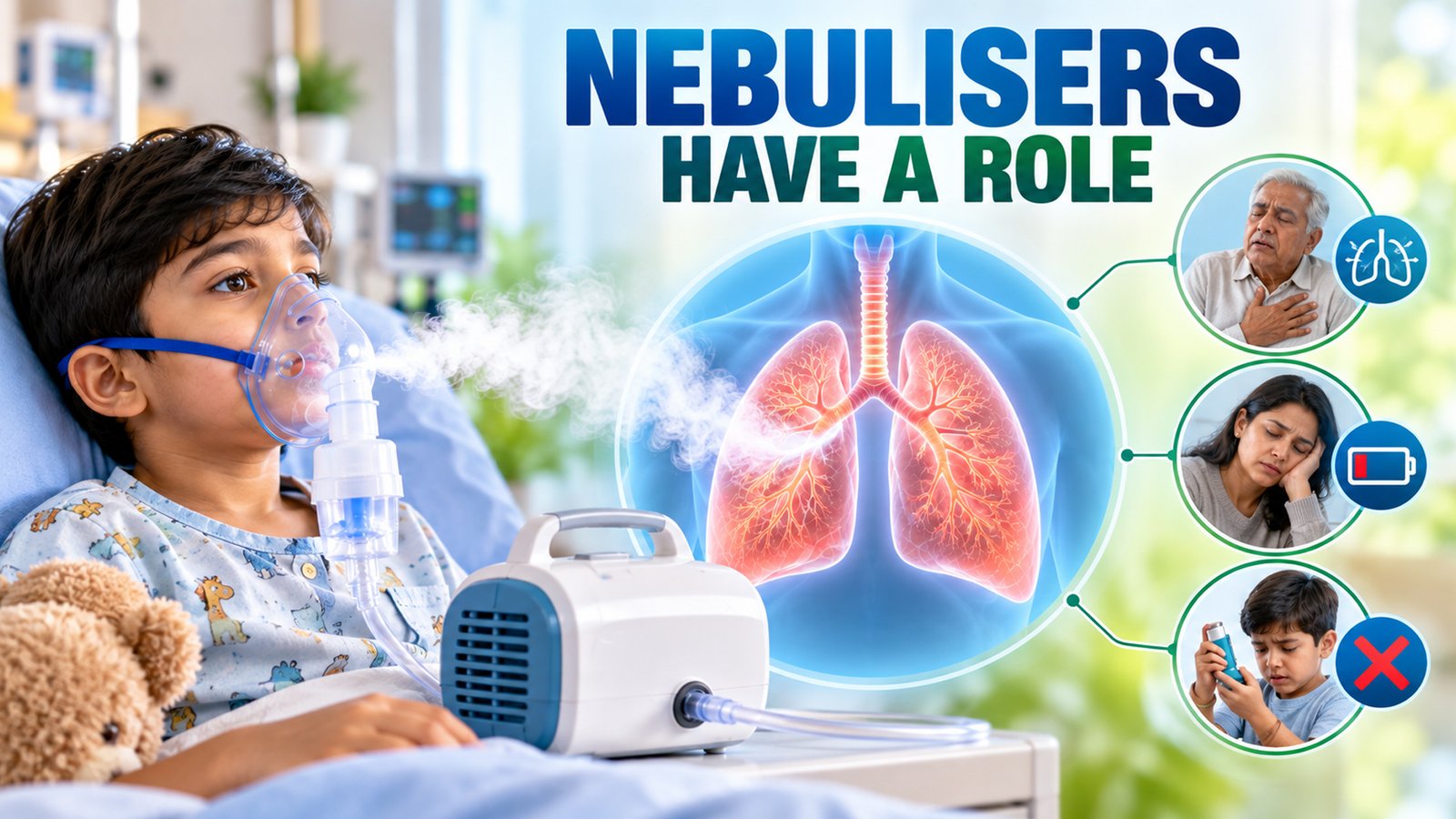
Both devices create an aerosol — medicine suspended as particles or droplets small enough to be breathed into the respiratory tract. A nebuliser turns liquid medicine into a continuous mist, usually through a compressor, mesh or ultrasonic system. A standard home compressor pushes room air — it does not manufacture oxygen. Oxygen can drive a hospital nebuliser, but only when supplied from a separate source.
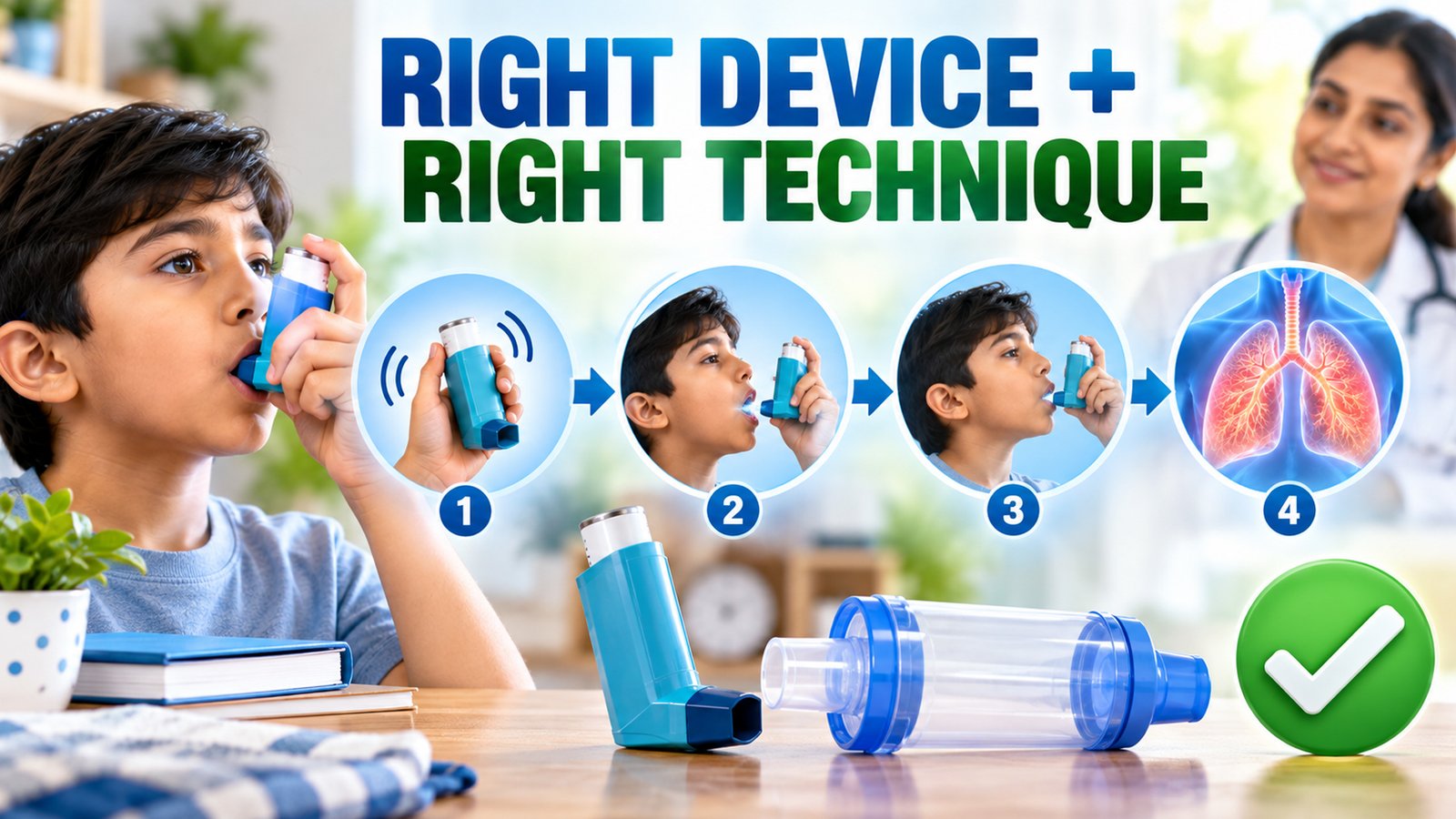
A pressurised metered-dose inhaler, or pMDI, releases a pre-set amount of medicine with each actuation. A spacer — a hollow holding chamber attached to the inhaler — catches the spray so it can be inhaled more slowly, reducing the need to press and breathe in at exactly the same moment. A dry-powder inhaler (DPI) works differently — the patient’s own quick, deep breath draws powder from the device, so it may be unsuitable when inspiratory effort is very weak.
What the comparison actually shows
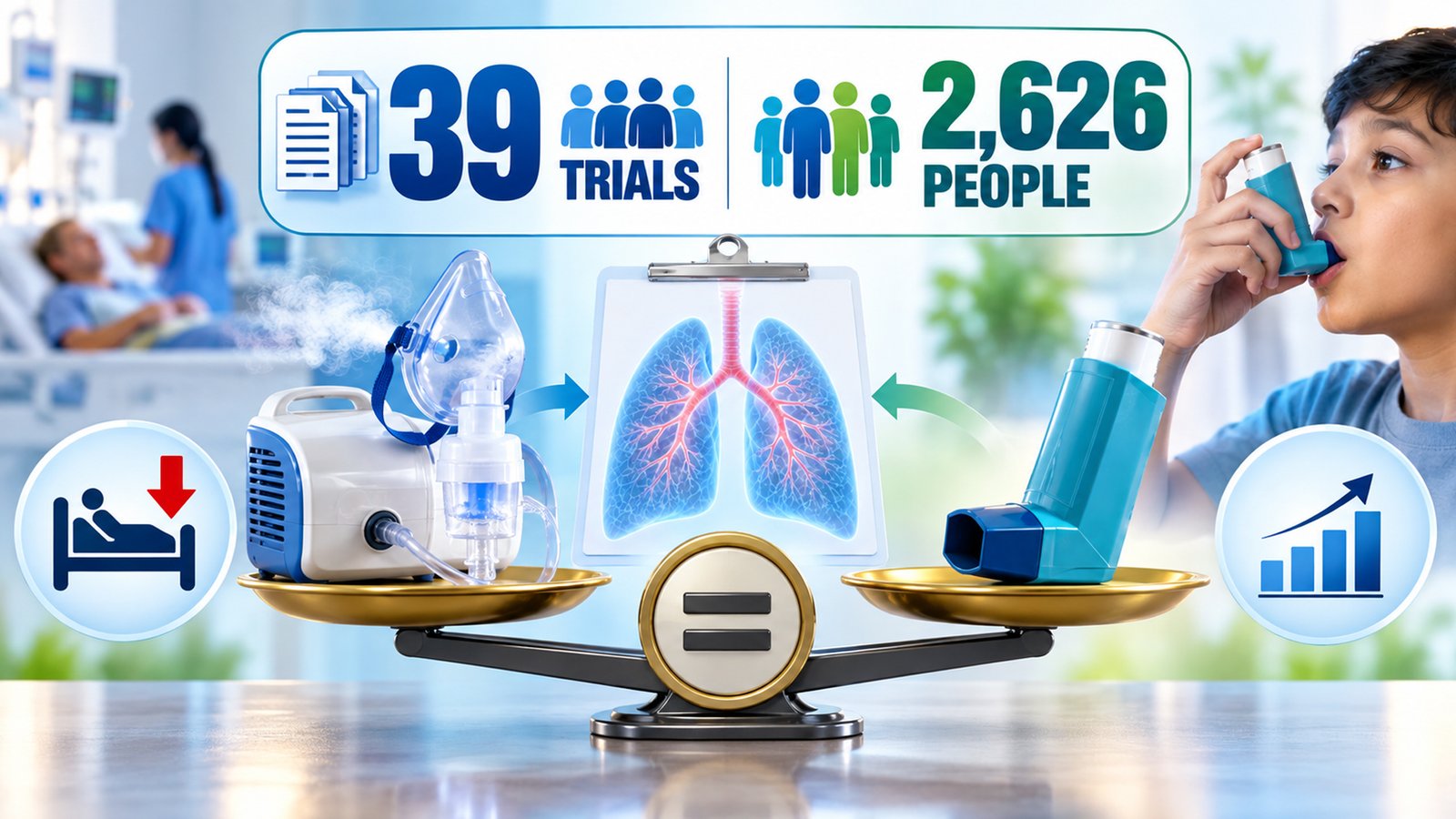
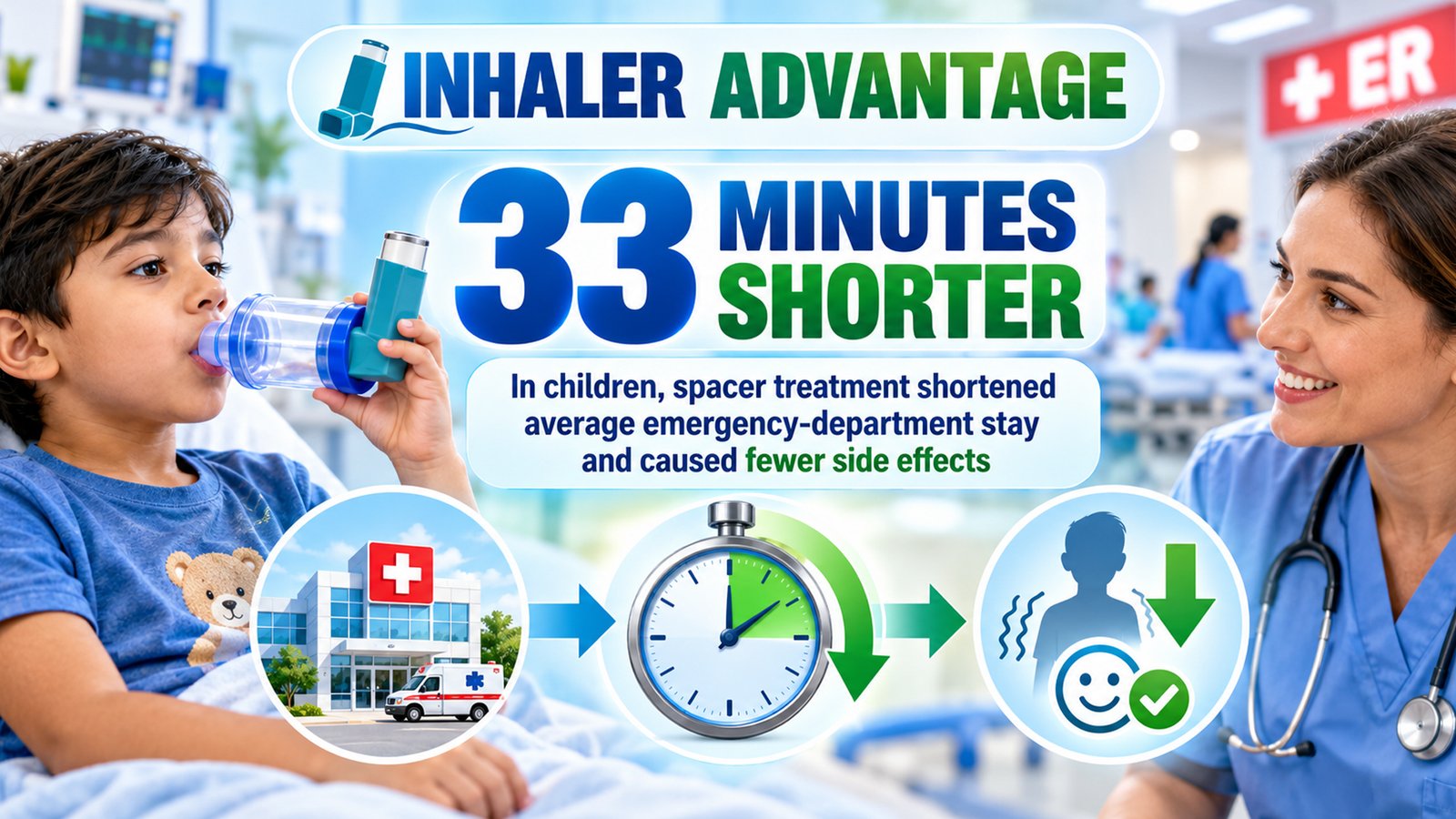
The clearest comparison concerns short-acting beta2-agonists such as salbutamol — bronchodilators that relax tightened airway muscle during an asthma attack. A Cochrane review pooled 39 trials involving 1,897 children and 729 adults. Hospital admission rates and lung-function responses were not significantly better with nebulisation. In children, spacer treatment shortened the average emergency-department stay by about 33 minutes and produced less tremor and a smaller rise in pulse. The important boundary is that the trials excluded life-threatening asthma.
Newer real-world evidence points in the same direction. In a 2025 emergency-department study of 384 children with mainly mild or moderate attacks, overall discharge rates were similar, while the pMDI group received less salbutamol, had fewer adverse effects and spent less time in the department. A separate study covering 6,521 adult ambulance encounters found similar relief of breathlessness after a regional switch from nebulisers to pMDIs with spacers. Its before-and-after design cannot prove superiority, but it found no signal that the change weakened treatment.
The 2026 Global Initiative for Asthma guidance therefore recommends a pMDI with spacer as the usual way to give salbutamol in mild or moderate exacerbations and lists pMDI-spacer treatment alongside nebulisation while arranging transfer for severe attacks. The choice in a dangerous attack belongs in a monitored clinical setting — it should not be reduced to a household contest between two gadgets.
Why nebulisation can feel stronger
Nebulised prescriptions often start with a much larger nominal quantity of drug than an inhaler puff. That does not mean the lungs receive that whole amount. Some liquid remains in the cup; some aerosol escapes around the mask, settles in the mouth or is exhaled. Inhaler and nebuliser dose numbers cannot be converted by eye, and one should never swap routes by copying the milligrams or number of puffs from another prescription.
A larger systemic exposure can also produce more noticeable salbutamol effects, including tremor and a fast heartbeat. Feeling shaky is not proof that more useful medicine reached the lungs. The visible cloud is equally misleading: much of what can be seen is outside the body, whereas an effective pMDI aerosol is brief and nearly invisible.
When a nebuliser genuinely earns its place
Nebulisers are valuable when a person is too breathless, fatigued, confused or physically unable to perform the manoeuvre required by an available inhaler, when repeated or continuous bronchodilator delivery is needed under supervision or when the prescribed medicine is not available in a suitable handheld device. They may be useful in selected people with advanced COPD, although the 2026 GOLD strategy emphasises matching inhaled treatment and device to the individual rather than assuming one platform is best for everyone.
Some specialist treatments make the answer obvious. People with cystic fibrosis or bronchiectasis may be prescribed nebulised antibiotics or sterile hypertonic saline, and dornase alfa is a mucus-thinning medicine used in cystic fibrosis. These are disease-specific therapies — hypertonic saline and dornase alfa have defined roles and dosing sequences, and can provoke cough or bronchospasm. They are not home remedies for an ordinary cold.
Even here, a nebuliser is a drug-delivery tool, not a substitute for oxygen, steroids, antibiotics, ventilatory support or urgent assessment when those are needed. A 2025 NHS patient guide notes that most people with asthma or COPD can be controlled using inhalers.
The quiet advantages of an inhaler and spacer
A pMDI and spacer are portable, quick, independent of electricity and easy to keep available at school, work or while travelling — important advantages in Indian homes where a bulky machine may sit in another room or become useless during a power cut. A spacer also makes pMDIs workable for many young children, older adults and people with poor hand-breath coordination — a tightly fitting mask can be attached when a mouthpiece cannot be used.
There is also less equipment to contaminate and less medication released into the room. Nebulisation produces escaped, or ‘fugitive’, aerosol around the patient. Evidence that this always increases transmission of respiratory infection is not conclusive, but 2024 expert guidance on infection-risk mitigation recommends sensible precautions, particularly when the user has a transmissible respiratory illness.
Technique is part of the prescription
An inhaler can fail spectacularly if it is not used correctly. Common pMDI errors include failing to breathe out first, firing before or after inhalation rather than as it begins, breathing in too fast, or taking several puffs into a spacer at once. DPI errors are different: breathing in too gently, exhaling into the device and dampening the powder, or not loading the dose. With any device, an empty canister or blocked mouthpiece defeats perfect technique.
The latest GINA guide says incorrect inhaler use is very common and advises clinicians to watch the patient use the actual device, correct errors with a device-specific checklist and re-check the demonstration. That small ‘show me’ test is often more valuable than automatically increasing the dose or buying a nebuliser.
For a pMDI with spacer, the essentials are usually: shake the inhaler, make a good seal, release one puff into the chamber, inhale promptly and repeat one puff at a time if prescribed. Some patients take one slow deep breath and hold it; small children or very breathless patients may use several normal breaths. Product instructions differ, so the technique must match the particular inhaler and spacer.
The home-nebuliser rules people underestimate
Only use the prescribed sterile solution in the dose and device advised. Do not improvise with tap water, homemade saline, cough syrups, essential oils or crushed medicines, and do not mix nebules unless a clinician or pharmacist has confirmed compatibility. Natural does not mean safe when a substance is being carried directly into inflamed airways.
Cleaning is not cosmetic. Residual liquid and damp parts can support microbial growth, and contaminated equipment can carry organisms back into the lungs. Wash hands before assembly; clean, disinfect, rinse and air-dry the detachable parts exactly as the manufacturer directs; keep tubing and the compressor out of water; and do not share a mouthpiece, mask or medicine cup. The Cystic Fibrosis Foundation warns that germs can be inhaled through a contaminated nebuliser, while the American Lung Association advises washing appropriate parts after each use. Different models tolerate different cleaning methods.
When the device debate must stop
A home nebuliser can create dangerous reassurance: the mask is on, the mist is flowing, therefore treatment must be working. Seek urgent help if breathlessness is severe or worsening, the person cannot speak in sentences, is drowsy or confused, has blue-grey lips, a quiet or ‘silent’ chest, marked chest indrawing, low oxygen readings, or poor relief after the treatment specified in the action plan. Severe asthma attacks can be fatal and may need oxygen, systemic corticosteroids and repeated assessment in addition to an inhaled bronchodilator.
Finally, winning the nebuliser-versus-inhaler argument does not control chronic asthma. Current guidance says asthma treatment should include an inhaled corticosteroid — an anti-inflammatory medicine — rather than relying on salbutamol alone. The best device is the one that reliably delivers the right treatment to this patient, at this moment, with correct technique. Sometimes that is a nebuliser. Very often, the quieter little inhaler — especially with a spacer — is doing the job just as well.
This article provides general health information and is not a substitute for individual medical assessment.
(The author is an interventional pulmonologist and respiratory medicine consultant in Bengaluru.)