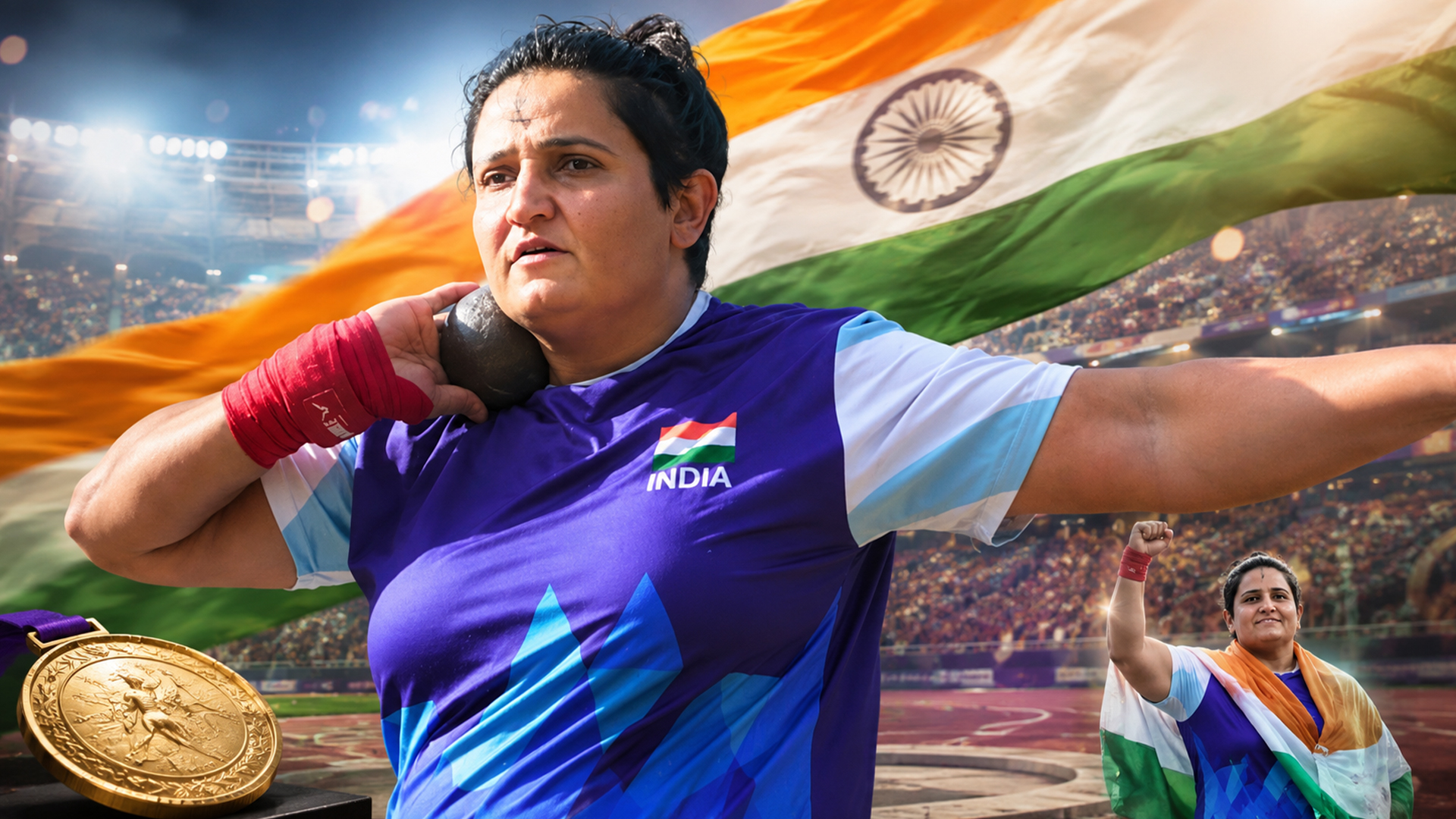
India scripted a memorable chapter in Commonwealth Games history on Monday as Sharmila Dhankar became the country’s first-ever Commonwealth Games para athletics gold medallist, winning the women’s Shot Put F57 event at the 2026 Commonwealth Games. The Haryana athlete produced a season-best throw of 9.81 metres to secure the gold medal, ending India’s 20-year wait for a para athletics medal at the Games and giving the nation one of its biggest sporting moments in Glasgow.
Sharmila’s victory is a landmark achievement for Indian para sports. While India has enjoyed remarkable success at the Paralympic Games and World Para Athletics Championships in recent years, a Commonwealth Games para athletics gold had remained elusive until now. Her triumph not only earned a place in the record books but also highlighted the growing strength of Indian para athletics on the international stage.
The women’s Shot Put F57 final saw Sharmila stay calm under pressure as she delivered her best throw of the season when it mattered most. Her 9.81m effort proved enough to beat a competitive field and secure the top spot on the podium. As the result was confirmed, the Indian contingent erupted in celebration, recognising the significance of the historic milestone.
India’s joy doubled in the same event as Shilpa Shyla added a bronze medal. Shilpa had initially finished outside the podium positions but was later promoted to third after officials upheld a post-event protest that altered the final standings. The revised result ensured India finished with both the gold and bronze medals in the women’s Shot Put F57 event, making it a memorable outing for the country’s para athletics team.
For Sharmila, the gold medal is the culmination of years of perseverance and determination. A polio survivor, she has faced numerous challenges throughout her life before emerging as one of India’s leading para athletes. Her journey from overcoming physical limitations to becoming a Commonwealth Games champion reflects the resilience and dedication that have become the hallmark of India’s para sporting movement.
The achievement is expected to inspire thousands of aspiring para athletes across the country. Over the past decade, India has invested significantly in para sports through improved coaching, sports science support and international exposure. Athletes have responded with medal-winning performances across global competitions, and Sharmila’s success is another sign of the country’s growing stature in disability sport.
Her victory also ended a long drought for India in Commonwealth Games para athletics. The country’s previous para athletics medal came at the 2006 Melbourne Commonwealth Games, making Sharmila’s gold the first para athletics medal for India at the event in two decades. The long-awaited breakthrough underlines the progress Indian para athletes have made in recent years.
Sharmila’s historic performance came on a highly successful day for the Indian contingent in Glasgow. High jumper Sarvesh Kushare, weightlifter Gyaneshwari Yadav and discus thrower Valluri Ajaya Babu each claimed silver medals, while Bindyarani Devi and Shilpa Shyla secured bronze medals. The medal haul strengthened India’s position in the overall standings and reflected the depth of talent across multiple disciplines.
Among the medals won, however, Sharmila’s gold stood apart because of its historic significance. It was not just another medal for India’s tally but a breakthrough moment that showcased how far the country’s para athletics programme has evolved. Her victory has become one of the defining stories of the Commonwealth Games and a source of pride for Indian sport.
Congratulatory messages poured in soon after her win. Prime Minister Narendra Modi praised Sharmila for creating history and said her achievement would inspire countless young athletes to chase their dreams despite challenges. Union Sports Minister Mansukh Mandaviya also congratulated the champion, describing the victory as a proud moment for the nation and a testament to India’s growing excellence in para sports.
Sports administrators, former athletes and fans joined the celebrations, with many calling the gold medal a watershed moment for Indian para athletics. Social media was flooded with tributes recognising Sharmila’s remarkable journey and the determination that carried her to the top of the Commonwealth podium.
Beyond the medal itself, the victory reflects the changing landscape of Indian sport, where para athletes are increasingly receiving recognition alongside their able-bodied counterparts. Improved infrastructure, better financial support and greater public awareness have helped create opportunities for athletes to compete at the highest level. Sharmila’s success is likely to encourage even more young athletes with disabilities to pursue competitive sport with confidence.
As competition continues at the 2026 Commonwealth Games, Sharmila Dhankar’s name will remain etched in history as the athlete who delivered India’s first Commonwealth Games para athletics gold medal. Her inspiring triumph has ended a 20-year medal drought, added a golden chapter to Indian para athletics, and reminded the sporting world that resilience, belief and relentless hard work can turn extraordinary dreams into historic achievements.