India and Nepal are looking to strengthen their longstanding relationship, with Prime Minister Narendra Modi and Nepalese Prime Minister Balendra Shah holding talks in New Delhi on Monday. Energy cooperation, infrastructure, trade and cross-border connectivity were among the key issues discussed, as the two neighbours explored ways to expand their partnership.
Shah is on a two-day visit to India, which began on November 22. It is his first bilateral overseas visit since becoming Nepal’s Prime Minister in March 2026. The visit is being seen as an opportunity to give fresh momentum to ties between the two countries, which share close economic, cultural and geographical connections.
The talks resulted in the exchange of eight Memorandums of Understanding (MoUs) covering areas such as space technology, security, healthcare, traditional medicine, agriculture, sustainable urban development and civil service training.
The agreements aim to strengthen cooperation between institutions in both countries and open up new areas of collaboration. Among them is a partnership between the Indian Space Research Organisation (ISRO) and Nepal’s Ministry of Information and Communication to establish a satellite communication network using the South Asia Satellite.
Security cooperation also featured in the agreements, with Indian institutions including the National Forensic Sciences University and Rashtriya Raksha University joining hands with their Nepalese counterparts. The partnerships are expected to support training, research and the sharing of expertise.
Healthcare and traditional medicine are other areas receiving attention. The two countries have agreed to encourage cooperation in health services and traditional systems of medicine, including Ayurveda. Agriculture and sustainable urban development are also part of the broader cooperation framework.
Hydropower and connectivity in focus
Energy remains one of the most important areas of India-Nepal cooperation. Nepal has significant hydropower potential, while India provides a major market for its electricity exports. Closer collaboration could help Nepal attract investment, develop new projects and expand its power generation capacity.
For India, stronger energy ties with Nepal offer an opportunity to diversify electricity supplies and improve regional energy cooperation. Cross-border power trade has already emerged as an important part of the bilateral relationship, and both countries are keen to build on it.
Infrastructure development is another priority. Better road, rail and air connectivity is essential for expanding trade, improving access to markets and making travel between the two countries easier.
A proposed development assistance package of up to $2 billion for Nepal’s reconstruction was also among the issues surrounding the visit. Nepal suffered extensive damage to homes, roads and hydropower infrastructure during devastating floods in August. The proposed assistance is aimed at supporting recovery and rebuilding efforts.
The development of an integrated check post at Banbasa in Uttarakhand is another initiative expected to improve cross-border movement and trade. Such facilities can reduce delays in the movement of goods and make commercial exchanges more efficient.
New train to connect Janakpur and Ayodhya
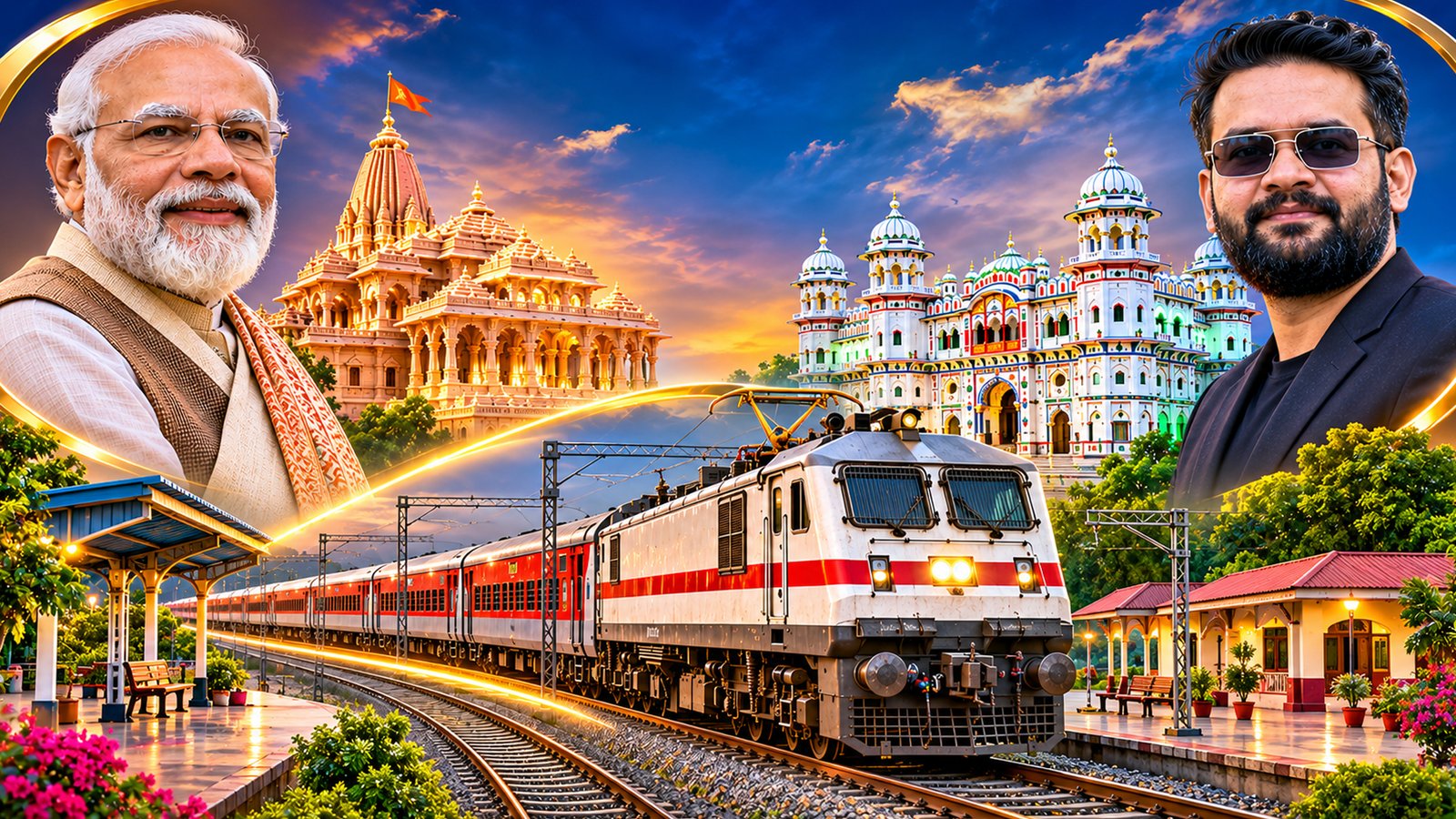
A major highlight of the visit is the introduction of a weekly train service between Janakpur Dham in Nepal and Ayodhya in Uttar Pradesh. Modi and Shah are scheduled to jointly flag off the service through video conferencing.
Named the Saryu-Kamala Express, the train will connect two important destinations associated with the Ramayana. Janakpur is traditionally regarded as the birthplace of Goddess Sita, while Ayodhya is associated with Lord Ram.
The 604-km route will pass through several towns in Bihar and Uttar Pradesh, providing a new travel option for pilgrims and tourists. The train will stop at stations including Jaynagar, Madhubani, Sitamarhi, Raxaul, Narkatiaganj, Gorakhpur, Basti and Mankapur before reaching Ayodhya.
The service will operate once a week, departing from Janakpur Dham on Saturdays and Ayodhya Cantt on Mondays. Besides making religious travel more convenient, the connection is expected to encourage tourism and benefit businesses along the route.
Business engagement to expand
Trade and investment are also high on the agenda. A Nepal-India Business Forum is part of the visit, bringing together representatives from both countries to discuss investment opportunities and strengthen commercial partnerships.
A 52-member business delegation is accompanying Shah, along with Nepal’s Finance Minister Swarnim Wagle and Foreign Minister Shishir Khanal. The discussions are expected to cover opportunities in infrastructure, energy, technology and other sectors where both countries can work together.
Before meeting Modi, Shah held discussions with External Affairs Minister S Jaishankar on Sunday. He also received a ceremonial welcome at Rashtrapati Bhavan and paid tribute to Mahatma Gandhi at Raj Ghat on Monday.
India and Nepal share an open border and deep-rooted social, cultural and economic ties. Millions of people travel between the two countries for work, education, business, tourism and family connections. This makes cooperation on infrastructure, trade and public services particularly important.
The latest visit reflects a shared interest in taking the relationship beyond diplomatic engagement and translating agreements into projects that deliver tangible benefits. With energy, connectivity and economic cooperation at the centre of discussions, both countries are looking to build a partnership that supports their development priorities and strengthens ties between their people.