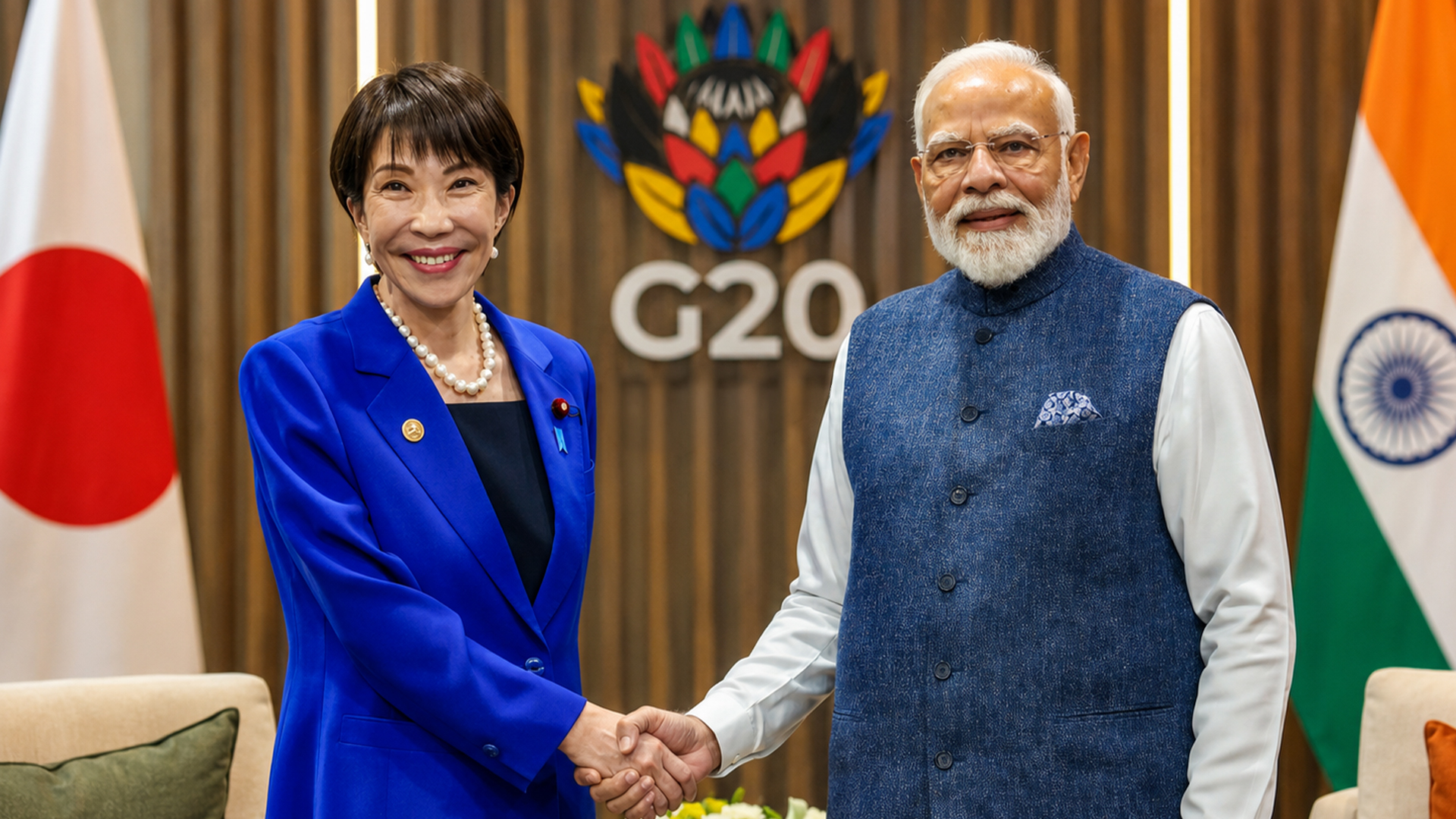
India and Japan have taken another major step in strengthening their long-standing partnership by signing their first joint defence co-development project during Japanese Prime Minister Sanae Takaichi’s official visit to India. The agreement reflects the growing strategic trust between the two countries and their shared focus on security and economic cooperation.
Prime Minister Narendra Modi welcomed Takaichi in New Delhi for wide-ranging discussions on defence, trade, investment, technology and regional security. Both leaders reaffirmed their commitment to building a stronger partnership and working together to ensure a free, open and stable Indo-Pacific region.
A key outcome of the visit was the launch of the first India-Japan defence co-development initiative. Although details of the project have not been disclosed, officials described it as a landmark move that will strengthen defence manufacturing, technology sharing and future collaboration between the two countries. The agreement is expected to encourage closer cooperation between Indian and Japanese defence industries.
The two leaders also inaugurated Maruti Suzuki’s new manufacturing plant at Kharkhoda in Haryana. Built with an investment of around ₹35,000 crore, the facility is one of the company’s biggest factories and is expected to significantly increase production capacity. It will also create thousands of direct and indirect employment opportunities while supporting India’s growing automobile sector.
Apart from defence and manufacturing, Modi and Takaichi discussed expanding cooperation in clean energy, semiconductors, digital technology and resilient supply chains. They stressed the need to strengthen economic ties and encourage more Japanese investment in India.
Japan remains one of India’s largest investors, with companies playing a key role in sectors such as automobiles, infrastructure and high-speed rail. Both leaders expressed confidence that stronger industrial partnerships would benefit businesses and create new opportunities for growth.
Also Read: GST collections hit ₹1.94 lakh cr