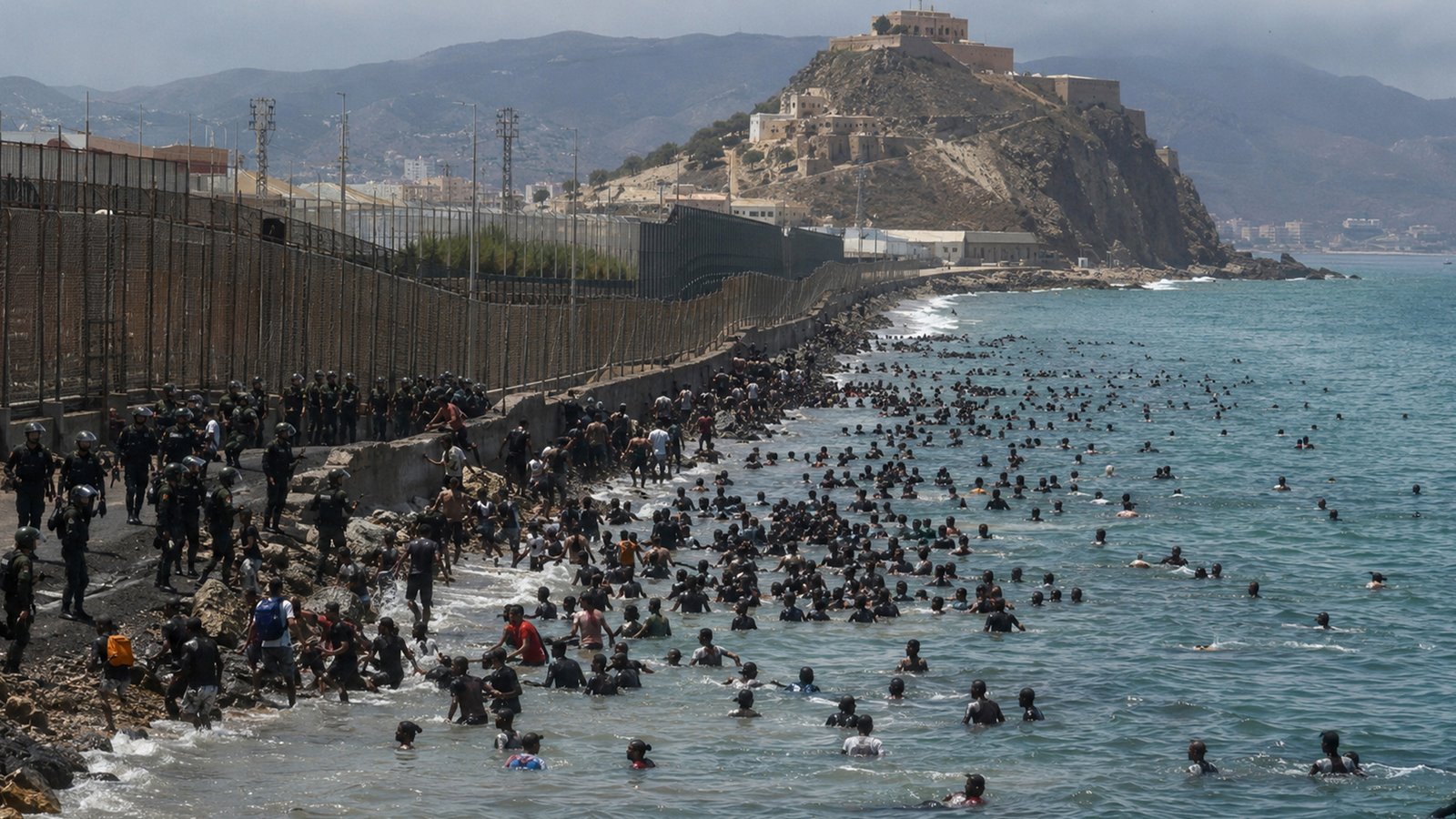
Spain says most of the more than 50,000 migrants who crossed from Morocco into the Spanish enclave of Ceuta have now returned voluntarily, after a dramatic border rush that left at least 57 people dead. The unprecedented movement of people into the Spanish territory in North Africa overwhelmed border controls and triggered an urgent security response from Spanish authorities. The deaths occurred during attempts to reach Ceuta by land and sea, with some migrants drowning and others being crushed while trying to negotiate the coastal barriers and border infrastructure.
The mass crossing began earlier this week when thousands of people moved towards Ceuta from neighbouring Morocco. Spanish officials said more than 50,000 people had entered or attempted to enter the enclave, with estimates at one stage reaching around 60,000. The scale of the movement was extraordinary for Ceuta, a small Spanish territory whose population is only a fraction of the number of people involved in the sudden influx. Migrants reached the territory through different routes, including by land and by attempting dangerous sea crossings around coastal barriers.
The sudden rush placed enormous pressure on Spanish security personnel and local services. Authorities moved additional police and military resources into the area as Spain sought to regain control of the border. Images from the area showed large groups gathered around the frontier while security forces worked to prevent further crossings. Spain and Morocco also coordinated efforts to stop the movement and facilitate the return of people who had entered Ceuta.
By Friday, Spain said the situation had changed significantly, with most of those who crossed already making their way back to Morocco. Spanish authorities described the returns as voluntary. Reports said tens of thousands had already gone back, while hundreds could be seen returning through border points and gaps in the fencing. The movement back to Morocco helped reduce the immediate pressure on Ceuta, although questions remained about how such a large number of people were able to reach the territory in such a short period.
The human cost of the border rush has been severe. Spanish authorities said 57 bodies had been recovered on the Spanish side, while warning that there could be additional casualties on the Moroccan side. Some people died after entering the water, while others were caught in the crush as large crowds attempted to move through or around the border barriers. The tragedy has once again highlighted the dangers faced by migrants attempting irregular crossings into Europe.
The episode has also raised questions about what triggered such an unusually large movement. Reports have pointed to social media and migrant-smuggling networks as possible factors behind the rush. Instructions about routes into Ceuta reportedly circulated online, encouraging people to attempt the crossing. However, claims that Morocco deliberately opened the border have not been established. Fact-checking reports have noted that although Moroccan security forces were initially unable to contain the movement, they later intervened to prevent further crossings.
The crisis has quickly become a political issue in Europe. The sudden arrival of tens of thousands of migrants in a Spanish territory has renewed debate over European migration policy, border security and cooperation with North African countries. Spain has faced questions over whether its existing arrangements were sufficient to deal with such a large and unexpected movement. The incident has also prompted neighbouring European countries to consider additional measures to protect their own borders.
Spain‘s government has attributed the surge in part to organised migrant-smuggling networks and difficult social and economic conditions in Morocco. At the same time, misinformation surrounding the incident has spread rapidly, including claims about Spain’s immigration policies and suggestions that the movement was deliberately organised for political reasons. Available evidence does not establish those claims.
The incident comes against a wider backdrop of dangerous migration routes into Spain. Migrants regularly attempt to reach Spanish territory through the Mediterranean, Atlantic routes and the country’s North African enclaves of Ceuta and Melilla. Many undertake risky sea journeys in overcrowded boats, while others attempt to cross heavily secured land borders. A report by the Caminando Fronteras group said 1,317 people died attempting to reach Spain during the first five months of 2026, underlining the continuing humanitarian cost of irregular migration.
The Ceuta crisis is also significant because Spain and Morocco have developed extensive cooperation on migration control. Madrid has invested in border surveillance and works with Moroccan authorities to manage irregular migration and combat smuggling. At the same time, Spain has been expanding legal migration programmes. In 2025, more than 25,000 workers from 17 countries participated in Spain’s circular migration programmes, with Morocco accounting for the largest share.
For now, the immediate emergency in Ceuta appears to have eased as most migrants return to Morocco. But the deaths and the sheer scale of the border rush have exposed the continuing challenges facing Spain and the European Union. The episode has highlighted how quickly a migration crisis can develop when thousands of people move simultaneously towards a heavily guarded frontier.
The focus will now shift towards determining exactly how the mass crossing unfolded, whether migrant-smuggling networks played a central role and how Spain and Morocco can prevent another such incident. For the migrants involved, however, the episode has already carried a devastating price. With at least 57 lives lost, the Ceuta border rush has become one of the most dramatic and deadly migration incidents in the region in recent years.