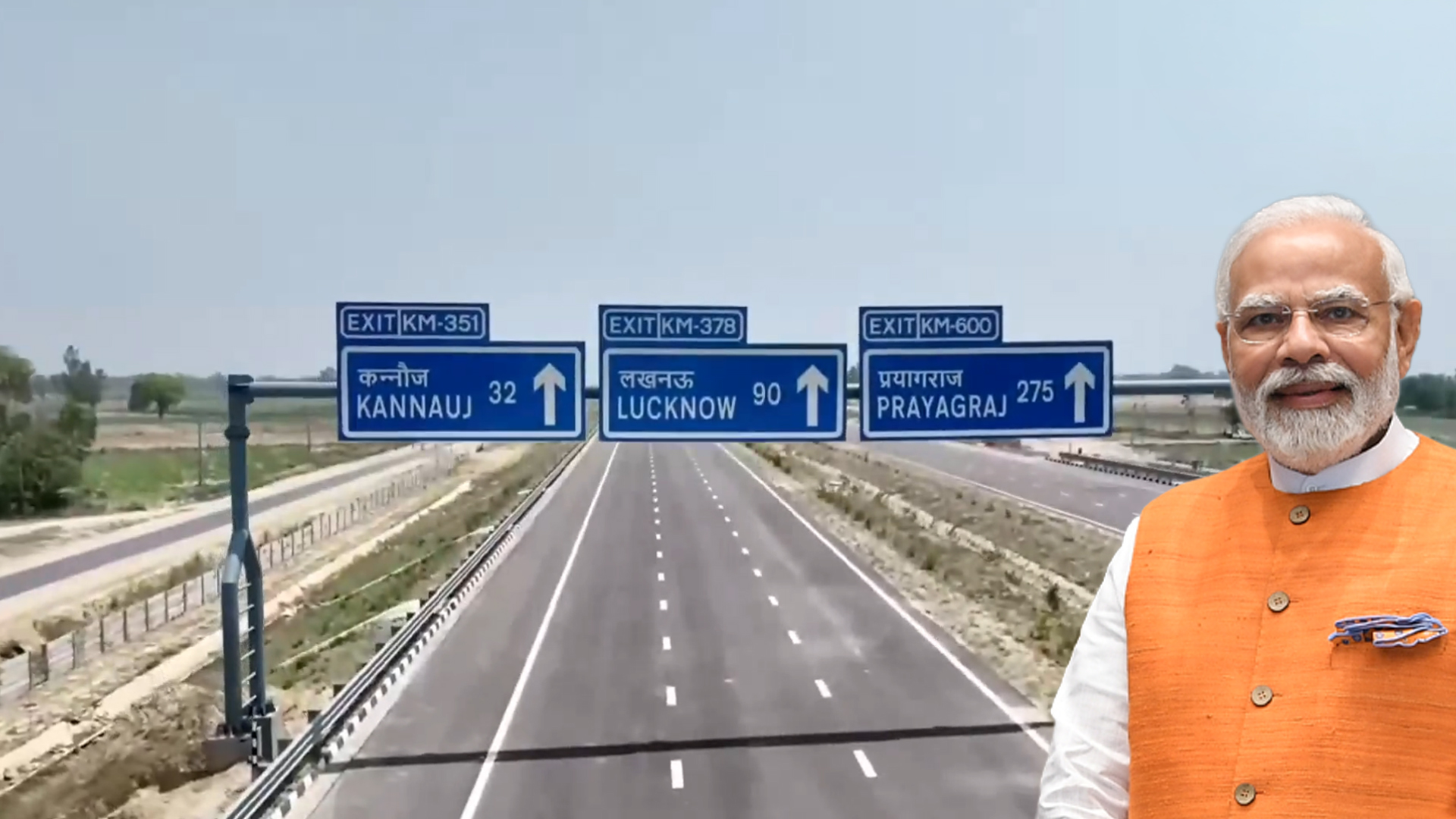
Prime Minister Narendra Modi has inaugurated the Ganga Expressway, a major highway project that is expected to change how people travel across Uttar Pradesh.
Stretching 594 kilometres, the expressway connects Meerut in western Uttar Pradesh to Prayagraj in the east. It passes through 12 districts, linking many towns and regions that earlier had slower and less direct road connections.
For everyday travellers, the biggest benefit will be time. A journey that earlier took 10 to 12 hours can now be completed in about six hours. This will make travel faster and more comfortable, especially for those who frequently move between these regions.
The expressway has been built at a cost of around ₹36,000 crore and is designed as a six-lane highway, with the option to expand to eight lanes in the future. It is an access-controlled road, which means vehicles can enter and exit only at fixed points. This helps reduce traffic congestion and improves safety.
Beyond travel, the project is expected to have a strong economic impact. Better roads mean easier movement of goods, which can help businesses grow. Farmers will find it easier to transport produce, and industries may see new opportunities as connectivity improves.
The expressway also includes modern facilities such as rest stops, emergency services, and even an airstrip that can be used in special situations. These features are aimed at making the road safer and more efficient for users.
During the inauguration, the Prime Minister highlighted how such infrastructure projects create jobs and support overall development. Large-scale projects like this often bring investment and help connect smaller towns to bigger markets.