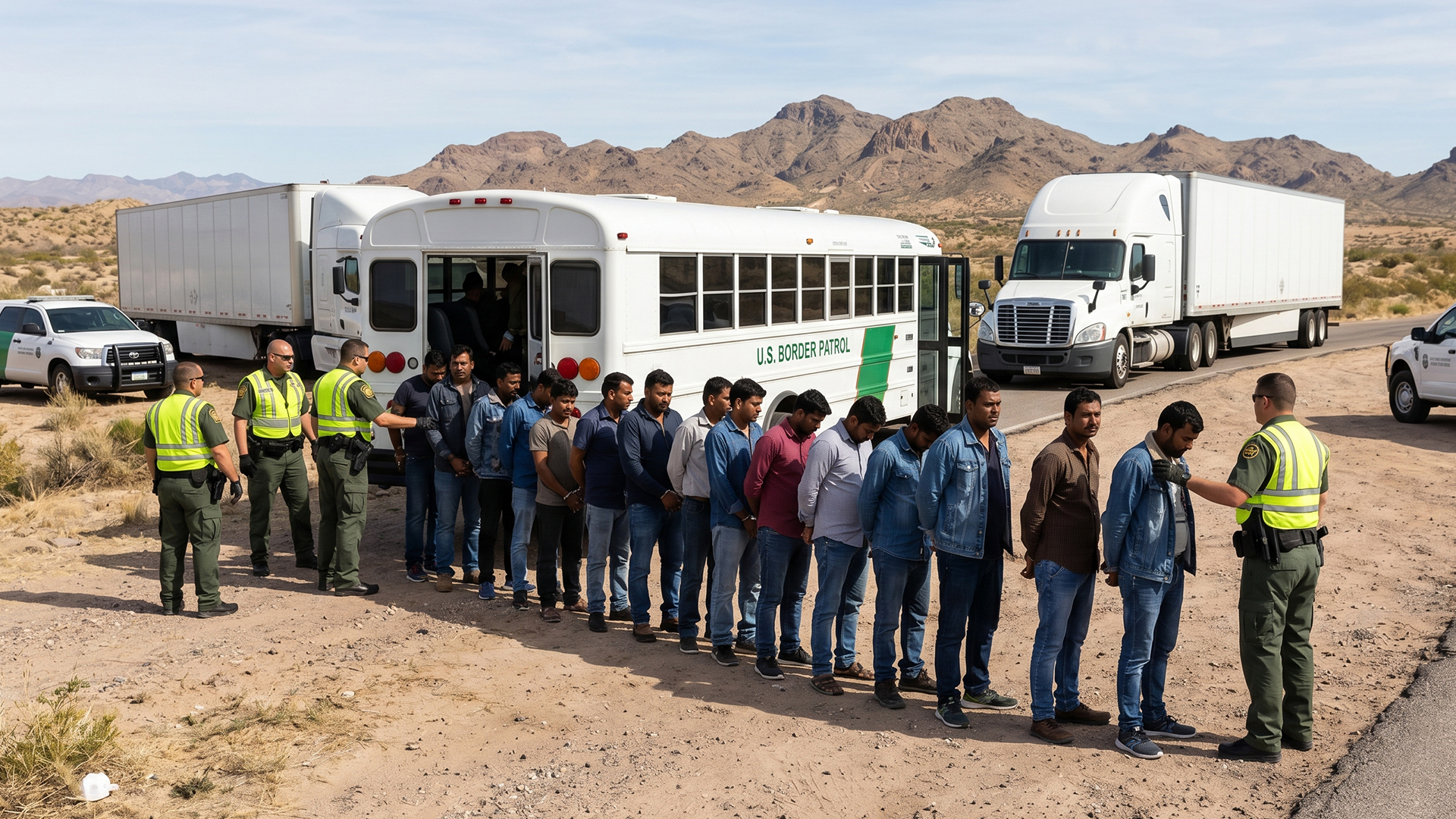
Thirty Indian nationals have been arrested in the United States for allegedly living and working illegally as commercial truck drivers and are expected to face deportation proceedings, according to US authorities.
The arrests were carried out as part of “Operation Checkmate,” an immigration enforcement initiative targeting undocumented workers employed in the trucking industry. Officials said the individuals were found to be residing in the country without valid immigration status while working as truck drivers, a profession that requires specific licensing and legal authorization.
According to reports, the operation was conducted by federal and state law enforcement agencies following investigations into suspected immigration and employment violations. Authorities said the individuals were taken into custody after checks revealed they lacked the necessary legal documentation to live and work in the United States.
US authorities stressed that the action was part of broader efforts to enforce immigration laws and ensure compliance within industries that require commercial driving licences and safety certifications. The trucking sector plays a crucial role in the American economy, and regulators have increasingly focused on ensuring that drivers meet legal and safety standards.
The arrested individuals are expected to be processed through immigration proceedings before being deported to India. Authorities have not released the identities of those detained but confirmed that all 30 are Indian nationals.
The development comes amid heightened immigration enforcement efforts across several sectors in the United States. Federal agencies have been conducting targeted operations against individuals found to be violating immigration laws or working without proper authorization.
The case has drawn attention within the Indian diaspora, particularly among communities involved in the transportation and logistics sectors. Immigration experts note that individuals working in regulated professions such as commercial trucking face additional scrutiny because of licensing, safety and legal requirements.
Also Read: Malaysia bans social media for under-16s