Relentless monsoon rains continued to wreak havoc across Assam on Thursday, with the flood death toll rising to 41 as fresh rainfall and overflowing rivers worsened the crisis in several districts. More than 6.4 lakh people have been affected, while thousands remain stranded in relief camps or marooned in flooded villages.
According to the Assam State Disaster Management Authority (ASDMA), 10 more people died in the past 24 hours, taking the overall death toll to 41. The latest casualties were reported from Sivasagar, Jorhat, Charaideo, Dhemaji and Karbi Anglong districts, where floodwaters swept away homes, roads and vehicles.
The flood situation remains particularly grim in Upper and eastern Assam. State Minister Atul Bora described the disaster as the worst flooding in eastern Assam in nearly 60 years, highlighting the unprecedented scale of damage caused by continuous rainfall and rising river levels.
Several major rivers, including the Buridihing, Dikhou, Dhansiri and Kushiyara, continue to flow above the danger mark. The Disang River has also crossed its highest recorded flood level, raising fears of further inundation if heavy rainfall continues over the next few days.
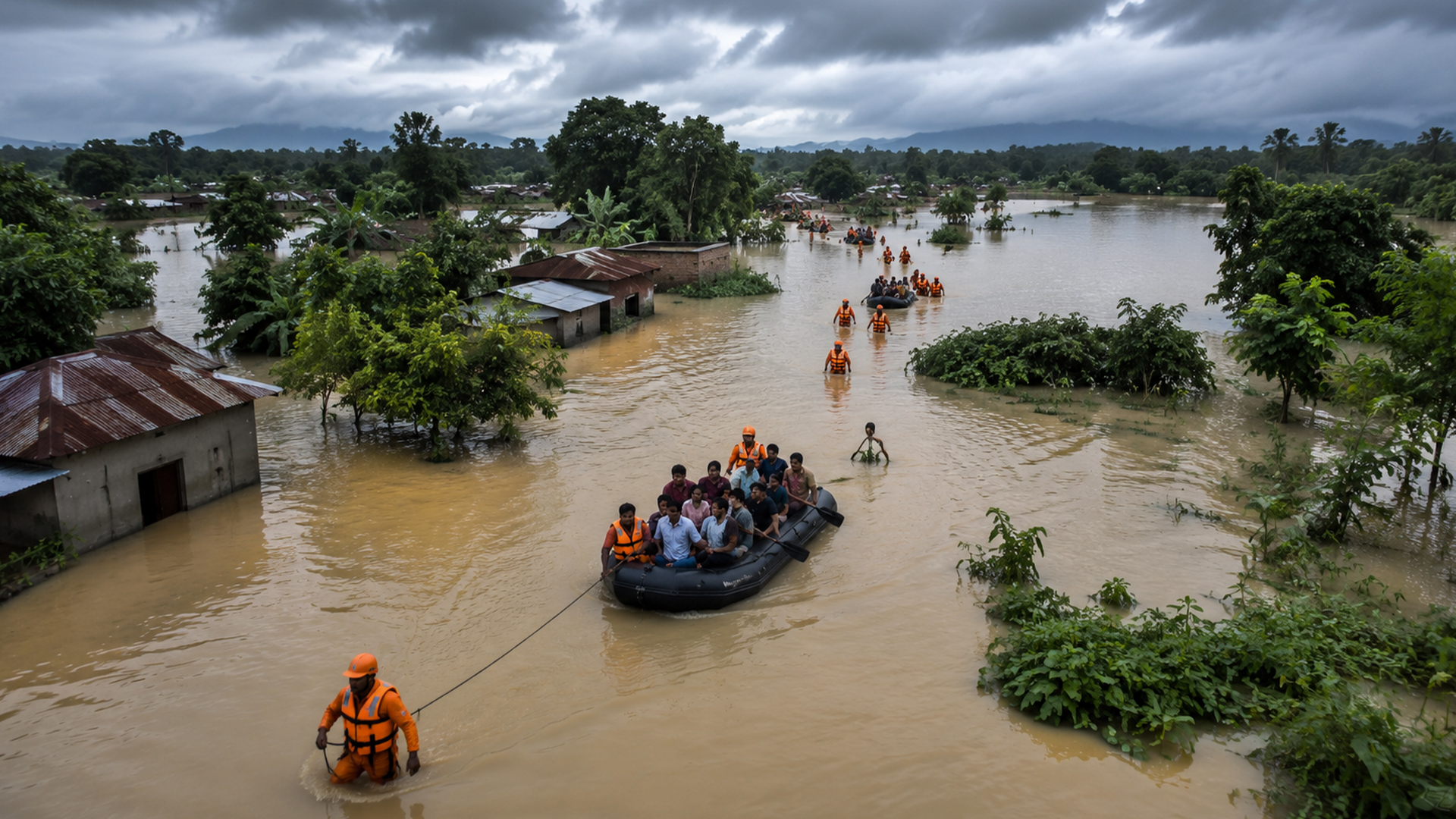
Entire villages remain submerged, forcing thousands of families to abandon their homes. Many have taken shelter in government relief camps, school buildings and temporary shelters set up by local authorities. Others are staying on embankments and higher ground, waiting for floodwaters to recede.
For many residents, the disaster has turned life upside down overnight.
“We managed to save only a few clothes before the water entered our house,” said a resident of Sivasagar. “Everything else has been washed away.”
Children, elderly people and pregnant women are among the worst affected, with many relief camps struggling to meet the growing demand for food, clean drinking water and medical assistance.
Rescue teams from the National Disaster Response Force (NDRF), State Disaster Response Force (SDRF), Army, local administration and volunteers are continuing evacuation operations across the affected districts. Boats are being used to rescue stranded families from submerged villages, while emergency supplies are being distributed to relief camps.
The floods have also dealt a severe blow to Assam’s agriculture. Thousands of hectares of paddy fields remain underwater, threatening the livelihoods of farmers who were preparing for the cultivation season. Several tea gardens in Upper Assam have also been inundated, raising concerns over production losses in one of India’s largest tea-producing regions.
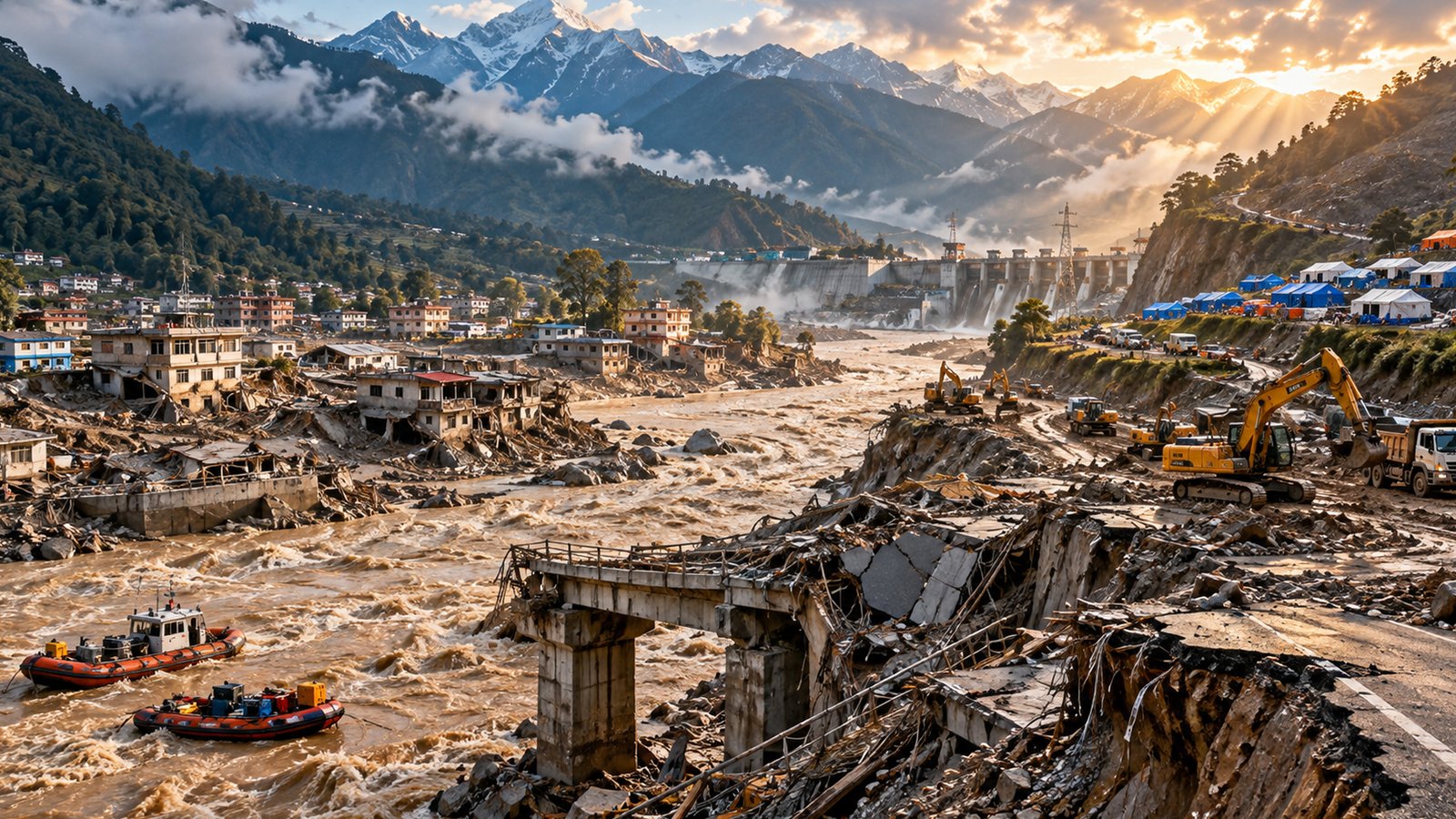
Road and rail connectivity has suffered extensive damage. Floodwaters have submerged highways, washed away roads and affected railway tracks, disrupting transportation across several districts. Authorities have diverted traffic in many areas, while some train services remain suspended because of waterlogged tracks.
Chief Minister Himanta Biswa Sarma visited the worst-affected districts to review rescue and relief operations. He assured affected families that the state government would continue providing all necessary assistance and speed up rehabilitation once floodwaters recede.
The India Meteorological Department (IMD) has forecast more heavy rainfall over parts of Assam, keeping authorities on high alert. District administrations have advised people living in low-lying areas to remain vigilant and move to safer locations if river levels continue to rise.
Experts say the recurring floods underline the need for better flood management, stronger embankments and improved drainage infrastructure. They also point to changing rainfall patterns and river siltation as factors contributing to increasingly severe floods in the state.
Despite the difficult conditions, relief workers and volunteers continue to work round the clock to reach isolated communities. Community kitchens are serving meals, while health teams are monitoring relief camps to prevent outbreaks of waterborne diseases.
For thousands of families, however, the priority remains returning home safely. Many have lost houses, livestock, crops and personal belongings, leaving them uncertain about how they will rebuild their lives once the floodwaters recede.
With more rain forecast and rivers still swelling, Assam remains on high alert as rescue agencies race against time to protect lives and provide relief to those caught in one of the state’s worst flood disasters in decades.