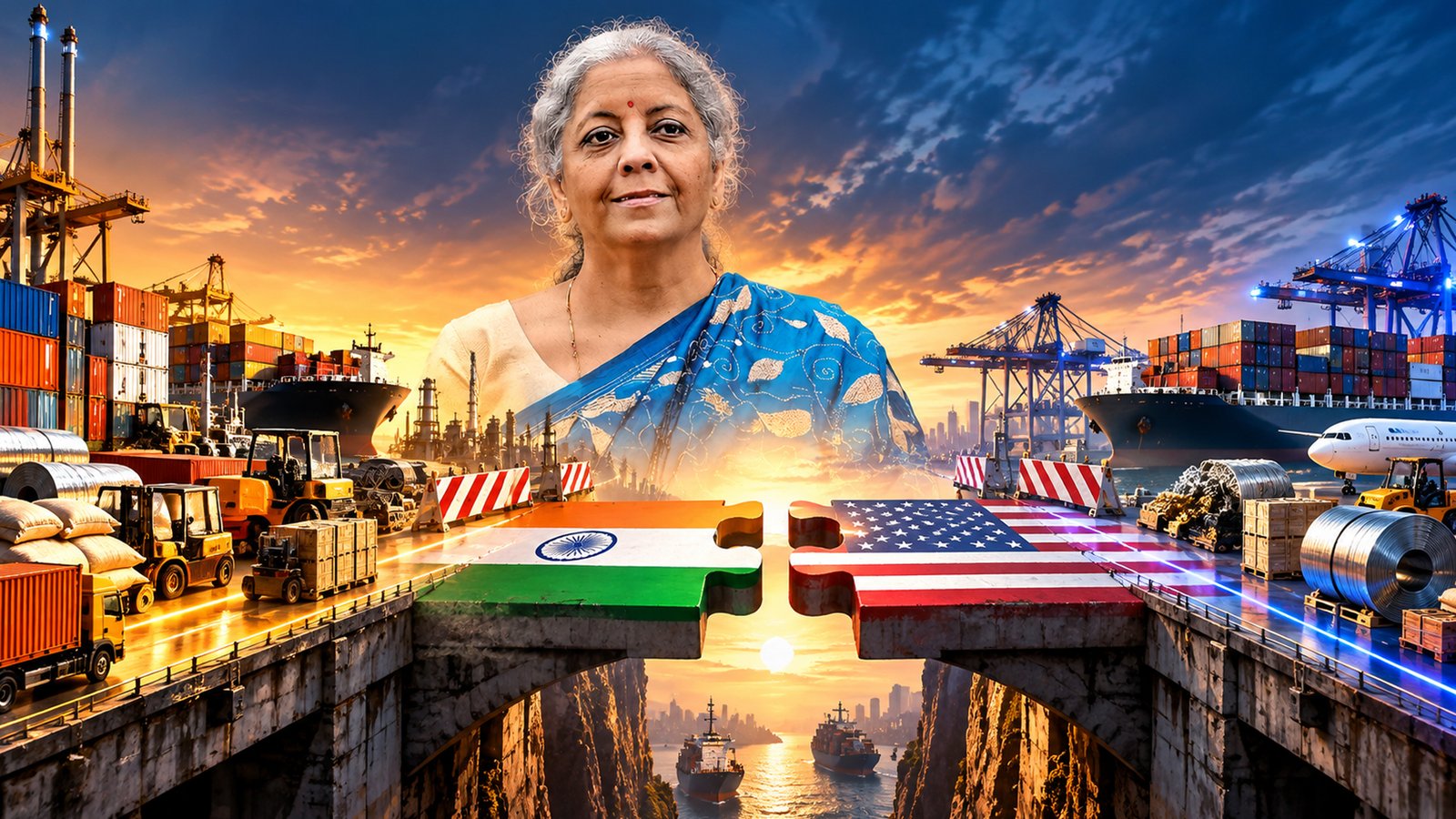
India and the United States appear to have reached a difficult point in their negotiations for a trade agreement, with Finance Minister Nirmala Sitharaman saying the talks have reached a “plateau” where securing further concessions could become increasingly difficult.
The comments highlight the challenges facing negotiators as New Delhi and Washington try to settle differences over tariffs, market access and other trade issues. The two countries have been working towards a broader bilateral trade agreement, but several sensitive matters remain unresolved.
Sitharaman said negotiations were continuing and that a deal could still move forward if both sides found enough room for compromise. At the same time, she indicated that the discussions had entered a stage where each additional concession would require careful consideration.
The comments come amid growing uncertainty over US tariffs on Indian goods. American tariff measures have become one of the most important issues in the negotiations, with Indian exporters concerned that higher duties could make their products more expensive and less competitive in the US market.
The United States remains one of India’s largest trading partners and an important destination for Indian exports. Pharmaceuticals, textiles, engineering goods, electronics and several other sectors depend heavily on American demand.
A prolonged disagreement could therefore affect businesses on both sides. Exporters need clarity on tariffs and market access to plan production, investments and long-term contracts.
Trade negotiations between India and the US have been underway for several months. Commerce and Industry Minister Piyush Goyal has been leading the Indian side, while US Trade Representative Jamieson Greer has been involved in discussions from Washington.
The negotiations are not limited to tariffs. Market access for American products, investment, industrial policy and the treatment of sensitive sectors are also part of the discussions.
India has been cautious about opening some domestic markets too quickly. The government wants greater access for Indian exports in the US while protecting sectors that could face pressure from increased imports.
The trade imbalance between the two countries is another issue in the background. India exports more goods to the US than it imports, giving Washington a trade deficit with India. The Trump administration has repeatedly argued that such imbalances need to be addressed.
Sitharaman has questioned whether tariffs are the best way to deal with trade imbalances. She has also pointed to India’s much larger trade deficit with China, highlighting the complexity of global trade flows and the difficulty of solving such imbalances simply through tariffs.
India’s energy purchases from Russia have added another layer to the negotiations. New Delhi continues to buy Russian crude oil, which has become an important source of energy for Indian refiners.
Washington has objected to countries continuing to purchase Russian energy and has considered additional tariff measures linked to such trade. India, however, has maintained that its energy purchases are guided by national interests and the need to secure affordable and reliable supplies.
The issue has made the trade negotiations more complicated because it connects commercial questions with geopolitics and energy security.
Another area attracting attention is the US investigation under Section 301 of the Trade Act. The investigation covers concerns related to India’s industrial capacity and its impact on American businesses. Any additional tariff measures arising from such action could add pressure on Indian exporters.
Businesses are therefore watching the negotiations closely. Companies need to know whether existing tariffs will remain, whether additional duties could be imposed and whether a final trade agreement could provide better market access.
The uncertainty is particularly important for smaller exporters, which generally have less room to absorb higher costs than large companies. Even a moderate rise in tariffs can affect pricing, orders and profit margins.
Despite the current difficulties, India and the US continue to have strong economic and strategic ties. Cooperation has expanded rapidly in areas including technology, defence, manufacturing, energy and investment.
That broader relationship gives both countries a reason to keep negotiating. Neither side has indicated that the trade talks have collapsed, but the latest comments suggest that the easiest compromises may already have been made.
The next stage will depend on whether Indian and American negotiators can resolve the remaining sensitive issues without either side feeling that it has compromised too much.
A conversation between Prime Minister Narendra Modi and US President Donald Trump could also provide political momentum if the negotiations require a high-level push.
Sitharaman’s remarks underline the difficulty of reaching the final stage of a major trade agreement. India remains open to a deal, but it is also signalling that further concessions cannot be taken for granted.
The talks have therefore reached a critical phase. The agreement is still possible, but both sides will need flexibility, patience and a clearer understanding of each other’s economic priorities to move beyond the current deadlock.