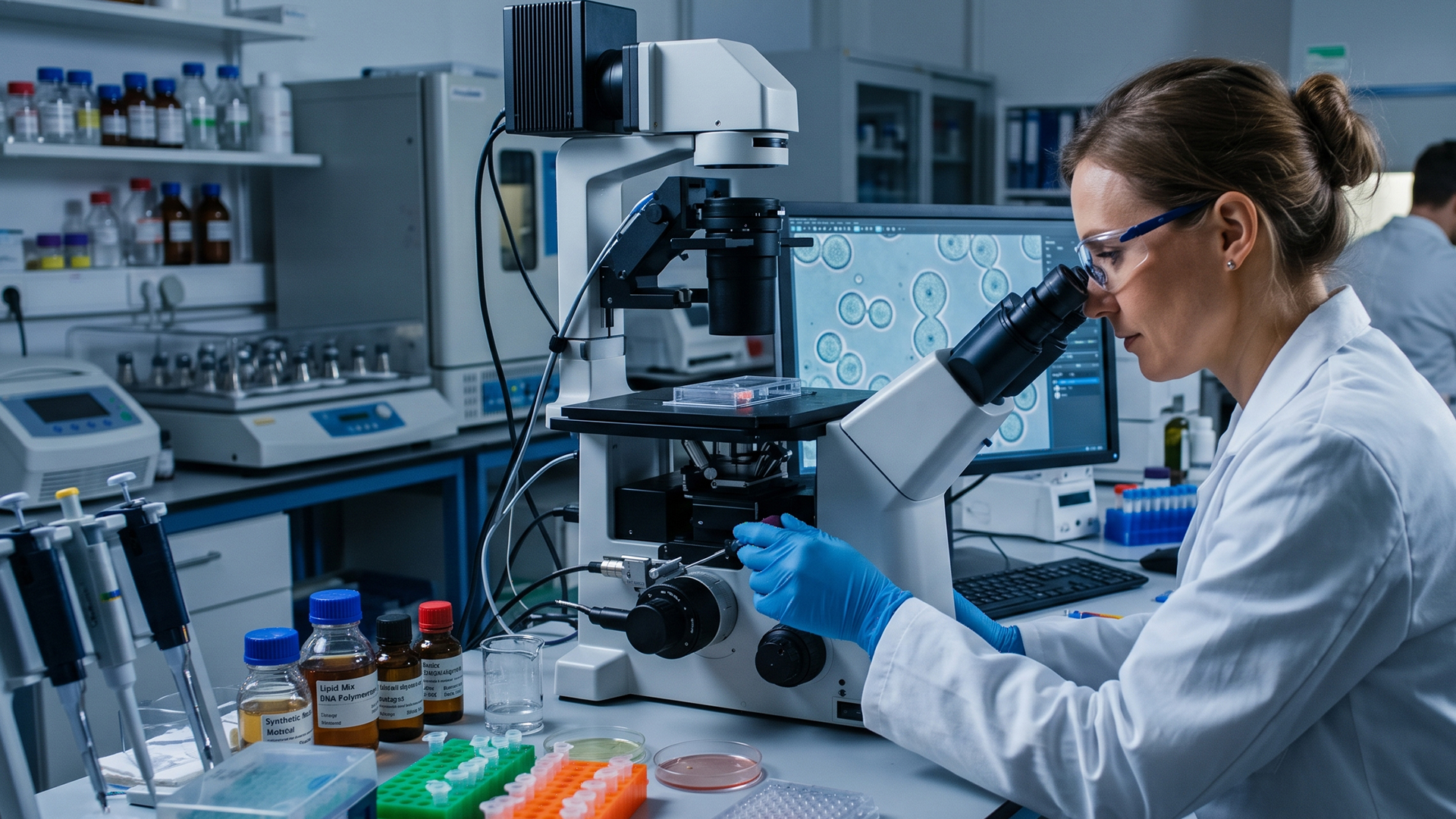
Scientists have achieved a major breakthrough by creating a synthetic cell that can grow and divide like a natural cell. The laboratory-made cell, named SpudCell, is the first artificial cell built from scratch to complete a full life cycle, marking an important milestone in synthetic biology.
Unlike earlier synthetic cells, which could perform only a few basic functions, SpudCell can absorb nutrients, grow and divide into two daughter cells that repeat the same process. Researchers say this offers new insights into how living cells function and reproduce.
The team stressed that the cell is not a new form of life but a simplified biological system designed for research. By recreating the basic processes of life in the laboratory, scientists hope to better understand cell behaviour and the origins of life. Breakthroughs in synthetic biology are expanding our understanding of how living systems work, with more such research covered in our science news and discoveries section.
This breakthrough could eventually support advances in medicine, biotechnology and environmental research. Synthetic cells may one day help develop new drugs, produce sustainable materials and improve treatments for disease.
Although the technology is still in its early stages, researchers say creating a synthetic cell capable of growing and dividing is a significant step towards engineering programmable biological systems for future scientific and medical applications.
Also Read: Salman Khan’s Kala Hiran plea deferred till July 6