A protest march towards Parliament organised by Cockroach Janta Party (CJP) turned tense in New Delhi on Monday after police stopped demonstrators and clashes broke out near Jantar Mantar. The protest, led by education reformer and climate activist Sonam Wangchuk, drew activists, students, writers, artists and civil society members demanding the resignation of Union Education Minister Dharmendra Pradhan.
The march began peacefully at Jantar Mantar, where hundreds of protesters gathered carrying placards and raising slogans before attempting to move towards Parliament during the ongoing Monsoon Session. However, Delhi Police had imposed security restrictions around the Parliament complex and prevented the procession from advancing.
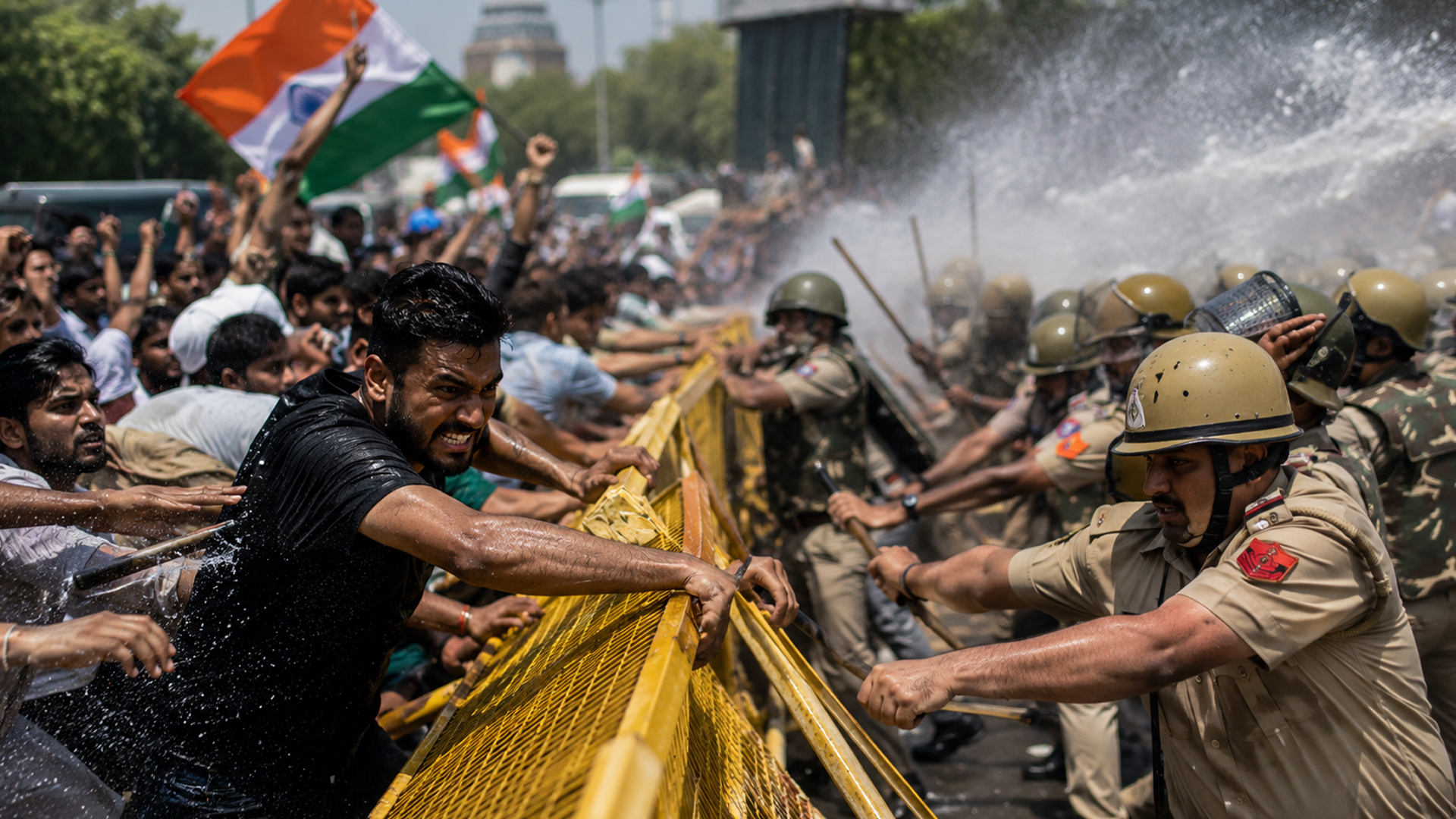
As demonstrators tried to push through police barricades, tensions escalated. Videos shared on social media showed police personnel physically stopping protesters, leading to scuffles between security forces and participants. Several protesters alleged that excessive force was used to disperse the crowd.
Among those participating in the march were Sonam Wangchuk, actor Shabana Azmi, actor Prakash Raj, activist Harsh Mander, writer Arundhati Roy, and several student leaders and social activists. Their presence drew significant public attention to the protest.
The Citizens for Justice and Peace (CJP), which organised the march, accused Delhi Police of using force against peaceful protesters. The organisation claimed that a truck carrying several prominent participants, including social activist Abhijeet Dipke, Shabana Azmi and Prakash Raj, was stopped and allegedly attacked during the confrontation. According to CJP, protesters were dragged, pushed and prevented from proceeding despite demonstrating peacefully.
Delhi Police, however, maintained that security arrangements around Parliament were in place because of the Monsoon Session and that no unauthorised procession would be allowed to move towards the high-security zone. Police officials said adequate arrangements had been made to maintain law and order and prevent any breach of security.
The protest was organised to press for the resignation of Dharmendra Pradhan over the ongoing controversy surrounding school education and the implementation of central education policies. CJP leaders said their demand for the minister’s resignation remains unchanged and vowed to continue their campaign through democratic means.
Addressing supporters before the march, Sonam Wangchuk urged citizens to protect democratic values through peaceful protest. He appealed for non-violence and asked participants to remain calm despite restrictions imposed by authorities.
Speaking after the confrontation, several protesters criticised the police action, alleging that democratic spaces for peaceful demonstrations were shrinking. They argued that citizens should be allowed to express dissent peacefully, particularly on issues concerning education and governance.
Eyewitnesses said traffic movement around central Delhi was affected for several hours as police deployed heavy security personnel, barricades and multiple layers of checking around Parliament Street and nearby areas. Commuters experienced delays due to traffic diversions implemented as a precautionary measure.
The incident also triggered political reactions, with opposition leaders criticising the handling of the protest and questioning the use of force against peaceful demonstrators. Some leaders demanded an independent inquiry into the allegations made by the organisers, while the ruling establishment defended the security measures, citing Parliament’s ongoing session.
Videos and photographs from the protest quickly spread across social media platforms, drawing widespread public attention. While some users expressed support for the protesters’ right to demonstrate, others argued that security restrictions around Parliament must be respected during the session.
The events have once again highlighted the delicate balance between maintaining public order and safeguarding the democratic right to peaceful protest. Legal experts note that while authorities have the responsibility to ensure security in sensitive zones, citizens also have constitutional rights to assemble peacefully, subject to reasonable restrictions.
Despite Tuesday’s confrontation, CJP leaders said their movement would continue through public campaigns and future demonstrations until their demands are addressed. They reiterated that the protest was intended to remain peaceful and accused the authorities of escalating tensions unnecessarily.
As Parliament continues its Monsoon Session, the developments are expected to keep the spotlight on issues surrounding public protest, democratic freedoms and the government’s education policies. With both sides standing firm on their positions, the debate over balancing security and the right to dissent is likely to remain a key national issue in the coming days.