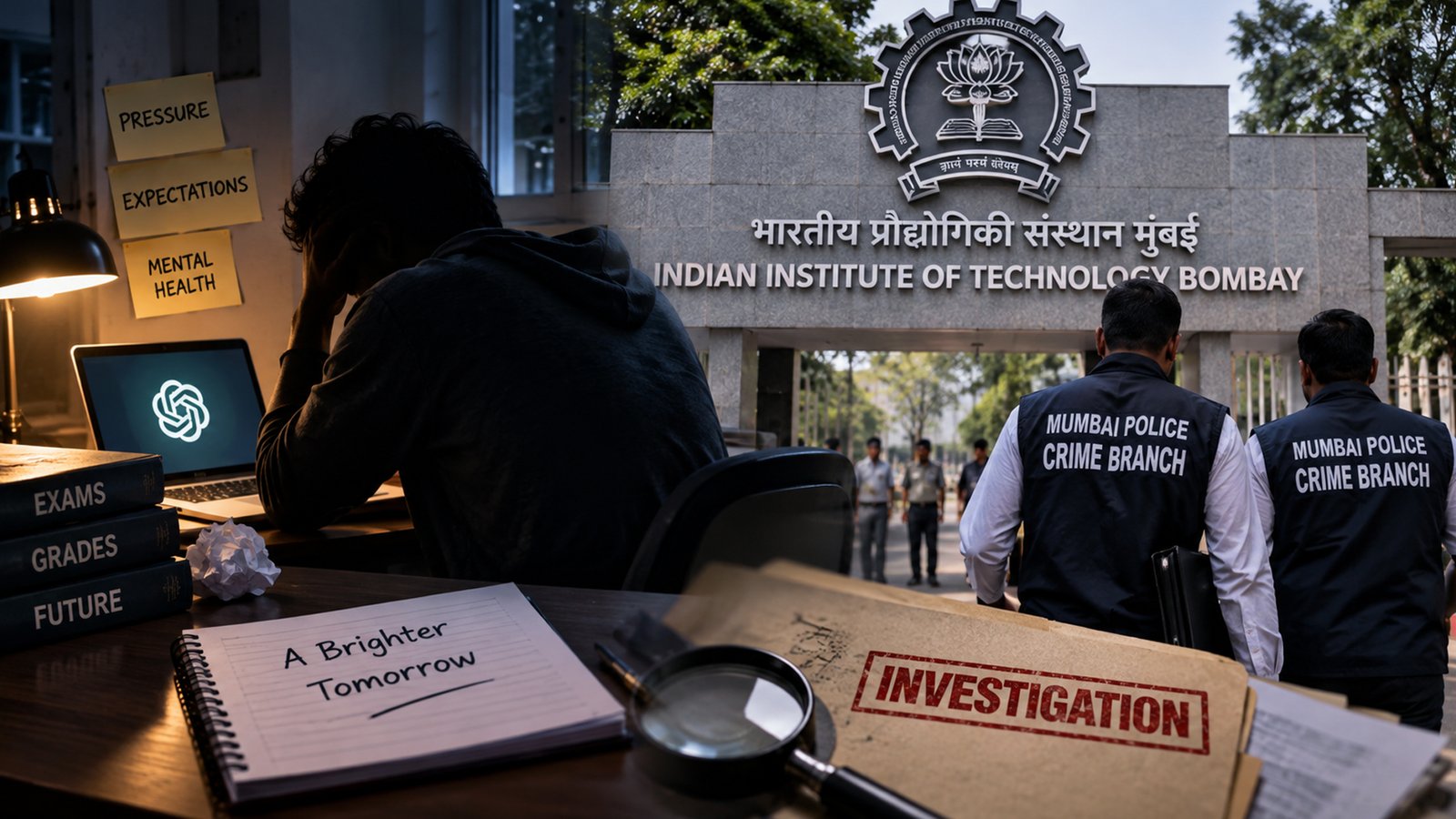
The investigation into the death of an IIT-Bombay student has been handed over to the Mumbai Crime Branch as protests on the Powai campus continued over concerns about academic pressure, student welfare and institutional accountability.
The student, identified as Sahil Wakode, a second-year BTech student, was found dead in his hostel room on September 18. His death came shortly after an incident during a mid-semester examination in which he was allegedly found using a mobile phone.
Wakode’s family has alleged that he faced harassment and caste-based discrimination and named a professor and institute officials in the FIR. The allegations are being investigated. IIT-Bombay has denied caste discrimination and said its SC/ST cell had not received any complaint from the student.
The institute had earlier said Wakode was found using a phone during the examination and had allegedly uploaded the question paper to an artificial intelligence platform for answers. It said no formal disciplinary proceedings had been started against him and that he had been counselled after the incident.
The Mumbai Crime Branch will now examine the circumstances surrounding the death and the allegations made by the family. An Assistant Commissioner of Police-rank officer is expected to oversee the investigation.
Meanwhile, the IIT-Bombay Faculty Forum has backed the professor named in the FIR. The forum said the professor had followed academic rules while dealing with the examination incident and expressed concern over allegations made against him.
The case has triggered protests by students, who have submitted an 18-point charter of demands to the institute administration. Their demands include an independent investigation into Wakode’s death and a review of four recent student deaths by suicide on campus.
Students have also sought stronger mental-health services, including more counsellors, hostel-level counselling facilities, round-the-clock support and access to psychiatric care during emergencies.
They are demanding changes to the way academic misconduct cases are handled. Among their proposals are clearer disciplinary procedures, access to mentors during proceedings and greater student representation on committees dealing with academic and campus matters.
The protesters have also sought a transparent grievance system through which students can file complaints and track the action taken by the institute. They want assurances that students participating in the protest will not face disciplinary or other punitive action.
IIT-Bombay Director Shireesh Kedare met the protesting students during discussions over their demands. The administration agreed to take up the charter, while the institute’s Board of Governors is expected to consider the issues raised by students.
The administration also clarified reports surrounding the director’s position, saying Kedare had not resigned, after an earlier communication created confusion over the matter.
The protests have brought renewed attention to conditions in IIT-Bombay hostels as well. Students have raised concerns about promised replacement of ceiling fans following earlier incidents on campus.
At the centre of the current dispute, however, is the question of whether existing systems are adequate to address student distress and resolve academic or personal grievances before they escalate.
The Crime Branch investigation is now expected to establish the circumstances surrounding Wakode’s death and examine the allegations against institute officials. At the same time, students are pressing the administration for wider changes in mental-health support, academic procedures, campus safety and grievance redressal.