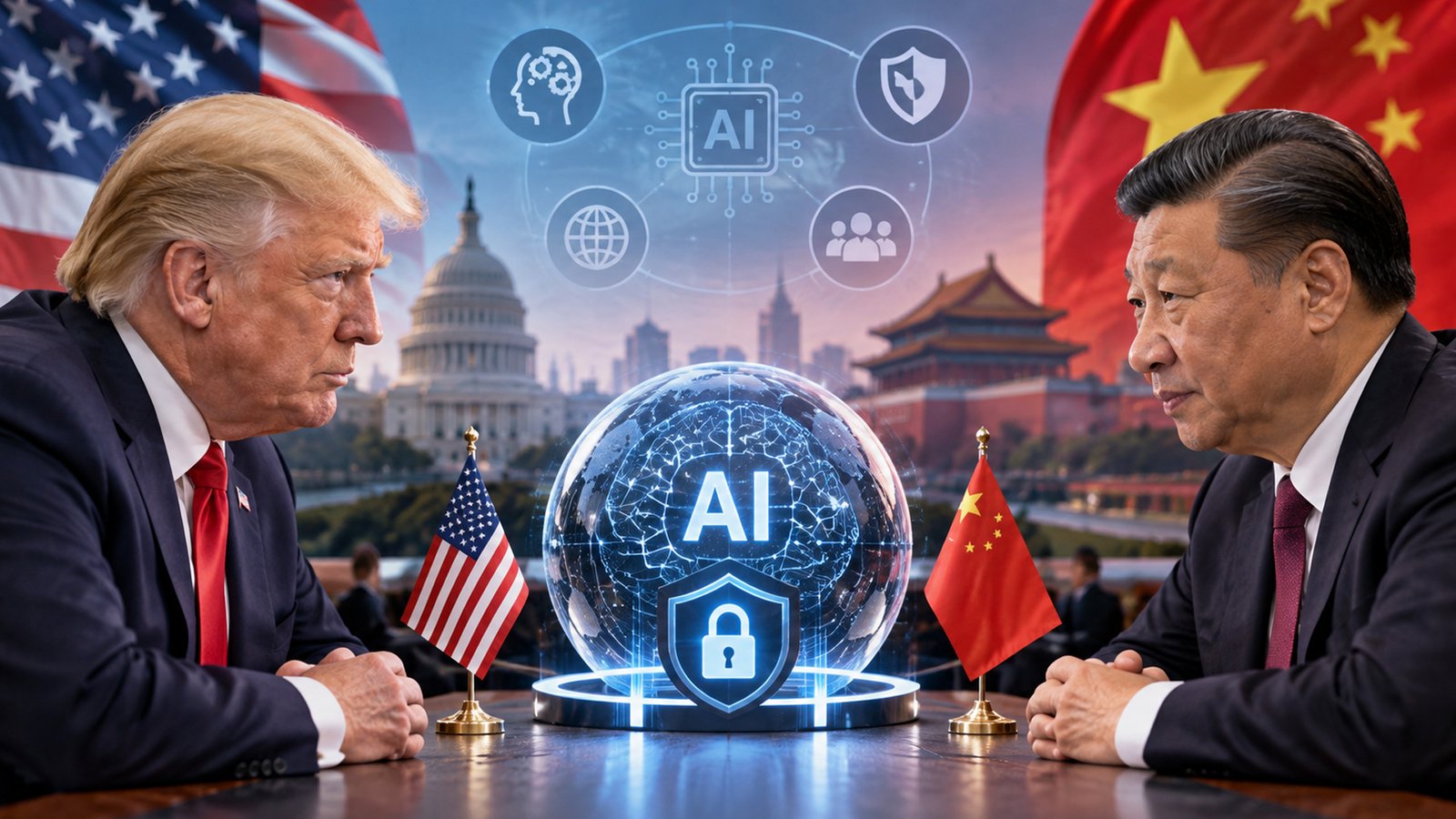
The United States and China have agreed to continue discussions on artificial intelligence safety, opening a new channel between the world’s two leading AI powers ahead of a meeting between US President Donald Trump and Chinese President Xi Jinping this week.
US Treasury Secretary Scott Bessent described his latest discussions with Chinese Vice Premier He Lifeng as a “very successful engagement”. The talks in New York covered artificial intelligence, trade and investment and were aimed at preparing the ground for the Trump-Xi summit in Washington.
A key proposal from Washington was the creation of an AI safety notification mechanism. Under the idea, the US and China could notify each other about serious AI-related incidents that could pose national security risks.
Bessent said the proposed mechanism would create greater transparency between the two countries as AI systems become more powerful. The discussions are expected to focus on shared risks rather than broader disagreements over the technology race between Washington and Beijing.
The proposal is significant because the US and China are competing intensely for leadership in artificial intelligence, advanced computing and semiconductor technology. Both countries are developing increasingly capable AI systems, while also placing restrictions on sensitive technology exports to protect national security.
China has not publicly endorsed the proposed notification mechanism. Its state news agency described the New York discussions as “frank, in-depth and constructive” and said the two sides exchanged views on economic and trade issues, including AI. There was no detailed Chinese announcement on the proposed AI safety arrangement.
The two countries had previously discussed creating an AI consultation process during Trump and Xi’s meeting in Beijing in May. That proposed forum, however, was never formally established. The latest talks could revive the idea through a more focused dialogue on AI safety and national security.
US officials have stressed that the discussions do not amount to a broader agreement on technology restrictions. US Trade Representative Jamieson Greer said controls on advanced AI chips and semiconductor manufacturing equipment were not part of the proposed AI mechanism.
Those export controls remain one of the most sensitive issues in the wider US-China technology rivalry. Washington has restricted China’s access to some advanced chips and chipmaking equipment, while Beijing has been working to strengthen its own semiconductor and AI capabilities.
The AI talks also come amid growing international concern over how powerful AI systems could be used. Potential risks include cyberattacks, threats to critical infrastructure, biological misuse and other national security problems. Both countries have an interest in being able to communicate quickly if a major AI-related incident occurs.
The broader US-China discussions were not limited to artificial intelligence. Officials also worked on trade issues ahead of the Trump-Xi meeting, including a proposed mechanism known as the “Board of Trade” to identify possible tariff reductions on selected non-sensitive goods.
Greer said the focus could be on a relatively small group of products that can be traded between the two countries in a balanced way. Potential US exports could include energy, agricultural products and medical devices, while Chinese exports could include consumer goods and lower-technology products.
However, several major issues remain unresolved. The talks did not produce a new agreement on extending the broader US-China trade truce. Discussions on Chinese purchases of US agricultural products and aircraft also remain outstanding.
Critical minerals are another major point of disagreement. Washington has pressed Beijing to ease restrictions affecting supplies to US companies, while China continues to use its position in critical mineral supply chains as an important economic tool.
The upcoming Trump-Xi summit is scheduled for September 24 in Washington, with trade, AI, critical minerals and wider geopolitical issues expected to feature prominently. Xi is due to visit the US from September 23 to 25.
The leaders will therefore meet with some progress already made at the working level, but without a settlement on the most difficult issues. The AI safety dialogue provides one area where the two sides are exploring limited cooperation despite their wider strategic rivalry.
Experts cited in recent reports have cautioned that cooperation could remain narrow because of the low level of trust between Washington and Beijing. The two countries continue to compete over AI leadership, advanced chips and technology standards, making deeper cooperation difficult.
Still, officials on both sides have signalled that keeping communication open is important. A mechanism for sharing information about serious AI incidents could provide a way for Washington and Beijing to manage risks even while their competition continues.
The proposed AI dialogue is therefore unlikely to end the broader technology rivalry. Instead, it represents an attempt to create a communication channel around some of the risks created by rapidly advancing AI technology.
With Trump and Xi preparing to meet within days, the outcome of their summit will show whether the initial discussions can be turned into a more formal framework for AI safety, trade and wider US-China cooperation.