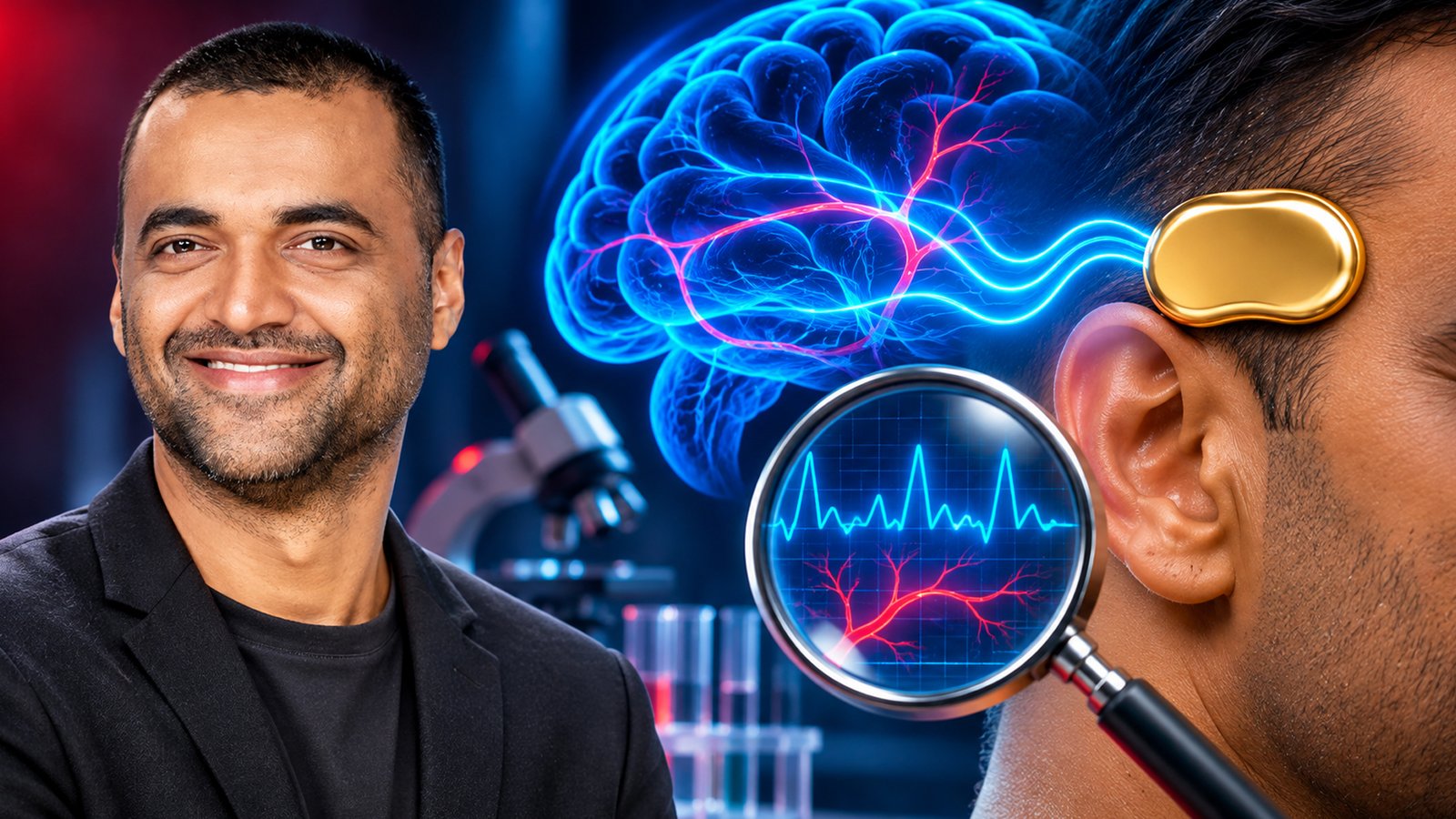
Deepinder Goyal, founder of Eternal and Zomato, has defended the pricing and technology behind his much-discussed wearable device Temple, stating that the product is designed for international markets rather than Indian consumers. Responding to criticism over its ₹85,000 price tag and questions about its scientific claims, Goyal said the company does not expect India to contribute more than 1% of its total sales.
In a series of posts on X on November 8, Goyal addressed the growing debate surrounding Temple, which has attracted attention from technology enthusiasts, consumers and medical professionals. While some have questioned whether the device offers enough value for its premium price, others have raised concerns about the scientific evidence supporting its brain-monitoring features.
“Temple is not made for India. It’s made for the world,” Goyal said, explaining the company’s global ambitions. He also made it clear that he did not want consumers to purchase the product simply because it was developed by an Indian startup. According to Goyal, the company wants to compete with international players in the wearable technology market and attract customers who believe in innovation and early-stage technology.
Temple’s price has emerged as one of the biggest points of discussion since pre-orders opened on November 1. At ₹85,000, the device is considerably more expensive than several popular fitness trackers and smartwatches available in the market. Responding to complaints about the cost, Goyal said substantial work had gone into developing the product and that the company had fixed its price based on what it believed the technology was worth. He acknowledged that some customers might find the device expensive but said they were free to wait for reviews and decide whether it justified the investment.
Goyal also rejected suggestions that Indian consumers should support Temple out of patriotism. He said the company was not looking for nationalist support and wanted customers to believe in its research and innovation instead. His comments underline the company’s intention to position Temple as a premium global technology product rather than a wearable designed specifically around Indian purchasing power.
Apart from its pricing, Temple has faced questions about the technology used to monitor brain-related signals, particularly a feature called Brain Flow. The device uses optical sensors positioned near the temple to track physiological signals associated with blood circulation. The company has presented the technology as a way to offer users insights into changes in brain blood flow.
However, medical professionals have questioned whether measurements taken from the temple region can accurately represent blood circulation across the brain. They have also called for stronger scientific evidence and independent validation before consumers rely on the readings.
Hepatologist Dr Cyriac Abby Philips, popularly known as The Liver Doc, has been among the prominent critics questioning the product’s scientific claims. Goyal responded by saying that consumers did not have to accept the company’s claims without sufficient evidence. He explained that scientific research progresses through different stages, including white papers, preprints and peer-reviewed publications. He added that Temple’s research would continue to be shared and that consumers could wait for peer-reviewed studies before deciding whether to buy the product.
Goyal also maintained that regulatory authorities, rather than social media discussions, would determine whether the company’s claims required specific approvals. Addressing concerns from doctors, Goyal clarified that Temple was designed as a fitness and artificial intelligence wearable and should not be considered a medical device. He said the company had not established that Temple could diagnose, prevent or treat any disease. It was also not intended to replace medical consultations or professional healthcare advice. This distinction is significant because much of the criticism has centred on whether the device’s brain-monitoring capabilities could offer meaningful information about neurological health.
Goyal said the product should be assessed within the fitness and wellness category. He also indicated that the company would seek regulatory approvals wherever necessary before making claims that required them. Goyal also attempted to shift attention towards another feature called Entropy, which he described as the central proposition of Temple. He said discussions surrounding the wearable had focused heavily on Brain Flow, even though the company’s larger ambition was to develop Entropy as a key metric.
The feature is intended to provide information about the body’s physiological strain and how hard it is working to maintain its internal balance. However, Goyal acknowledged that the company had not yet published detailed research explaining Entropy. He said further information would be shared as the research progresses. He also addressed questions about Roomdeaf AI, another proposed capability associated with Temple. Goyal said it was an expansion of the product’s vision rather than a change in its original direction. Amid the continuing debate, Goyal promised to publish a detailed explanation of how Temple calculates Brain Flow, its possible applications and its limitations on November 9.
The announcement is important because questions about the accuracy and usefulness of the device’s measurements remain central to the criticism. The Temple controversy highlights the challenges facing companies attempting to introduce new products at the intersection of artificial intelligence, wearable technology and health research.