Prime Minister Narendra Modi has said that preventing examination paper leaks is a “national responsibility”, stressing that protecting the integrity of competitive exams is essential for safeguarding the future of millions of students. His remarks come during continued political debate over the NEET paper leak controversy and demands for greater accountability in the examination system.
Speaking on the issue, the Prime Minister said the Centre is committed to ensuring that recruitment and entrance examinations remain fair, transparent and free from malpractice. He emphasised that every student deserves an equal opportunity to compete based on merit and that any attempt to compromise the examination process must be dealt with firmly.
Calling paper leaks a serious challenge, Modi said governments, educational institutions, examination agencies and society must work together to eliminate the problem. He described the issue as one that goes beyond politics, saying it directly affects the aspirations of young people and public trust in the education system.
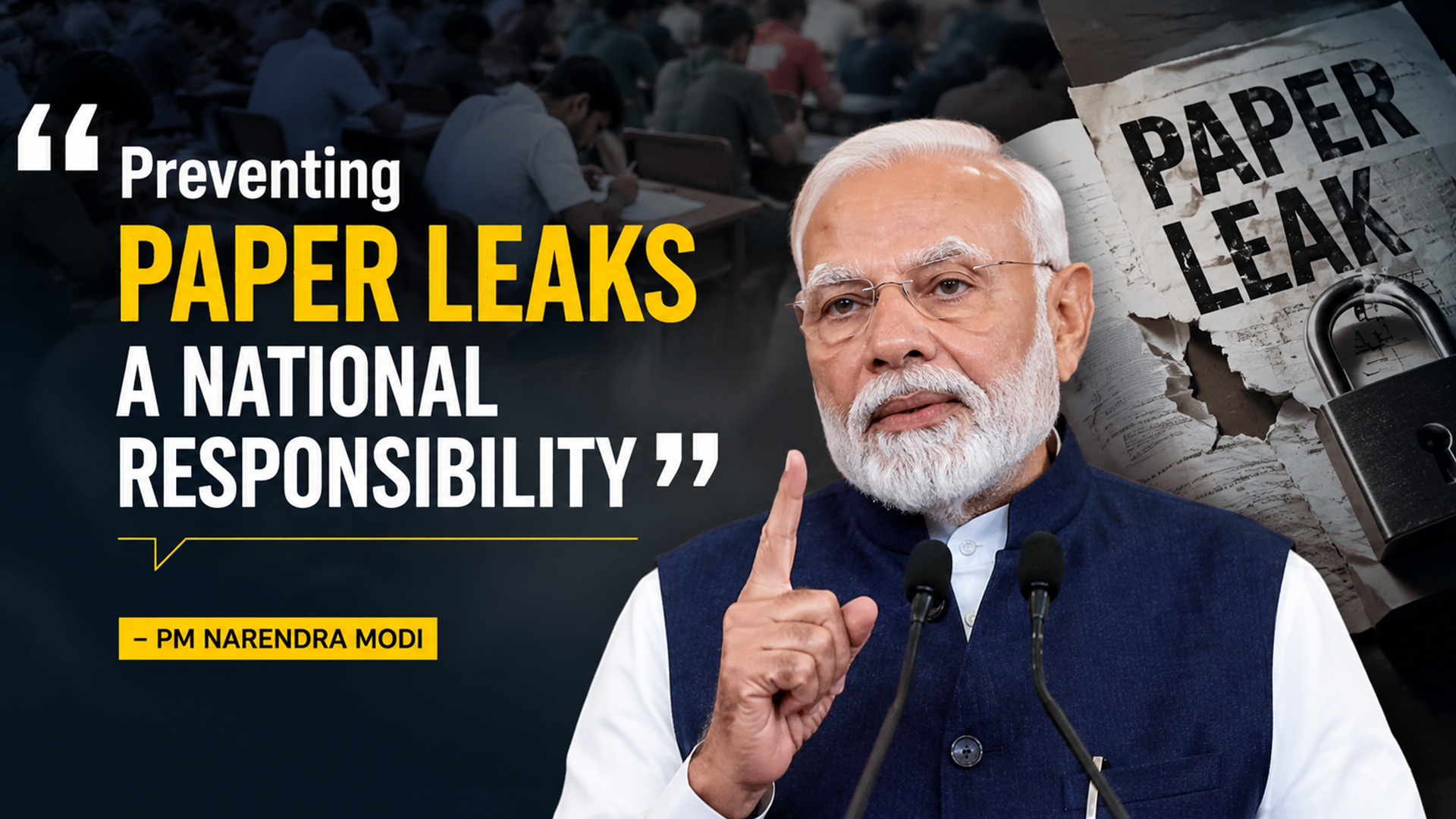
“Preventing paper leaks is a national responsibility,” the Prime Minister said, underlining that the credibility of examinations must be protected at all costs. He added that students spend years preparing for competitive exams, and any irregularity can have a lasting impact on their confidence and future.
The remarks come as concerns over examination security continue to dominate national discussions following allegations of irregularities in the National Eligibility-cum-Entrance Test (NEET) and other competitive examinations over the past two years.
The Prime Minister highlighted the steps taken by the Union government to strengthen the examination system. He referred to the Public Examinations (Prevention of Unfair Means) Act, which was enacted to curb paper leaks and organised cheating in public examinations. The law provides for strict punishment, including imprisonment and heavy fines, for individuals and organised groups involved in exam-related fraud.
Modi said the legislation sends a clear message that any attempt to manipulate public examinations will not be tolerated. He added that the government is also working to improve technological safeguards and strengthen monitoring systems to prevent such incidents in the future.
The Prime Minister noted that technology can play a significant role in making examinations more secure. From encrypted question paper transmission to stronger digital surveillance and enhanced coordination among agencies, he said modern systems should be fully utilised to reduce opportunities for malpractice.
He also stressed the importance of accountability within examination bodies, saying institutions responsible for conducting tests must maintain the highest standards of transparency and professionalism.
The issue has gained political attention after opposition parties repeatedly questioned the government’s handling of alleged irregularities in NEET and demanded stronger action against those responsible. Student groups have also called for reforms to restore confidence in the examination process.
Responding to these concerns, Modi said the focus should remain on protecting students rather than politicising the issue. He reiterated that the Centre’s priority is to ensure that hardworking candidates are not disadvantaged by the actions of a few individuals involved in malpractice.
Education experts have welcomed the emphasis on strengthening examination security but say effective implementation will be crucial. They believe technology, stronger coordination between state and central agencies, faster investigations and strict legal action are all necessary to prevent future paper leaks.
Experts also point out that examination reforms should include regular security audits, better training for officials handling confidential examination material and stronger cyber security measures to prevent digital breaches.
For millions of students across India, competitive examinations such as NEET represent years of preparation and aspirations for higher education and professional careers. Any disruption caused by paper leaks not only delays admissions but also affects students’ mental well-being and confidence in the system.
Parents and educationists have repeatedly urged authorities to ensure timely investigations and swift punishment for those involved in examination fraud. They believe restoring trust in the system is just as important as conducting examinations successfully.
As the debate over examination reforms continues, the Prime Minister’s remarks underline the government’s position that safeguarding the integrity of public examinations requires collective effort. By describing paper leak prevention as a national responsibility, Modi has sought to place the issue beyond political differences and focus attention on protecting the interests of students.
With competitive examinations playing a crucial role in shaping the futures of millions of young Indians, the government is expected to continue strengthening legal, technological and administrative measures to ensure that every candidate gets a fair and transparent opportunity to succeed.