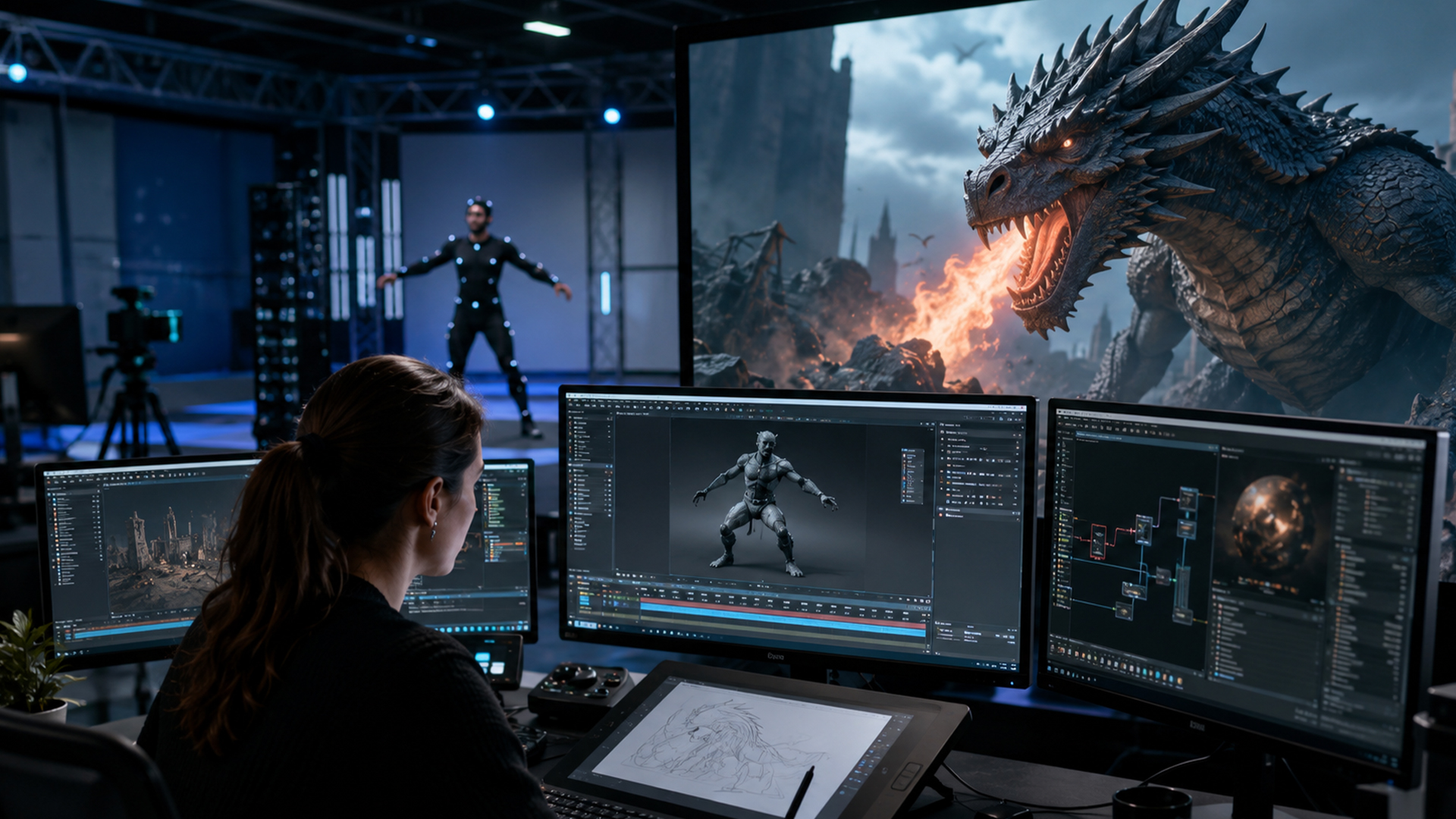
Autodesk has unveiled a new suite of AI-powered tools aimed at transforming the way animation studios, visual effects (VFX) artists and game developers create digital content. Announced at SIGGRAPH 2026, one of the world’s biggest computer graphics conferences, the updates are designed to reduce repetitive tasks, speed up production and help creative professionals focus more on storytelling than technical processes.
The latest innovations span Autodesk’s popular creative software, including Maya, Flow Studio, Flow Capture, Arnold and Wonder Studio. Together, the new features aim to streamline workflows across film, television, gaming and virtual production, reflecting the company’s growing focus on integrating artificial intelligence into professional content creation.
One of the biggest announcements is the introduction of Autodesk Assistant, an AI-powered helper that enables users to perform complex tasks using natural language prompts. Instead of searching through menus or writing scripts, artists can simply describe what they want, and the assistant generates suggestions, automates repetitive actions or guides them through workflows.
For animation professionals, Autodesk has introduced AI-assisted rigging and enhanced character animation tools in Maya. These updates automate several time-consuming processes involved in preparing digital characters for animation, reducing production time while maintaining creative control.
The company has also expanded its Flow Studio platform with smarter automation for motion capture and virtual production. AI can now clean up motion-capture data more efficiently, reducing the manual corrections that often consume hours during post-production. This allows animation teams to move from filming to final scenes much faster.
Another major update focuses on OpenUSD (Universal Scene Description), the open framework that allows artists using different software platforms to collaborate more effectively. Autodesk has strengthened support for OpenUSD across its tools, making it easier for studios to share complex 3D scenes without losing data or compatibility.
Rendering technology also received significant upgrades. Autodesk’s Arnold renderer now includes performance improvements that accelerate high-quality image generation while reducing hardware demands. This enables artists to preview scenes more quickly and shorten production timelines for feature films and television projects.
For visual effects teams, the company announced new simulation capabilities and better cloud integration. Studios can now process large projects using cloud-based computing resources, allowing artists in different locations to collaborate seamlessly without relying solely on local hardware.
Game developers also stand to benefit from the new tools. Improved asset management and AI-assisted content creation can help development teams build realistic environments and characters faster while reducing repetitive manual work. Autodesk says the updates are intended to support both large studios and independent creators working on increasingly complex projects.
The announcements reflect a broader shift in the entertainment industry, where AI is becoming an assistant rather than a replacement for creative professionals. Autodesk stressed that the new features are designed to enhance artists’ productivity while ensuring that creative decisions remain firmly in human hands.
Industry experts believe workflow automation is becoming essential as demand for high-quality visual content continues to rise across streaming platforms, gaming, advertising and immersive experiences. By reducing technical bottlenecks, artists can spend more time refining storytelling, character performances and visual quality.
Autodesk also highlighted its continued investment in interoperability, open standards and cloud collaboration. These technologies are becoming increasingly important as production teams often work across multiple countries and use a variety of software platforms during the same project.
With AI rapidly reshaping digital content creation, Autodesk’s latest announcements position the company at the forefront of animation and VFX technology. The new tools are expected to help studios shorten production schedules, lower costs and improve collaboration while preserving the creative freedom that remains central to filmmaking, game development and digital storytelling.
Also Read: PM Modi announces fast-track courts to tackle paper leaks