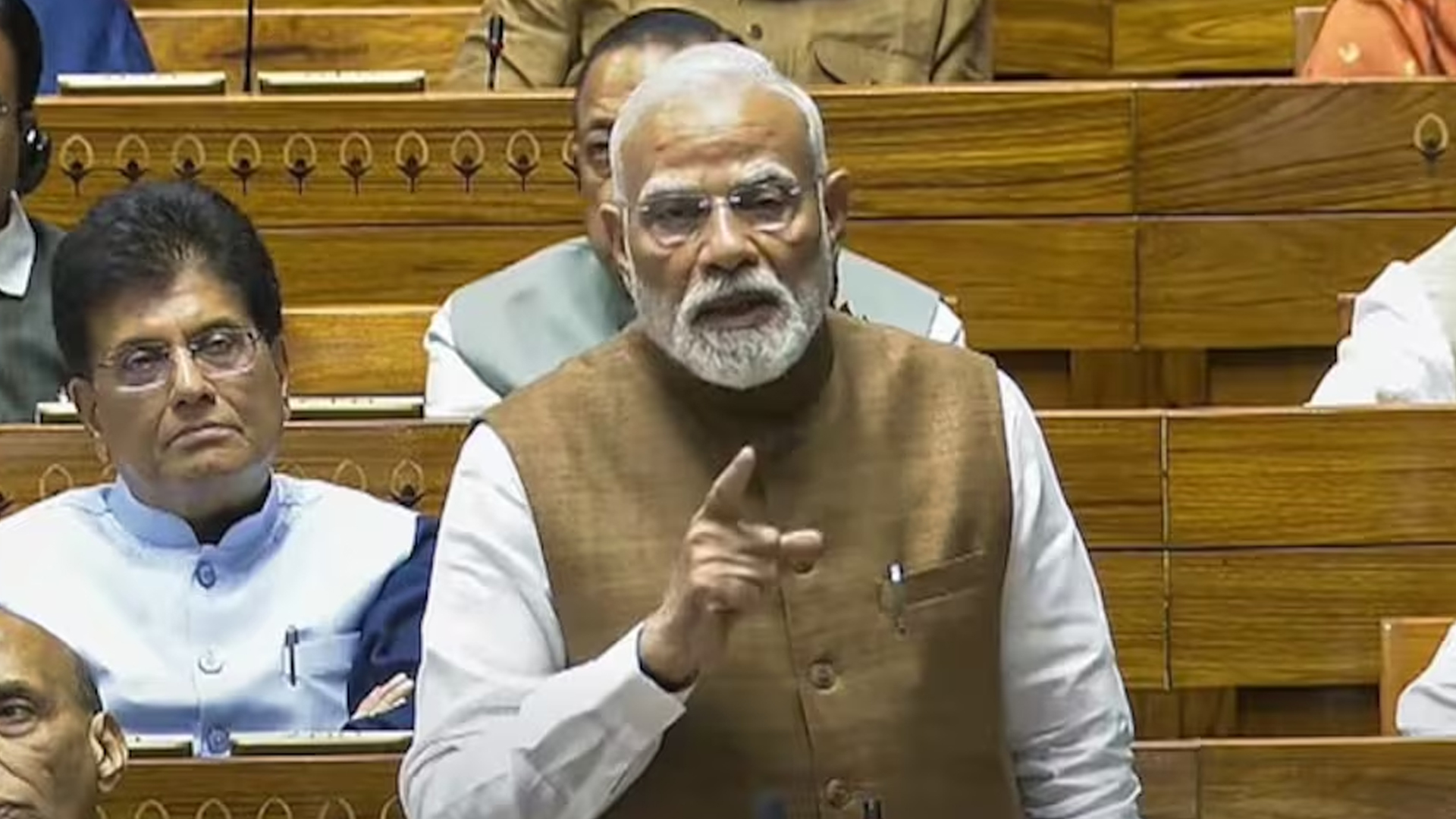
Prime Minister Narendra Modi has announced that the Centre will establish fast-track courts to ensure speedy trials in exam paper leak cases, describing the integrity of examinations as a matter of national importance. The announcement comes amid widespread student protests across the country demanding stricter action against those responsible for repeated examination irregularities.
Addressing the nation, Modi said the future of India’s youth is the government’s top priority and stressed that no compromise would be made on the fairness and transparency of competitive examinations.
“Nothing is more important than the future of our youth. Preventing paper leaks is a national responsibility,” the Prime Minister said, assuring students that the government is committed to delivering justice and restoring confidence in the country’s examination system.
The announcement comes as thousands of students continue protesting in New Delhi under the banner of the Cockroach Janta Party (CJP), demanding the resignation of Union Education Minister Dharmendra Pradhan over alleged paper leaks and examination irregularities. The protests at Jantar Mantar have witnessed repeated confrontations between demonstrators and police, bringing the issue to the centre of national political debate.
Modi said the proposed fast-track courts would ensure that those involved in paper leaks are prosecuted without unnecessary delays. According to the Prime Minister, lengthy legal proceedings often weaken public confidence, and quicker trials are necessary to act as a deterrent against organised examination fraud.
The government believes that faster disposal of such cases will not only punish offenders but also reassure millions of students preparing for competitive examinations that the system remains fair and transparent.
Paper leaks have emerged as one of the biggest concerns for students in recent years, affecting recruitment tests, entrance examinations and other competitive exams across several states. Repeated cancellations of examinations have forced lakhs of candidates to reappear for tests after spending months, and sometimes years, preparing for them.
For many aspirants, the issue extends beyond delayed examinations. Families often invest significant savings in coaching classes, travel and accommodation, hoping to secure government jobs or admission to professional courses. Every cancelled examination represents not only emotional distress but also a financial burden.
Recognising these concerns, the Prime Minister said protecting students from examination fraud is essential for building trust in public institutions. He added that honest candidates should never suffer because of the actions of a few individuals involved in criminal networks.
The Centre has already introduced measures to strengthen examination security through the Public Examinations (Prevention of Unfair Means) Act, which aims to curb organised cheating, impersonation and paper leaks through stricter penalties. Officials say the proposed fast-track courts will complement the new law by ensuring quicker prosecution and conviction of offenders.
Education experts have welcomed the proposal but stressed that speedy trials alone may not eliminate examination fraud. They argue that stronger digital security, encrypted question paper transmission, tighter monitoring of printing facilities and improved coordination between examination agencies and law enforcement are equally important.
The issue has also dominated the ongoing Monsoon Session of Parliament, where Opposition parties have repeatedly demanded accountability for recent paper leak incidents. Several MPs have sought comprehensive reforms in the examination process, arguing that repeated irregularities have eroded public confidence.
Meanwhile, student organisations have given a cautious response to the Prime Minister’s announcement. While many welcomed the decision to establish fast-track courts, several protest groups said they would continue their agitation until broader reforms are introduced and those responsible for recent examination controversies are held accountable.
Students participating in the protests say they are seeking more than punishment for offenders. They want a transparent, technology-driven examination system that prevents leaks before they occur and ensures that merit alone determines success.
Parents have also expressed support for stricter action, saying repeated examination cancellations create immense stress for young aspirants. Many families have spent years supporting their children through coaching, relocation and repeated attempts at competitive examinations, only to face uncertainty because of alleged malpractice.
Political analysts believe the government’s latest announcement is aimed at reassuring students that their concerns are being addressed while signalling zero tolerance towards examination fraud. The proposal is also expected to become a key part of broader education reforms focused on improving transparency and accountability.
As protests continue and demands for systemic reform grow louder, the government’s promise of fast-track courts for paper leak cases marks one of its strongest responses yet to the issue. Whether the move succeeds in restoring public confidence will depend not only on swift legal action but also on the effective implementation of long-term reforms that safeguard the future of millions of students across the country.
Also Read: CJP protest sparks fresh clashes in Delhi