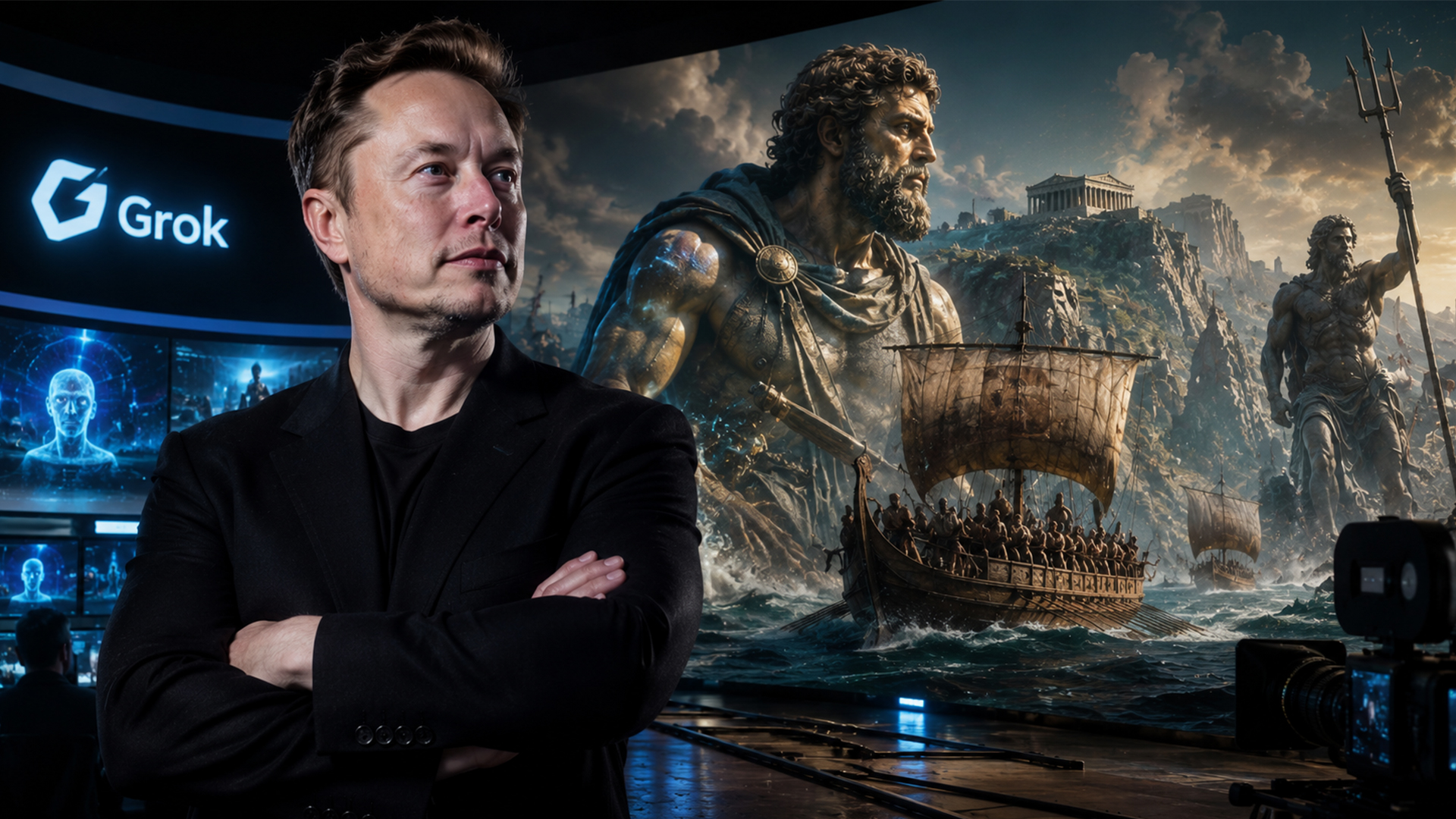
Elon Musk has stirred fresh debate in the entertainment industry after backing a proposed AI-generated remake of The Odyssey with a reported $100 million investment. The project, led by filmmaker Mel Gibson, aims to recreate the classic epic using advanced artificial intelligence tools, reigniting discussions about AI’s growing role in filmmaking.
The controversy began after Musk’s AI chatbot, Grok, criticised director Christopher Nolan’s upcoming adaptation of The Odyssey, calling it an example of “Hollywood elitism” and suggesting that an AI-driven version could better reflect the original epic. Musk later endorsed the idea on social media, saying audiences deserved new approaches to storytelling and creative freedom.
According to reports, Musk has expressed support for Gibson’s AI-powered vision, which would use generative AI to assist with visual effects, digital environments and large-scale production. While details of the project remain limited, reports suggest the proposed investment could reach $100 million, making it one of the most ambitious AI-backed film projects to date.
The announcement has triggered mixed reactions across Hollywood. Supporters argue that artificial intelligence could reduce production costs, improve visual storytelling and allow filmmakers to create large-scale historical epics more efficiently. They believe AI should be viewed as a creative tool rather than a replacement for human talent.
Critics, however, fear that increasing reliance on AI could threaten jobs across the film industry, including writers, artists, visual effects teams and performers. Many also argue that classic literary works deserve the emotional depth and creative interpretation that only human filmmakers can provide.
The debate comes at a time when the global entertainment industry is still grappling with the impact of generative AI on filmmaking, copyright and creative ownership. Questions surrounding the ethical use of AI in cinema have become increasingly prominent since Hollywood’s recent labour disputes over artificial intelligence.
Neither Musk nor Gibson has announced a production schedule, and the project has not yet entered active development. Meanwhile, Christopher Nolan’s adaptation of The Odyssey continues to move forward independently.
The discussion surrounding the proposed AI remake highlights how rapidly artificial intelligence, filmmaking and creative technology are converging. Whether the project ultimately reaches theatres or not, it has already reignited an industry-wide conversation about the future of storytelling in the age of AI.