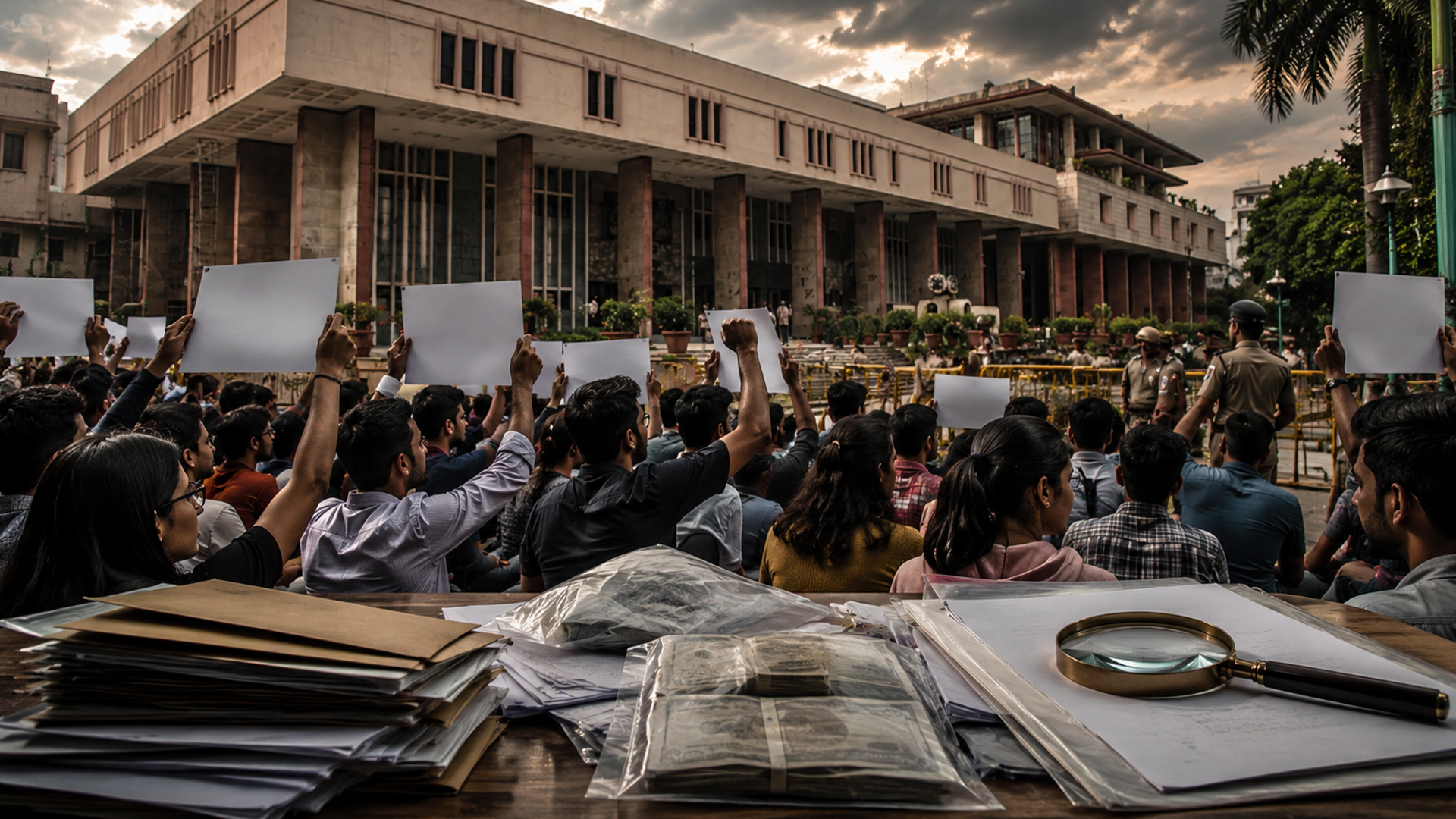
The Delhi High Court is set to hear a Public Interest Litigation (PIL) seeking a court-monitored investigation by the National Investigation Agency (NIA) into the ‘Chalo Sansad’ protest organised by the Citizens for Justice and Peace (CJP) on July 20. The petition alleges that the protest, held over the NEET paper leak controversy, may have received foreign funding and calls for a detailed investigation into its financial sources.
The plea, filed by advocate Ravi Kumar Singh, argues that the protest was not merely a public demonstration but may have involved financial support from foreign entities. It urges the court to direct the NIA to investigate whether any overseas organisations or individuals provided funds to organise the event, and if such funding violated Indian laws, including the Foreign Contribution (Regulation) Act (FCRA).
According to the petitioner, allegations of foreign funding raise concerns that go beyond financial irregularities and touch upon issues of national security and public order. The PIL claims that if any external influence was involved in mobilising the protest, it should be examined by a specialised central agency with the necessary investigative powers.
The petition also seeks directions to the Union government and other concerned authorities to examine the financial transactions linked to the protest, identify the individuals and organisations involved, and determine whether any legal provisions governing foreign contributions were breached.
The ‘Chalo Sansad’ protest was organised to demand accountability over the alleged NEET paper leak and to press for reforms in India’s examination system. Students, activists and members of civil society gathered in Delhi to call for greater transparency in the conduct of competitive entrance examinations and stricter action against those responsible for examination irregularities.
The protest came amid widespread concern among students and parents over repeated allegations of paper leaks and examination malpractice. Many participants argued that such incidents undermine the credibility of one of India’s most important entrance examinations and affect the future of lakhs of aspiring medical students.
However, the PIL contends that while peaceful protests are protected under the Constitution, any possibility of unlawful foreign funding must be thoroughly investigated. The petitioner has argued that public demonstrations involving financial support from foreign sources require closer scrutiny under existing legal provisions.
It is important to note that the allegations contained in the petition have not been proven, and no government agency has so far confirmed any evidence of foreign funding or wrongdoing by the organisers. The filing of the PIL represents the petitioner’s claims before the court, and the matter is yet to be examined judicially.
Legal experts say the Delhi High Court will first consider whether the petition presents sufficient material to justify an investigation by the NIA. Before issuing any direction, the court may seek responses from the Union government, investigating agencies and other parties named in the petition.
The NIA generally investigates cases related to terrorism, national security and offences affecting the sovereignty and integrity of India. Courts usually order an NIA probe only after carefully assessing whether the allegations fall within the agency’s jurisdiction and whether there is adequate material to warrant such an investigation.
The case has also drawn attention because it comes at a time when the NEET paper leak issue continues to dominate public debate. The controversy has triggered protests in several parts of the country, with students demanding stronger safeguards to ensure fair and transparent examinations.
The petition has added another legal dimension to the ongoing debate by raising questions about the funding of public protests. While the organisers maintain that the demonstration was a legitimate expression of public concern, the petitioner has asked the court to determine whether any external financial influence played a role.
For now, the matter remains before the Delhi High Court, and all allegations are subject to judicial scrutiny. The court’s decision on whether to order an NIA investigation could have wider implications for future cases involving claims of foreign funding and public demonstrations.
Until then, the claims made in the PIL remain allegations, and no findings have been recorded against the organisers. The upcoming hearing is expected to determine the next course of action, including whether the court finds sufficient grounds to direct a detailed investigation into the protest and its funding.