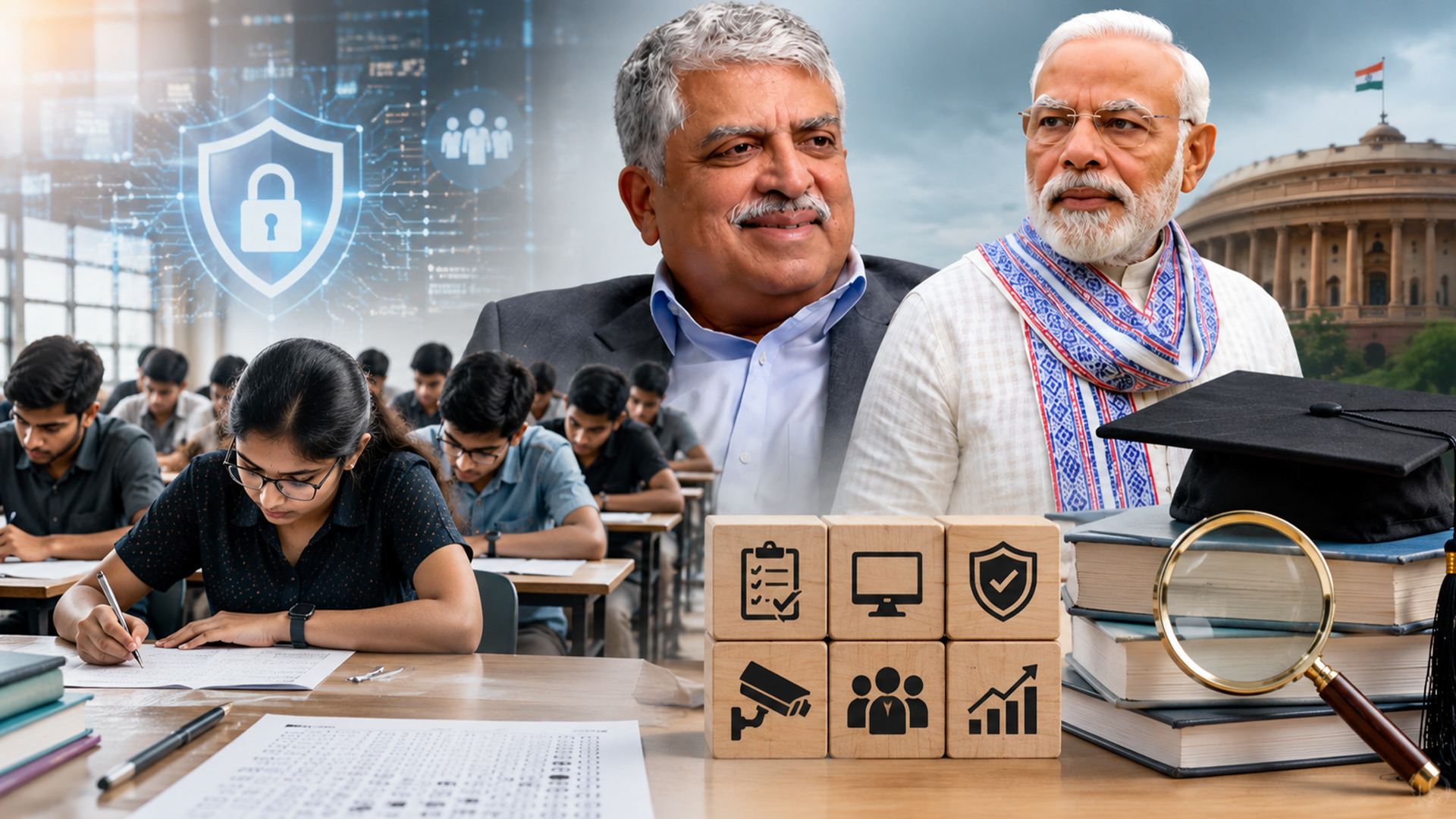
Prime Minister Narendra Modi has announced a high-powered task force headed by Infosys co-founder Nandan Nilekani to recommend sweeping reforms to India’s examination system. The panel will focus on making public examinations more transparent, secure and technology-driven, following a series of paper leak controversies that have affected millions of students.
In a video message after returning from his foreign visit, Modi said protecting students’ future remains a top priority for the government. He stressed that while strict action is being taken against those responsible for exam fraud, systemic reforms are essential to restore confidence in the country’s testing process.
“The future of our students is our responsibility,” the Prime Minister said, adding that those who tampered with examinations are being brought to justice. He noted that fast-track courts have been set up to ensure speedy trials in such cases and that stronger legal measures are being introduced to curb unfair practices.
The newly formed panel will be led by Nandan Nilekani, who played a key role in building India’s Aadhaar digital identity platform. The government believes his expertise in technology and digital governance will help create a more secure and efficient examination framework.
The task force comprises experts from technology, education, administration and security. Among its members are former ISRO Chairman S. Somanath, former Intelligence Bureau Director Tapan Deka, IIT Madras Director V. Kamakoti, former Education Secretary Anita Karwal and senior bureaucrat Amrit Lal Meena.
The committee has been asked to identify weaknesses in the existing examination system and recommend measures to prevent paper leaks, strengthen cybersecurity, improve candidate verification and enhance the use of digital technology throughout the examination process. It will also suggest structural changes to improve the functioning of the National Testing Agency (NTA), which conducts major entrance examinations.
The announcement comes amid continuing efforts to rebuild trust after the NEET-UG paper leak controversy triggered nationwide protests from students and parents. The incident raised serious concerns over the credibility of competitive examinations and prompted the Centre to initiate multiple reforms.
The government has already begun implementing recommendations made by the K. Radhakrishnan Committee to strengthen the NTA. The Nilekani-led panel is expected to build on those efforts by developing a long-term roadmap for a modern, technology-driven examination system.
Education experts believe the inclusion of technology leaders and academic experts signals a shift towards digital solutions, including AI-based monitoring, secure question paper management and stronger cybersecurity safeguards.
The Centre says the task force’s recommendations will help create a fairer and more transparent examination process for millions of students appearing for national-level entrance tests such as NEET, JEE and other competitive examinations. The reforms are expected to strengthen public trust and ensure that merit remains the foundation of India’s examination system.
Also Read: Dharmendra Pradhan resigns after exam protest wave