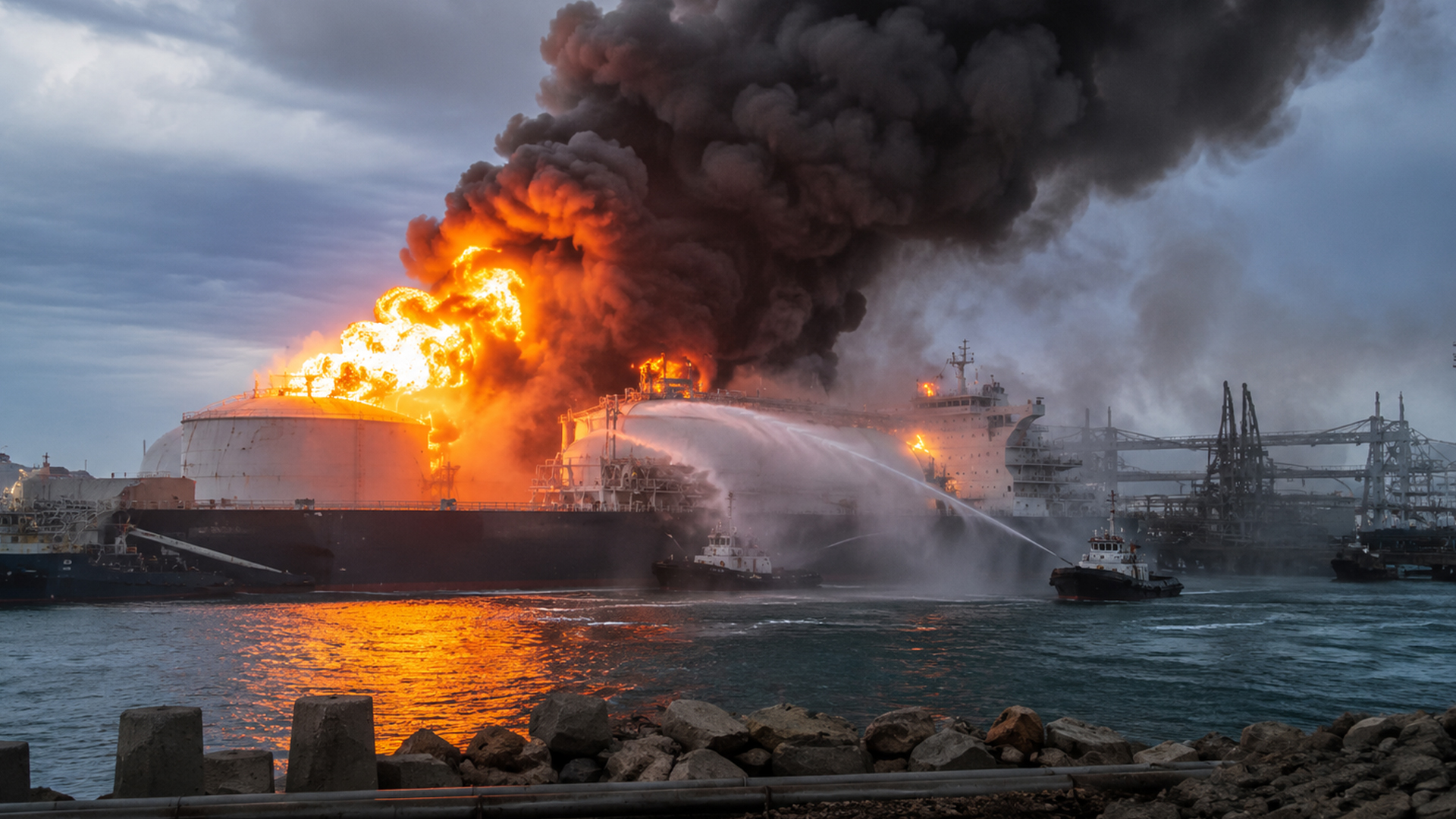
A drone attack on two gas vessels at Egypt’s Damietta Port has raised fresh concerns about the security of energy infrastructure and commercial shipping in the eastern Mediterranean, as the wider Middle East conflict continues to intensify.
The incident took place on Wednesday, July 29, at Damietta Port on Egypt’s Mediterranean coast. A fire broke out on two vessels involved in gas processing and storage operations. Egyptian authorities initially reported the fire but did not immediately confirm what had caused it.
On Thursday, however, the Egyptian Cabinet said preliminary investigations had established that a drone was responsible for the incident. No group has claimed responsibility for the attack so far. Authorities said investigations were continuing and that measures were being taken to protect Egypt’s national security.
The attack involved the US-owned floating gas storage vessel Energos Winter, according to Reuters and maritime security sources. The vessel was reportedly struck on its starboard side, triggering a fire that later spread to another gas vessel, Gaslog Salem. Both vessels were connected to gas storage and processing operations at the port.
Emergency teams moved quickly to contain the blaze. Egypt’s petroleum authorities said the situation was handled under established emergency and rapid-response procedures. No deaths or injuries were reported in the incident. The fires were brought under control, allowing authorities to begin assessing the damage and investigating how the drone reached the port.
British maritime security company Ambrey had earlier reported that an explosion struck a US-owned and operated floating liquefied natural gas storage facility at Damietta. The incident was significant because it occurred at a major Egyptian port that handles important energy infrastructure.
Damietta is an important part of Egypt’s energy network. The port hosts facilities connected to liquefied natural gas, or LNG, and serves as a key point for the country’s gas-related activities in the Mediterranean. Any attack on such infrastructure can therefore have implications beyond the immediate fire, particularly at a time when energy markets are already sensitive to developments across the Middle East.
The incident has also drawn attention because of its location. Damietta lies on Egypt’s Mediterranean coast, relatively close to the northern approach to the Suez Canal. The canal is one of the world’s most important shipping routes, linking the Mediterranean Sea with the Red Sea and providing a vital connection between Europe and Asia.
The drone strike therefore adds another layer of uncertainty for regional shipping. Commercial vessels have already faced increased security risks in parts of the Red Sea and Gulf region because of the broader Middle East conflict. A strike on energy infrastructure on Egypt’s Mediterranean coast could raise concerns about whether the geographical reach of the conflict is expanding.
Reuters reported that the incident comes amid a sharp escalation in regional tensions involving the United States and Iran. Recent attacks and retaliatory military operations have increased concerns over the safety of commercial shipping and energy facilities across the region.
However, Egyptian authorities have not publicly identified who carried out the drone attack. That distinction remains important. While the incident has occurred against the backdrop of the wider regional conflict, there has been no official attribution to Iran, an Iranian-backed group, or any other organisation.
The lack of a responsibility claim means that several questions remain unanswered. Investigators will need to establish where the drone originated, what type of weapon was used, how it reached the heavily monitored port and whether the attack was specifically aimed at the gas infrastructure or a particular vessel.
The Egyptian government has stressed that the authorities are taking the necessary steps to protect the country’s interests and national security. The absence of casualties has also helped prevent the incident from becoming an even more serious humanitarian crisis.
Still, the attack highlights a growing challenge for countries across the Middle East: protecting critical infrastructure from relatively low-cost but potentially disruptive drone attacks.
Energy facilities, ports, oil terminals and commercial ships are particularly sensitive targets because even limited physical damage can create wider economic consequences. A fire at a gas facility can disrupt operations, increase insurance and security costs and make shipping companies more cautious about entering affected areas.
For Egypt, the incident is particularly sensitive because the country has sought to maintain stability while navigating a turbulent regional environment. The Suez Canal remains central to global trade, while Egypt’s Mediterranean ports and energy infrastructure are important to its domestic economy.
The Damietta incident has consequently become more than a port fire. It is a reminder that as the regional conflict widens, even critical facilities away from the traditional front lines can face new and unpredictable security risks.