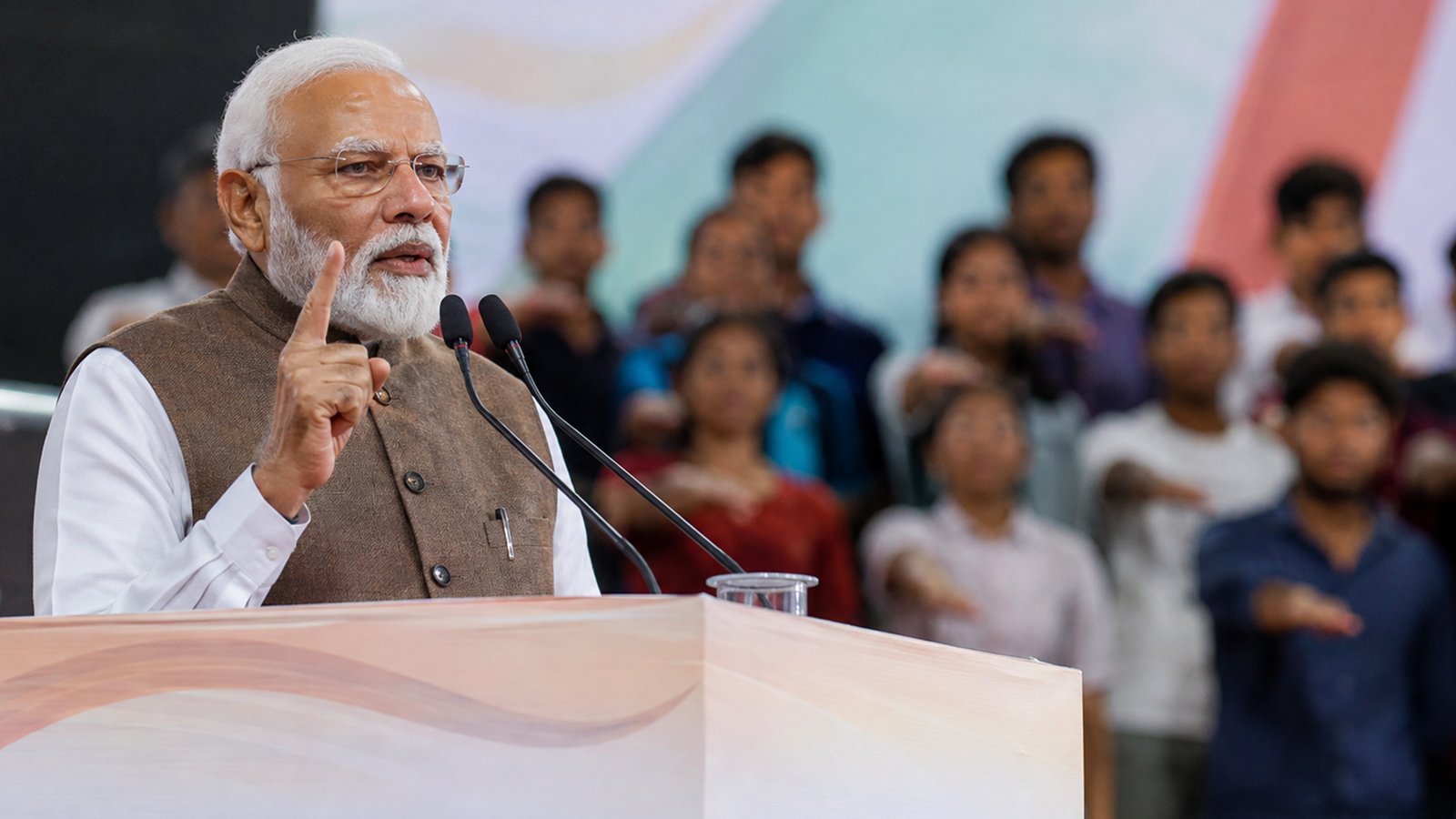
Prime Minister Narendra Modi on Sunday launched the Nasha Mukt Yuva for Viksit Bharat Sankalp Abhiyan, calling for a nationwide movement to protect young people from drug addiction and substance abuse. The campaign, which will run for 100 weeks, aims to turn the fight against drugs into a sustained public movement involving youth, families, educational institutions and communities.
More than one crore young people joined the nationwide launch through a video conference connecting over 28,000 locations. PM Modi said a developed India cannot be built without a healthy, confident and mentally strong younger generation. He urged young Indians to stay away from drugs and other destructive habits and encouraged citizens to make the campaign a collective responsibility.
The Prime Minister said the issue of youth drug abuse goes far beyond individual health. Addiction, he noted, can damage careers, strain families and weaken society. At a time when young Indians are making their mark in startups, artificial intelligence, sports and space research, he said substance abuse can divert that energy and prevent many from realising their potential.
The campaign has its roots in a pilot initiative launched in Kashi last year. According to the Prime Minister, the initiative has now expanded into a national programme with the support of more than 125 spiritual organisations and several non-governmental organisations under the Kashi Declaration.
A key feature of the Nasha Mukt Yuva campaign will be its long-term focus. Instead of limiting the anti-drug effort to occasional awareness programmes, the government plans activities every Sunday for the next 100 weeks. These will include sports, cultural programmes, meditation, art and awareness activities designed to bring more young people into the movement.
Modi described the coming 100 Sundays as 100 steps towards a drug-free India. He also praised young people who have taken an anti-drug pledge and asked them to carry the message into their schools, colleges and local communities.
The Prime Minister placed particular emphasis on the role of families in preventing drug addiction. He urged parents not to hide cases of substance abuse because of fear of social embarrassment or loss of family prestige. Instead, families should recognise addiction as a problem that requires timely support and medical intervention.
He also called for greater openness between parents and children. According to him, honest conversations within families can help identify warning signs before a young person becomes deeply trapped in addiction. The focus, he said, should be on extending a hand rather than pushing an affected young person away.
This emphasis on support also extended to people already struggling with addiction. He said falling into the trap of drugs should not mean that a young person’s future is over. He pointed to rehabilitation centres, medical assistance, social support, yoga and meditation as possible tools in the recovery process.
The message marks a shift from viewing addiction only through the lens of punishment or social stigma to recognising the importance of recovery and rehabilitation. He urged society to respect those who overcome addiction, describing their fight to rebuild their lives as a sign of courage rather than weakness.
Educational institutions, too, have been asked to play a bigger role. PM Modi appealed to professors and universities to discuss the dangers of drug abuse alongside regular academic coursework and to organise anti-drug initiatives on campuses. With young people spending a significant part of their formative years in schools and colleges, awareness and early intervention could become important elements of the campaign.
The government’s approach also combines prevention with enforcement. He said the government would continue its crackdown on drug traffickers and smugglers, referring to large-scale seizures and enforcement action against those involved in the illegal drug trade.
The campaign comes as India continues to confront concerns surrounding substance abuse among young people. While enforcement remains necessary to disrupt drug networks, the Prime Minister’s message highlighted that tackling addiction also requires stronger families, informed communities, accessible treatment and greater social acceptance of rehabilitation.
With a 100-week roadmap now in place, the government is seeking to make the fight against drug abuse in India a continuing public conversation rather than a one-day campaign. For the country’s youth, the message is straightforward: protecting their health and future is also central to building a stronger and more developed India.
The success of the Nasha Mukt Yuva for Viksit Bharat Sankalp Abhiyan, however, will ultimately depend on what happens beyond the launch event. Sustained participation by schools, colleges, families, healthcare professionals, community organisations and young people will be crucial if the campaign is to translate awareness into lasting behavioural change.