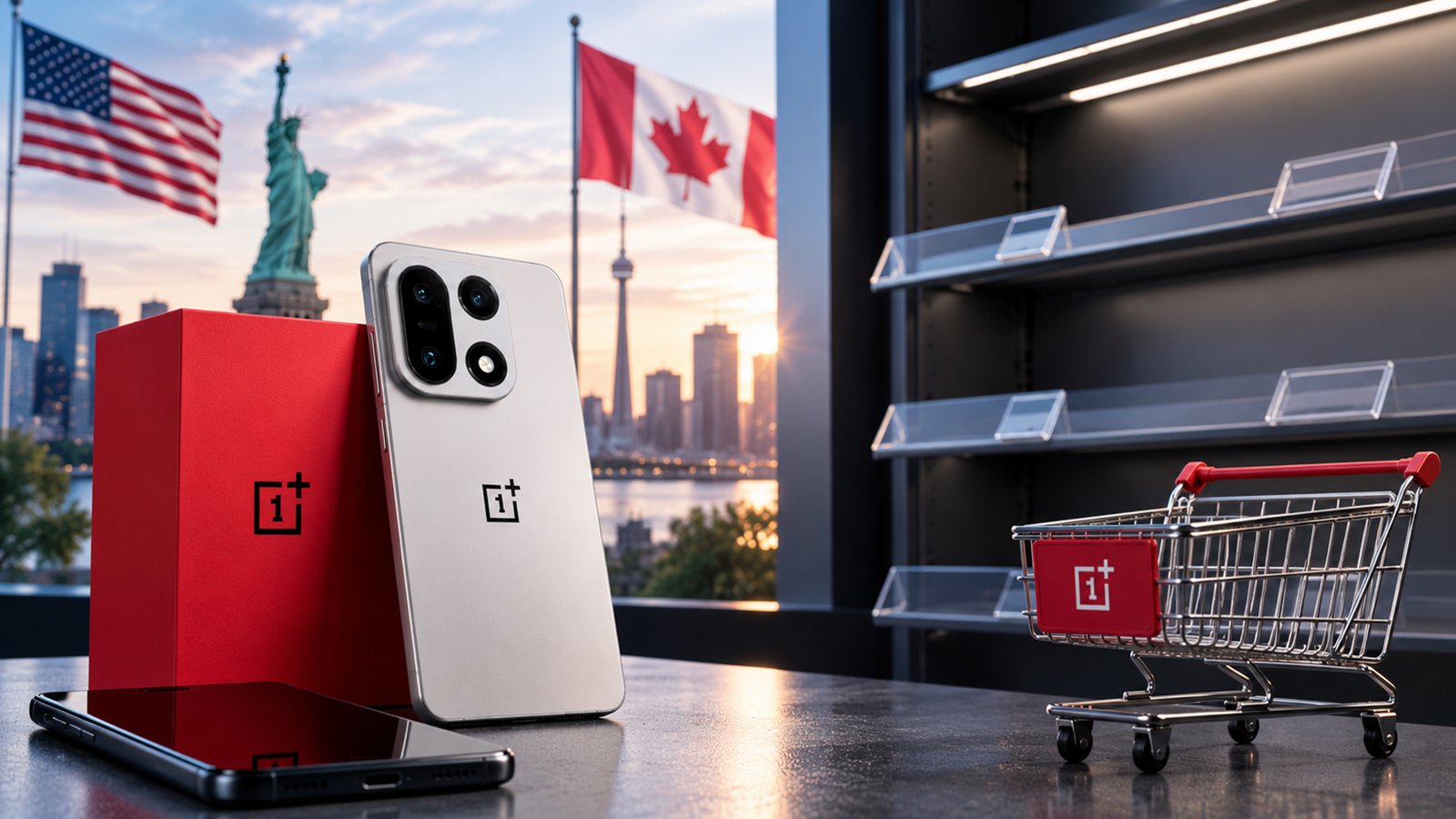
The writing is now on the wall for OnePlus in the Western smartphone market. After announcing its decision to stop launching new products in Europe and North America, the company has now run out of phones on several of its official online stores.
The latest development affects OnePlus’ official websites in the US, Canada and Mexico. The OnePlus 15, OnePlus 15R and several other products have disappeared from the available inventory, leaving customers with little or no opportunity to purchase a new OnePlus phone directly from the company.
The stock-out follows OnePlus’ July announcement that it would end new product rollouts in Europe and North America. While the company has stopped short of describing the move as the end of the OnePlus brand, the withdrawal marks a major change for a smartphone maker that once built its identity around challenging premium brands.
OnePlus did not disappear from Western markets overnight. Signs of a retreat had been building for months, with availability falling in several European markets and some OnePlus stores showing fewer models.
The company eventually confirmed the strategy in July, saying it had decided to conclude new product rollouts in Europe and North America following a broader evaluation of its global strategy.
Now, the remaining inventory is disappearing.
The OnePlus 15, which was among the company’s major flagship smartphones in these markets, has reportedly sold out from the US online store. The same pattern has affected the OnePlus 15R, OnePlus Pad Go 2, OnePlus Watch 4 and other products.
That makes the latest development different from an ordinary temporary stock shortage. With no new OnePlus product launches planned for these regions, existing inventory is effectively the end of the road for official OnePlus sales.
The biggest concern for existing users is likely to be software support and warranty service.
OnePlus has tried to address those concerns by promising continued software updates, security patches and after-sales support for existing devices. The company says warranty obligations will also continue under applicable terms.
However, OnePlus users will face another change in the months ahead.
The company has confirmed plans that will allow eligible devices to transition from OxygenOS to Oppo’s ColorOS. The software change is part of the wider restructuring involving the two brands.
For ordinary users, the distinction is important. A OnePlus phone already in someone’s hand will continue to work, receive support and remain usable. What is changing is the future of new OnePlus hardware in markets where the company has decided to withdraw.
OnePlus has always occupied an unusual position in the smartphone industry. It started by targeting consumers who wanted flagship-level performance without paying flagship prices.
Its early phones gained attention among technology enthusiasts because they combined powerful processors, fast charging, high-refresh-rate displays and relatively clean software with competitive pricing.
But the smartphone industry has changed significantly since then.
Premium buyers have strong choices from Apple and Samsung, while Chinese manufacturers have intensified competition in hardware, cameras, battery technology and charging speeds. At the same time, maintaining a separate global smartphone brand requires substantial investment in distribution, marketing, retail partnerships and after-sales networks.
OnePlus is also part of the broader Oppo ecosystem. The increasing overlap between OnePlus and Oppo has made a more consolidated approach to global markets possible.
For Indian smartphone users, the situation is different, at least for now.
OnePlus India has said that its business continues as usual, with local operations, products and support unaffected. The company has also pushed back against reports suggesting an immediate India shutdown.
This means Indian consumers should not assume that the disappearance of OnePlus phones from American and European stores will immediately be repeated in India.
The company’s continued presence in India is particularly significant because the country has been one of OnePlus’ important international markets. Its smartphones have developed a strong following among consumers looking for premium features without moving completely into ultra-premium pricing.
In Europe and North America, the remaining phones are rapidly disappearing and no new models are planned. Existing customers will continue to receive support, but the familiar OnePlus buying experience is coming to an end.
For a company that once made its name by challenging the smartphone establishment, the empty shelves are a powerful symbol of just how dramatically its global strategy has changed.