The standoff between the Jharkhand government and protesting students has intensified after the sixth round of talks failed to produce a settlement, despite the state agreeing to cancel three Jharkhand Public Service Commission (JPSC) examinations. Students have refused to call off their agitation, saying their central demand for an independent CBI investigation into alleged irregularities in recruitment examinations remains unanswered.
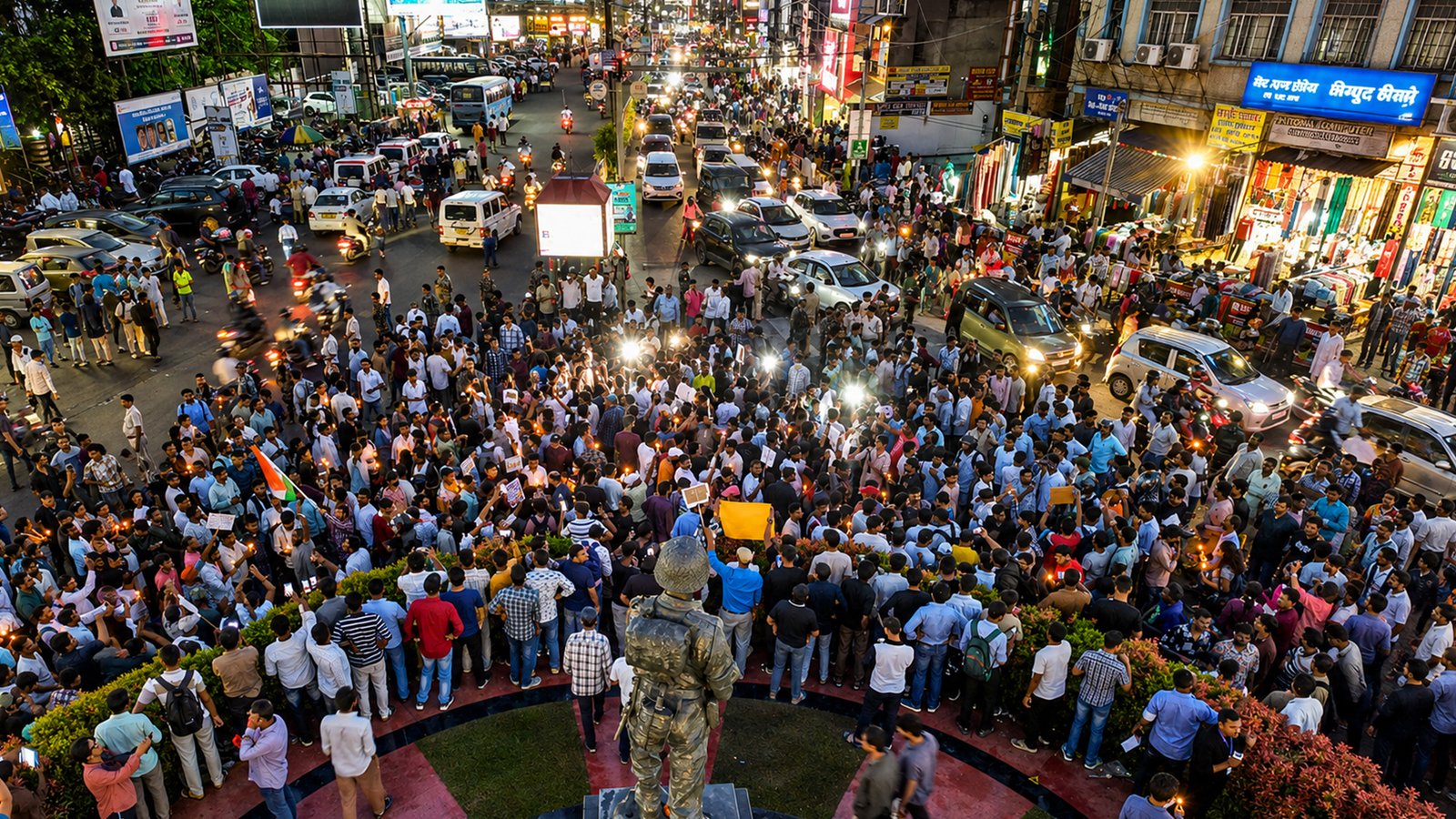
The student protest, which entered its 17th day on Monday, has become one of the biggest recruitment-related agitations in Jharkhand in recent years. The protesters have accused the authorities of failing to ensure transparency and fairness in competitive examinations conducted by the JPSC and Jharkhand Staff Selection Commission (JSSC).
The government has agreed to cancel three JPSC examinations — the 14th Combined Civil Services Preliminary Examination, the 2023 backlog examination and the 2025 backlog examination. However, the administration has not agreed to cancel the JSSC Combined Graduate Level (CGL) examination, a key demand of the protesters.
The CGL issue has emerged as the main sticking point between the two sides. The government has maintained that the examination was conducted under court supervision and that selected candidates have already joined government service. Students, however, argue that allegations surrounding the examination require an independent investigation before its results are allowed to stand.
The disagreement has continued despite repeated meetings between government representatives and student groups. Sunday’s sixth round of talks again ended without a breakthrough. The government claimed that it had accepted around 98 per cent of the students’ demands, but protest leaders rejected the assertion, saying that the unresolved issues were fundamental to their agitation.
At the centre of the students’ demands is a CBI probe into alleged paper leaks, examination irregularities and other recruitment-related complaints. The protesters have argued that a state-level inquiry would not be sufficient to restore confidence among candidates.
Chief Minister Hemant Soren has sought to reassure the protesters that the government is willing to investigate the allegations and take action against anyone found responsible. He has stressed that dialogue, rather than force, should be used to resolve the dispute and has promised justice and transparency in the recruitment process.
The government has also moved to strengthen the investigation into the allegations. The Enforcement Directorate has registered a case linked to alleged JPSC examination irregularities under the Prevention of Money Laundering Act, bringing a central agency into the wider controversy. The ED is expected to examine possible financial aspects connected with the allegations.
The crisis deepened further on Sunday when all three serving JPSC members resigned. Governor Santosh Kumar Gangwar accepted the resignations of Ajita Bhattacharya, Anima Hansda and Jamal Ahmed. The resignations came amid the continuing student agitation and scrutiny over alleged irregularities in the recruitment process.
For the protesting aspirants, however, these developments have not been enough to end the agitation. They want accountability that goes beyond cancelling examinations or changing members of the commission. Their demand is for a transparent investigation that establishes what went wrong, identifies those responsible and ensures that future recruitment examinations are conducted without similar controversies.
The prolonged protest has also highlighted the uncertainty faced by thousands of young people preparing for government jobs in Jharkhand. Recruitment examinations are often the culmination of months or years of preparation, and allegations of paper leaks or procedural irregularities can leave candidates unsure about whether their efforts will result in fair opportunities.
The agitation has now moved from negotiations to the streets. On Monday, large numbers of students marched towards the Jharkhand Assembly in Ranchi after the talks failed. Security was tightened around the Assembly complex, with barricades and additional police deployment put in place. Protesters subsequently breached some police barricades during the march.
The Assembly march has added a new dimension to the JPSC-JSSC protest. What began as a demand for action over recruitment examinations has developed into a broader confrontation over transparency, accountability and the credibility of the state’s competitive examination system.
The government now faces the challenge of preventing the situation from escalating while addressing the students’ concerns. The protesters, meanwhile, have made it clear that cancellation of three JPSC examinations will not be enough to end their campaign.
With the CBI probe remaining the principal point of disagreement, the possibility of further demonstrations remains high. The latest developments have therefore provided partial relief but failed to resolve the larger question at the heart of the Jharkhand student protest: whether the state’s recruitment system can regain the confidence of the aspirants who depend on it for their careers.