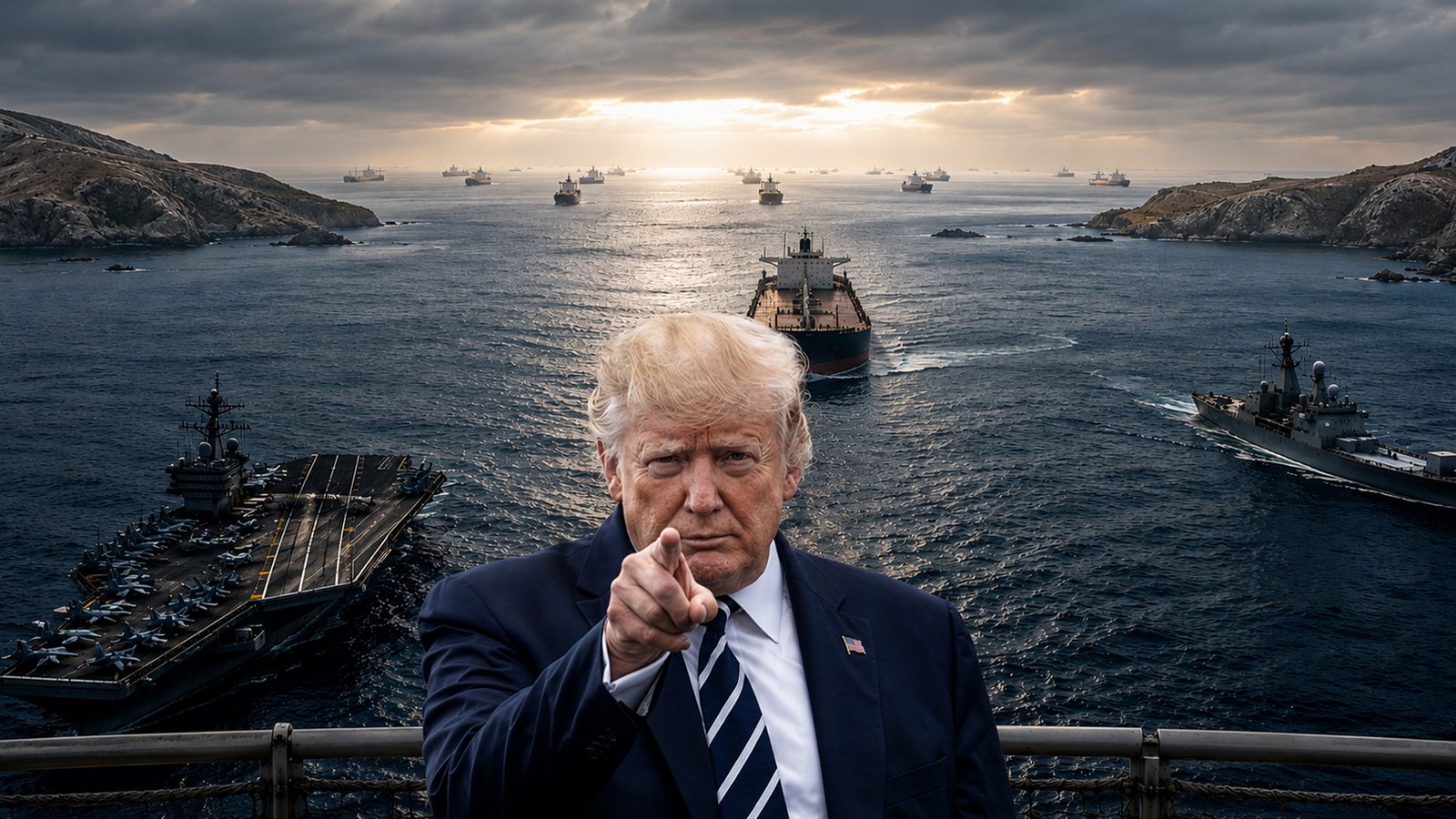
US President Donald Trump has threatened to declare the Strait of Hormuz a US territory after the war with Iran ends, adding a new dimension to an escalating confrontation over the strategically important waterway.
Trump made the remark on Friday while defending the US military campaign against Iran and warning that Washington would intensify economic pressure on Tehran. He also said Americans should be prepared to pay more for fuel, arguing that higher prices were part of the cost of preventing Iran from acquiring nuclear weapons.
The statement comes as shipping through the Strait of Hormuz has fallen sharply, with Iran and the United States making competing claims over control of access to the waterway.
Trump has repeatedly said the US has established effective control over the strait through its naval presence and blockade. Iran has rejected that claim, insisting that the waterway remains under its authority and that Tehran will decide when normal shipping can resume.
The Strait of Hormuz connects the Persian Gulf with the Gulf of Oman and is one of the world’s most important energy routes. Before the current conflict, roughly one-fifth of global oil and LNG shipments passed through the waterway.
The disruption has therefore quickly spilled into global energy markets.
Ship movements through the strait have fallen to a fraction of their normal level, with very few vessels making the crossing in recent days. The sharp decline has raised concerns among energy-importing countries over the availability and cost of crude oil and other fuels.
Oil prices also climbed as markets assessed the possibility of a prolonged disruption. Brent crude settled at $88.52 a barrel, while US West Texas Intermediate ended at $82.40 on Friday. Both benchmarks recorded strong weekly gains.
Iran rejects Trump’s claim
Iran has strongly pushed back against Trump’s remarks.
Iranian officials have said Tehran will not be intimidated by US military pressure and that Washington cannot simply claim sovereignty over an international waterway.
The dispute over Hormuz has become one of the biggest obstacles to efforts to revive negotiations between Washington and Tehran. Iran has indicated that reopening the waterway would require concessions from the US, including changes to sanctions and other measures imposed on Tehran.
Iranian Foreign Minister Abbas Araqchi has also said there is currently no decision to resume direct negotiations with Washington. Discussions involving regional intermediaries have continued, but they have not produced a broader agreement to end the confrontation.
Trump’s proposed declaration of US sovereignty over the strait would represent an extraordinary escalation. The waterway borders Iran and Oman and is governed by a complex international legal framework governing navigation.
It remains unclear whether Trump’s statement represents a concrete policy proposal or a political threat intended to increase pressure on Tehran.
Washington prepares tougher sanctions
The territorial claim came alongside warnings that the Trump administration is preparing additional economic sanctions against Iran.
US Treasury Secretary Scott Bessent has said Washington will announce further measures, signalling that the new restrictions could significantly increase pressure on Iran’s economy.
The US strategy combines military pressure around the Gulf with economic measures aimed at limiting Iran’s ability to generate revenue.
Trump has argued that the campaign is necessary to prevent Iran from developing nuclear weapons. Tehran has rejected Washington’s approach and continued to demand an end to the military campaign and sanctions.
The standoff has also created economic difficulties inside Iran, where officials have blamed US restrictions and disruption to oil exports for worsening inflation and shortages.
Fuel prices become political issue
The disruption around Hormuz is also creating pressure inside the United States.
Trump has acknowledged that Americans are paying more for petrol but has defended the increase as a consequence of the military campaign against Iran. He has asked Americans to accept higher fuel costs while the administration pursues its objectives in the region.
The issue could become increasingly sensitive for the administration if elevated oil prices persist.
The Strait of Hormuz is not simply a regional shipping route. Any prolonged disruption can affect crude prices, freight costs, insurance premiums and inflation across major economies.
For countries that rely heavily on imported energy, sustained high oil prices could increase transportation and manufacturing costs and put pressure on household fuel bills.
Global shipping remains under pressure
The latest escalation follows attacks on vessels in and around the Strait of Hormuz. Two vessels linked to the UAE’s state-owned Abu Dhabi National Oil Company were reportedly attacked while transiting the waterway, adding to concerns over the safety of commercial shipping.
Several Gulf countries have condemned attacks on commercial vessels and called for the waterway to be reopened.
The continuing uncertainty has left shipping companies facing difficult decisions over whether to use the strait, wait for safer conditions or seek alternative routes where possible.
For energy markets, the biggest concern is the duration of the disruption. The longer the crisis continues, the greater the possibility of sustained pressure on crude supplies and prices.
For India and other major Asian energy importers, the situation is particularly important because the Gulf is a major source of crude oil.
A new phase in US-Iran tensions
Trump’s threat to declare the Strait of Hormuz US territory has moved the dispute beyond the immediate question of shipping access and into the realm of sovereignty and international law.
Iran shows no indication that it is prepared to accept Washington’s claim of control, while the Trump administration continues to insist that it can determine which vessels pass through the waterway.
With US-Iran peace efforts stalled, shipping severely disrupted, sanctions set to tighten and oil prices rising, the Strait of Hormuz has become a major focus of global geopolitical developments.
Whether Trump’s territorial threat develops into an actual policy remains uncertain. But the statement has demonstrated how far the confrontation has escalated, turning control of one of the world’s most important energy corridors into a direct contest between Washington and Tehran.