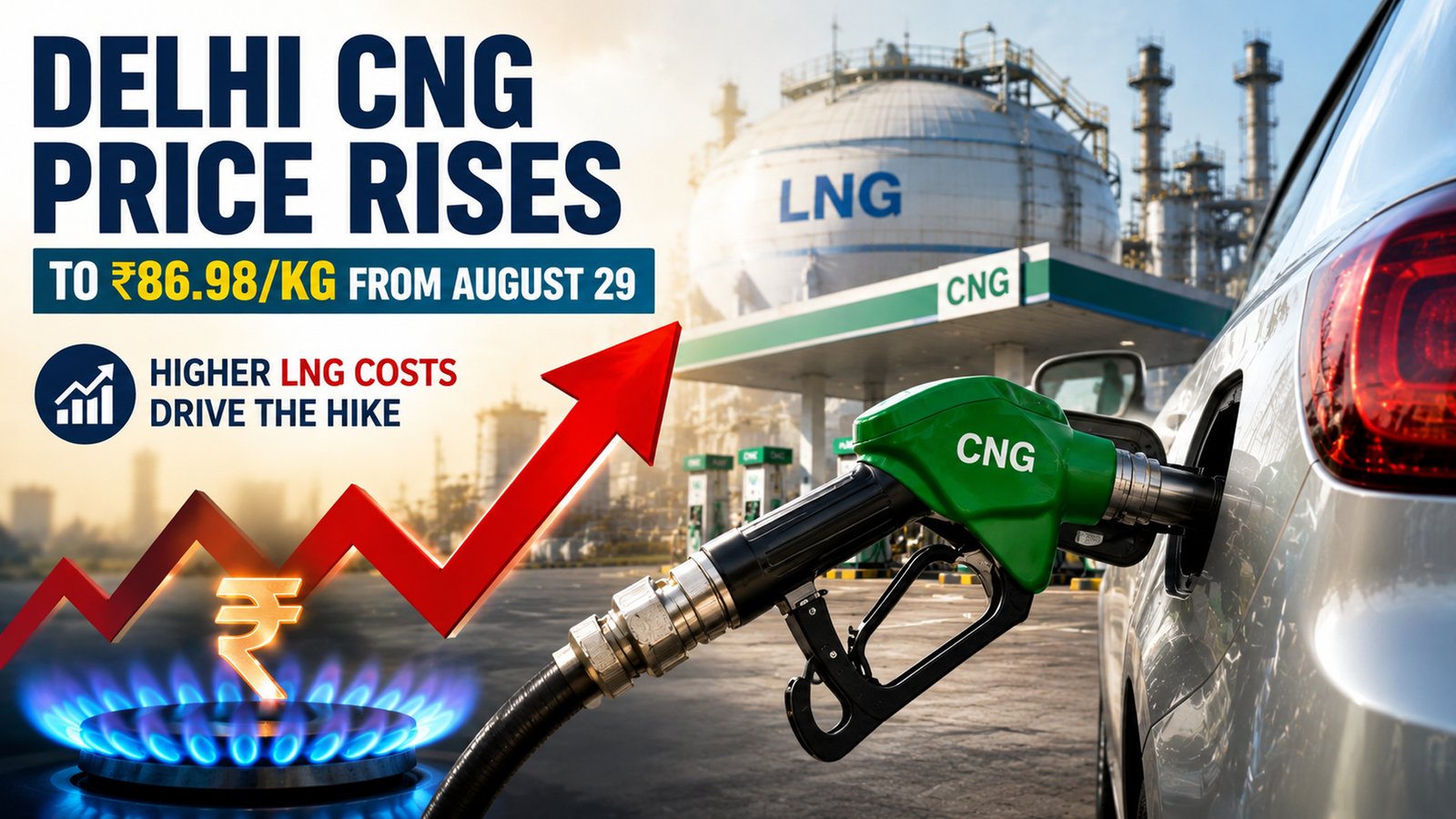
CNG users in Delhi-NCR are paying more from Saturday as Indraprastha Gas Limited (IGL) raised the price of compressed natural gas by Rs 3.89 per kg, citing a steep rise in international liquefied natural gas (LNG) prices.
The revised rates came into effect from 6 am on August 29. In Delhi, CNG now costs Rs 86.98 per kg, up from the earlier Rs 83.09. The increase is expected to raise fuel expenses for private motorists as well as auto-rickshaws, taxis, buses and other commercial vehicles that depend on CNG.
The latest revision covers all geographical areas supplied by IGL. In Noida and Ghaziabad, the new CNG price is Rs 95.59 per kg. Gurugram consumers will pay Rs 92.01 per kg, while the rate in Meerut, Muzaffarnagar and Shamli has been fixed at Rs 95.47 per kg.
IGL attributed the increase primarily to higher input costs caused by expensive imported LNG. The company said a substantial share of the gas required to meet rising CNG demand is sourced from the international spot LNG market. As global prices have climbed, the cost of procuring gas has increased for city gas distributors.
The situation has been aggravated by continuing instability in West Asia. Disruptions and uncertainty surrounding LNG cargo movements through the Strait of Hormuz have added pressure to international energy markets. The waterway is an important route for global energy shipments, making any disruption a concern for countries dependent on imported fuel.
IGL also pointed to stronger European demand for natural gas as another factor behind the increase. European countries have been building gas inventories ahead of the winter season, adding to competition for available LNG supplies and contributing to higher international prices.
The rise in global benchmarks has been much sharper than the increase in Delhi’s retail CNG price in recent months. According to IGL, Delhi CNG prices moved from Rs 77.09 per kg in late February to Rs 83.09 per kg by August 27, an increase of about 7.8%.
In comparison, the company’s figures showed that Europe’s TTF gas benchmark rose by around 105% during the same period, while Asia’s JKM LNG benchmark jumped about 113%. The divergence highlights the extent to which IGL has so far absorbed part of the increase in international gas costs rather than passing the entire burden on to consumers.
IGL said the latest increase was a calibrated step aimed at partially recovering the additional cost of input gas while maintaining uninterrupted and reliable CNG supplies. The company added that it would continue working on sourcing strategies and other measures to control costs.
The increase is likely to be noticeable, particularly among people who use CNG vehicles extensively. A higher price per kilogram directly increases the cost of running a vehicle, with the impact becoming larger for high-mileage users.
The commercial transport sector could face greater pressure. Auto-rickshaw drivers, taxi operators, app-based cab drivers, delivery services and fleet owners typically consume considerably more fuel than private motorists. A sustained increase in CNG prices could therefore affect their operating margins and, over time, create pressure for higher fares.
The impact could also extend beyond individual vehicle owners. Transport operators often factor fuel expenses into their overall operating costs. If CNG prices remain elevated for a prolonged period, higher running costs could eventually influence passenger fares and delivery or logistics charges.
The latest increase is IGL’s fifth CNG price hike this year and the first since May. In May, the company raised prices by a cumulative Rs 6 per kg through four revisions over a period of about 10 days, as global energy markets remained under pressure.
Despite the latest increase, IGL maintained that Delhi’s CNG remains among the more economical fuel options for consumers. The company said private vehicle owners, auto and taxi operators and public transport users had largely been protected from the full impact of volatile imported LNG prices.
The price difference across NCR cities is also influenced by local factors such as transportation costs, taxes and the expenses involved in supplying natural gas to different markets. As a result, consumers in neighbouring cities are paying more than those in Delhi even after the latest uniform increase.
The CNG price hike highlights India’s exposure to global energy-market movements. While CNG is produced and sold domestically, the cost of imported LNG used in the supply chain can influence retail prices when international markets experience sharp volatility.
There is still doubt as to whether international LNG prices ease in the coming weeks. Any improvement in global supply conditions or a reduction in geopolitical tensions could lower pressure on imported gas costs. On the other hand, continued disruption around major energy routes could keep prices elevated.
For now, the higher CNG rates mean another increase in the cost of mobility for Delhi-NCR residents. With CNG widely used across private and public transport, the latest revision is likely to keep fuel costs and their impact on household and commercial budgets firmly in focus.