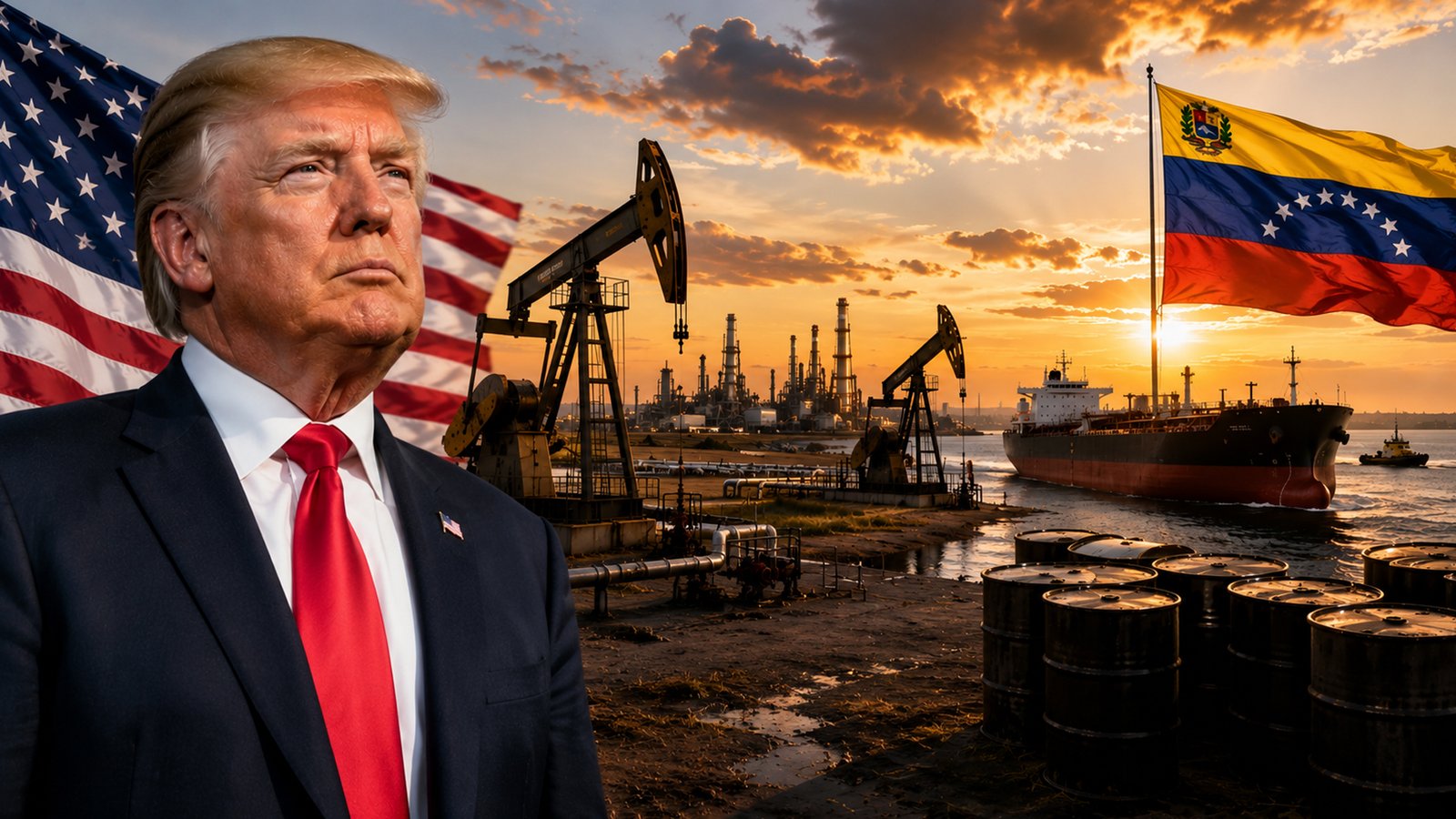
US President Donald Trump has announced a major oil agreement with Venezuela that would give the United States majority control over more than 65 billion barrels of the country’s proven oil reserves.
Trump described it as the “biggest oil deal in world history” and said the arrangement would increase US oil supplies and eventually help bring down fuel prices. The announcement was made on Friday through his social media account, with Trump saying the agreement had been negotiated by Secretary of State Marco Rubio, Secretary of War Pete Hegseth and Venezuelan interim President Delcy Rodriguez.
The deal is expected to bring American companies back into Venezuela’s oil industry, which has struggled for years because of underinvestment, ageing infrastructure and political instability. Venezuela holds the world’s largest proven crude oil reserves, but much of its production capacity has deteriorated significantly.
According to the Venezuelan government, the agreement involves the development of 17 strategic oil fields containing about 65 billion barrels of proven reserves. Caracas expects the projects to attract more than $100 billion in investment and generate over $209 billion in tax revenue for the Venezuelan state.
The proposed arrangement would involve the United States working with a private operator to establish a new company to develop the oil fields. A US official familiar with the agreement said the company would receive long-term rights to operate the assets. Reports indicate the contracts could run for as long as 100 years, although several details of the agreement have yet to be formally released.
The scale of the agreement makes it strategically important for Washington. Trump has been under pressure to address high fuel prices in the United States and has repeatedly argued that increased access to crude supplies could help bring gasoline prices down.
The President said the Venezuelan deal would more than double US oil reserves and substantially increase supplies. However, the benefits are unlikely to be felt immediately by American motorists. Venezuela’s oil industry needs substantial investment before production can rise significantly.
Years of poor maintenance have left parts of the country’s oil infrastructure in bad shape. Pipelines, processing facilities and other equipment require major repairs, while producing Venezuela’s heavy crude requires specialised infrastructure. Analysts therefore expect any significant increase in Venezuelan oil output to take years rather than months.
The agreement offers a chance to revive an industry that remains central to its economy. Oil revenues have historically provided much of the country’s government income, but production collapsed after years of economic turmoil and underinvestment.
Rodriguez’s administration has recently moved towards opening the oil sector to private investment. The latest agreement represents a significant step in that direction and could provide Caracas with access to capital, technology and expertise needed to restore production.
The potential economic gains are substantial. Venezuela expects the investment to create jobs, rebuild energy infrastructure and increase government revenue. Rodriguez said the agreement could have a major impact on the country’s economic recovery.
This deal also carries an energy-security dimension. Greater access to Venezuelan crude could provide Washington with another major source of oil at a time when global energy markets are facing supply disruptions and geopolitical uncertainty.
The agreement could also help American oil companies gain a stronger foothold in Venezuela. Trump has been encouraging US energy firms to return to the country, although some companies remain cautious because of the condition of its oil infrastructure and concerns over the stability of the investment environment.
There are also questions about the legal and political basis of the arrangement. Venezuela’s oil industry has traditionally been dominated by the state, and the extent of foreign control proposed under the new agreement could face scrutiny under Venezuelan laws governing natural resources.
Another unanswered question is how the deal will actually be financed and implemented. Trump has said the arrangement will come at no cost to American taxpayers, but private companies will still have to invest heavily to restore production and develop the fields.
The agreement is also unlikely to immediately change global oil prices. Although 65 billion barrels represents an enormous resource base, reserves do not translate directly into available crude. Increasing production requires exploration, drilling, infrastructure and transportation networks, all of which take time and money.
Still, the announcement marks a major change in US-Venezuela relations and could reshape the energy landscape in the Western Hemisphere. Washington would gain greater access to one of the world’s largest oil reserves, while Caracas would gain the investment it needs to rebuild its struggling petroleum sector.
The success of the agreement will ultimately depend on how quickly production can be restored and whether the promised investment materialises. For now, the headline figure of 65 billion barrels has made the deal one of the most significant developments in the global oil industry.
Trump has presented the agreement as a major victory for US energy security and American consumers. Venezuela, meanwhile, sees it as a potential lifeline for its oil-dependent economy.
The real impact, however, will be measured not by the size of the reserves but by how much oil eventually reaches the market — and how much economic value the two countries can extract from the deal.