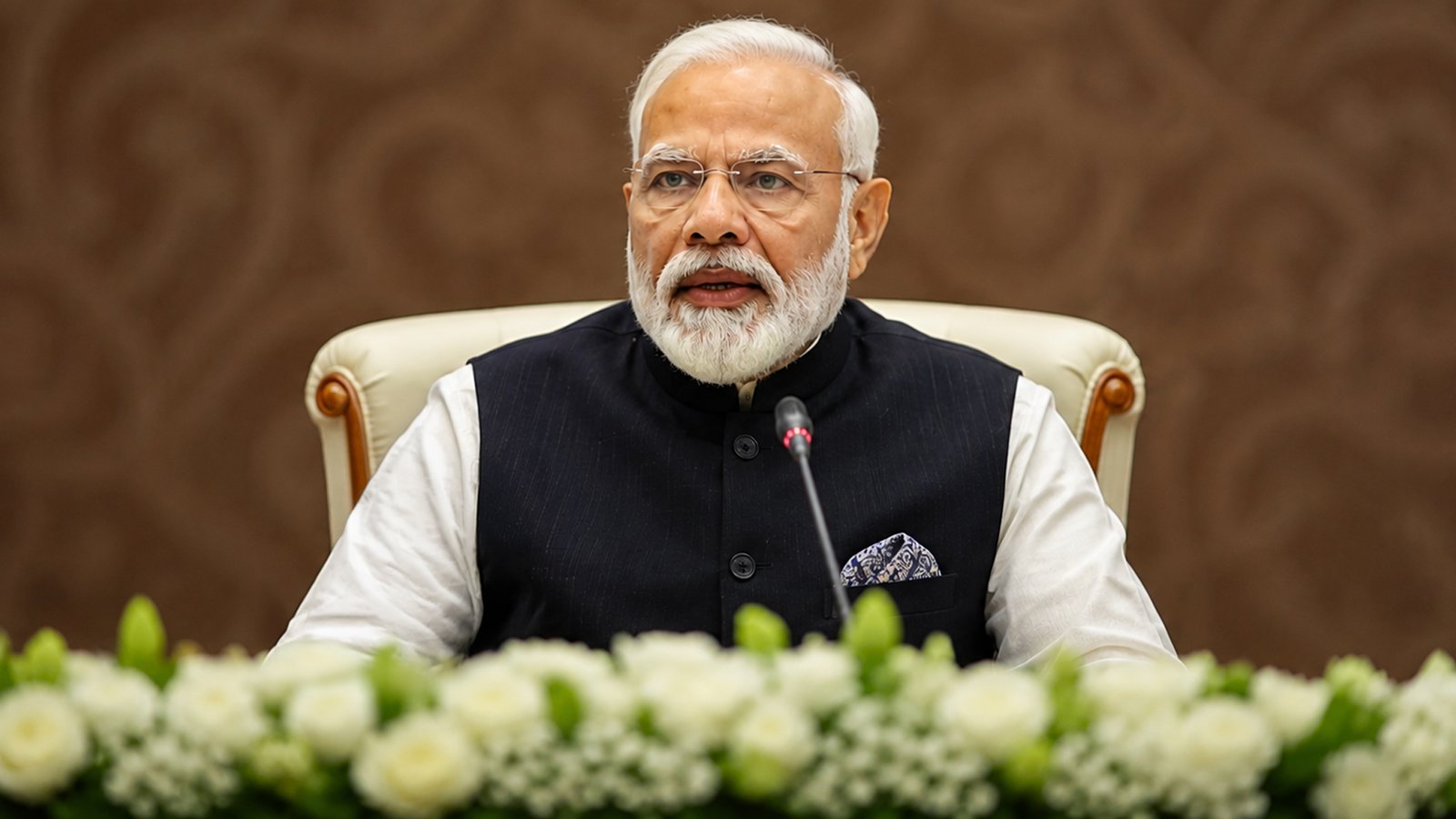
Prime Minister Narendra Modi has called on the Shanghai Cooperation Organisation (SCO) to take stronger and more coordinated action against terrorism, saying there can be no double standards when dealing with a threat that affects the entire world.
Addressing the 26th SCO Summit in Bishkek, Kyrgyzstan, on September 1, Modi urged member countries to dismantle the complete ecosystem that supports terrorism, including terror financing, recruitment, radicalisation and safe havens. His remarks placed counter-terrorism at the centre of India’s message at the regional grouping.
Without naming Pakistan, Modi said some countries continue to use terrorism as an instrument of state policy. He stressed that the international community must adopt a consistent approach towards terrorism and those who support or enable terrorist networks.
The Prime Minister’s comments came in the presence of Pakistani Prime Minister Shehbaz Sharif, giving his remarks added diplomatic significance. India has repeatedly raised concerns over cross-border terrorism and has pushed for international action against terror groups, their financiers and those providing them support.
Modi said terrorism is not simply a security challenge for individual nations but a serious threat to humanity. He called for committed collective action to dismantle the networks that allow terrorist organisations to operate.
His message extended beyond attacks themselves. According to the Prime Minister, combating terrorism requires countries to target the financial channels, recruitment networks, radicalisation machinery and safe havens that allow extremist organisations to survive and expand.
While security dominated his address, Modi also presented a broader roadmap for the SCO. He called for concrete progress around three interconnected areas — Security, Connectivity and Opportunity.
India had outlined these three priorities at the previous SCO summit, and Modi said the grouping should now focus on turning the vision into practical results.
On security, the Prime Minister called for greater cooperation against terrorism and other transnational threats. He also highlighted the need to address challenges such as drug trafficking and organised crime, which can cross borders and threaten regional stability.
Afghanistan also figured in India’s regional outlook. Modi emphasised the importance of continued humanitarian assistance and development support for the Afghan people while seeking a stable and peaceful Afghanistan.
The Prime Minister also spoke about the conflicts taking place in different parts of the world. He said wars cannot provide lasting solutions and argued that disputes should be addressed through dialogue and diplomacy.
This message comes against the backdrop of continuing geopolitical tensions and conflicts that have disrupted trade, energy supplies and global supply chains. For countries in Asia and the wider Eurasian region, prolonged instability can have direct economic consequences.
Connectivity was therefore another important element of Modi’s address. He called for stronger links between countries and markets while making it clear that connectivity initiatives must respect the sovereignty and territorial integrity of all nations.
India has consistently supported connectivity projects that improve trade and economic links across Central Asia and the wider Eurasian region. At the same time, New Delhi has maintained that such projects should be transparent, sustainable and based on mutual respect.
Improved connectivity, according to the Indian approach, can help reduce logistical barriers, strengthen regional trade and create new economic opportunities. Modi’s emphasis on connectivity also reflects India’s growing engagement with Central Asian countries.
The third pillar of his vision was opportunity. Modi called for greater focus on young people, entrepreneurs, farmers, technology and innovation.
He highlighted initiatives aimed at connecting young people across SCO countries, including forums dealing with startups, science and education. The Prime Minister argued that cooperation should deliver visible benefits for citizens rather than remain limited to government-level discussions.
Technology and innovation were also presented as areas where SCO members could deepen cooperation. Greater interaction among startups, researchers, students and entrepreneurs could help create new opportunities and strengthen people-to-people links across the region.
Modi also welcomed plans for the first session of the SCO Civilisation Dialogue Forum to be held in India. The initiative is aimed at encouraging greater understanding among the diverse cultures and civilisations represented within the grouping.
The Bishkek summit brought together leaders from major Eurasian countries, including India, China, Russia, Pakistan, Iran and Central Asian nations. This makes the SCO an important platform for India to engage with countries that have different political and strategic interests.
The summit for Delhi was therefore about balancing immediate security concerns with a wider regional agenda involving trade, connectivity, technology and economic cooperation.
Modi’s emphasis on terrorism, however, remained the strongest element of India’s position. His call for “no double standards” reflected India’s longstanding argument that countries cannot selectively condemn terrorism while tolerating or supporting organisations that threaten other nations.
The Prime Minister’s 10-point roadmap also sought to give the SCO a more practical focus. Rather than limiting the grouping to broad declarations, India wants member states to work towards measurable cooperation in security, connectivity, trade, technology and youth development.
The summit also saw SCO leaders sign a joint declaration, providing a broader framework for cooperation among member states. India’s participation allowed Modi to put New Delhi’s concerns about terrorism alongside its economic and diplomatic priorities.
As Modi concluded his participation in the summit, he emphasized that SCO must become more effective in responding to shared challenges while creating opportunities for its people.