The death of 22-year-old IIT Bombay student Sahil Wakode has triggered a police investigation, campus protests and a wider debate over caste discrimination, academic pressure and student welfare at one of India’s premier engineering institutions.
Wakode, a second-year BTech student in Energy Science and Engineering, was found dead in his hostel room on September 18. His death came hours after an incident during a semester examination in which he was allegedly caught using a mobile phone.
The circumstances surrounding the examination have since become a central part of the investigation. IIT Bombay’s initial account said Wakode had uploaded an examination question paper to ChatGPT and was subsequently caught using a phone during the test. The institute later apologised for the way it described the events, saying details surrounding the student’s death remained under investigation and should not have been presented as established facts.
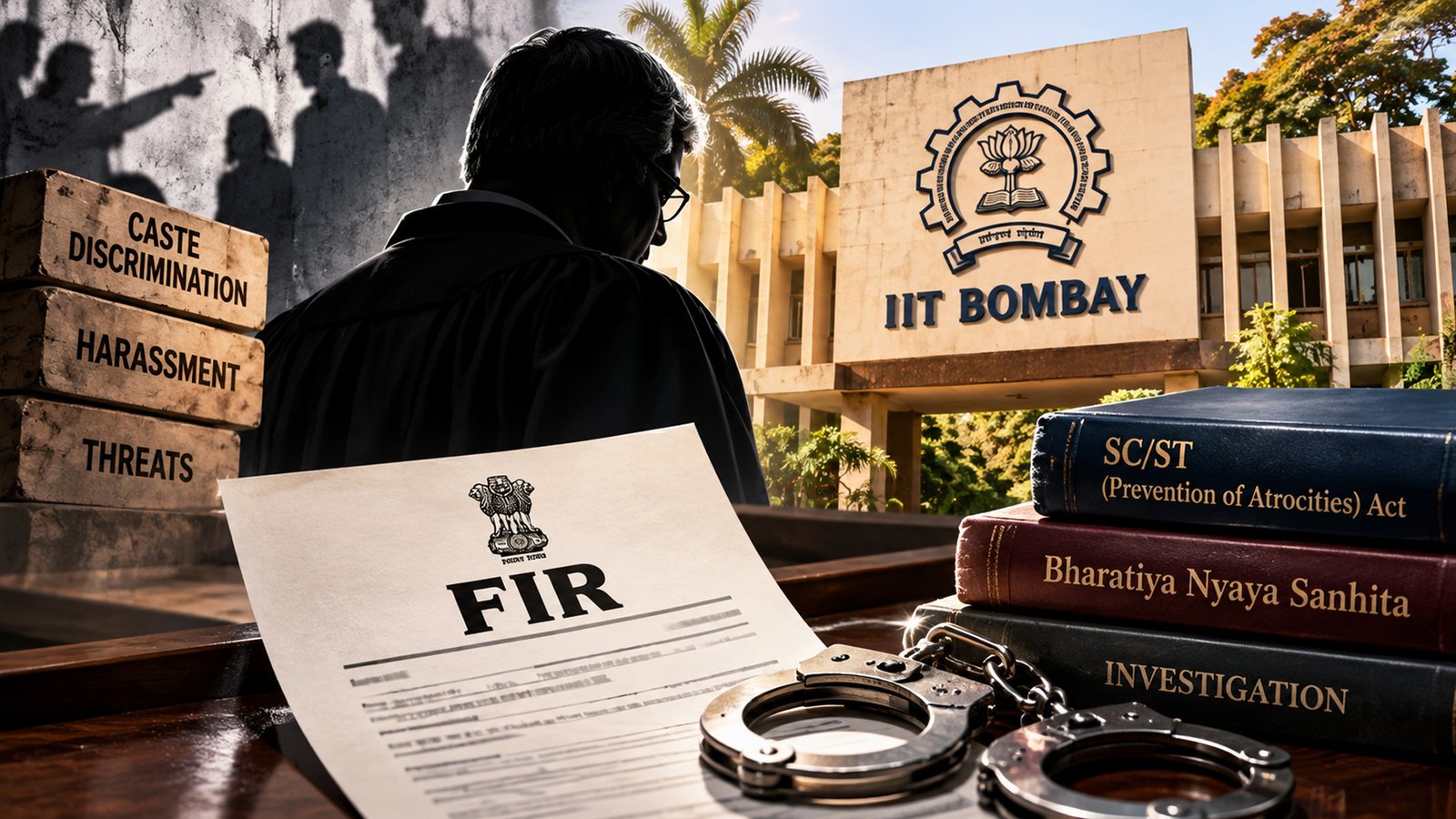
The incident has taken a more serious turn following allegations by Wakode’s family. His father, Chakradhar Wakode, alleged that his son had faced caste-based abuse and mental harassment for several months. The complaint named IIT Bombay professor Suryanarayana Doolla and alleged that caste-related remarks and threats had been directed at the student.
Mumbai Police registered an FIR against Doolla under provisions of the Scheduled Castes and Scheduled Tribes (Prevention of Atrocities) Act and for alleged abetment to suicide. The allegations are being investigated and have not been established in court.
The investigation has now been transferred to the Mumbai Crime Branch. Investigators are examining CCTV footage, digital evidence and statements from people who were present during the examination and in the hostel around the time of Wakode’s death. CCTV footage from the examination hall is being examined to reconstruct what happened after Doolla allegedly noticed Wakode looking at something in his pocket.
The police are also looking into the allegations made by Wakode’s family and the sequence of events that followed the examination. The investigation is expected to establish whether there was any confrontation, pressure or other interaction that could have contributed to the circumstances preceding his death.
IIT Bombay has meanwhile taken administrative action against Doolla. He was removed from his position as Dean of Administrative Affairs and, as of September 23, was sent on leave to facilitate an impartial investigation. He remains a faculty member of the institute.
The move has created a divide on campus. While students have demanded stronger action against the professor, the IIT Bombay Faculty Forum has expressed support for Doolla, saying he was carrying out examination-related procedures approved by the institute. Faculty groups at other IITs have also voiced concerns about what they described as pressure on faculty members performing their academic duties.
At the same time, students have used the incident to raise broader concerns about the way academic misconduct, mental health and student grievances are handled at IIT Bombay.
After several days of protests, students submitted an 18-point charter of demands to the institute. The demands include an independent inquiry into Wakode’s death, greater student representation in decision-making bodies, stronger mechanisms for complaints against faculty members and changes to procedures followed in academic malpractice cases.
Mental-health support is another major part of the charter. Students have sought more counsellors, independent audits of the Student Wellness Centre, a 24-hour psychiatrist on call, better emergency medical support and compulsory mental-health sensitisation programmes for faculty and staff who regularly interact with students.
The students have also demanded a permanent student-wellbeing task force involving students, faculty members, mental-health professionals and external experts. They want the body to examine student distress and publish regular reports.
The institute has agreed to take forward the 18-point charter. The agreement followed several days of protests on campus and included demands concerning student welfare, administrative accountability and the investigation into Wakode’s death.
The Board of Governors has also constituted a 10-member committee to examine the circumstances surrounding Wakode’s death. The panel is headed by Ramesh Venkateswaran, chairman of the Board of Governors of IIT Palakkad, and includes IIT Bombay faculty members and students, a retired IAS officer, a former vigilance officer and a psychiatrist. The committee will conduct its own examination while the Mumbai Crime Branch continues its criminal investigation.
The case has also brought renewed attention to caste discrimination in higher educational institutions. A 2024 email by Doolla, which resurfaced after Wakode’s death, had cautioned students against asking classmates about their admission categories, JEE ranks or GATE scores, saying such questions could reveal caste or reservation status and contribute to bias. The email itself does not establish the allegations made by Wakode’s family, but it has become part of the wider public discussion around the case.
IIT Bombay has said it is cooperating with the investigation. The institute’s reversal of its initial communication and subsequent administrative steps came as pressure grew on the campus.
The family, meanwhile, has sought a thorough investigation into the circumstances leading to Wakode’s death. Student groups have continued to demand accountability, while faculty members have called for due process in dealing with the professor named in the FIR.