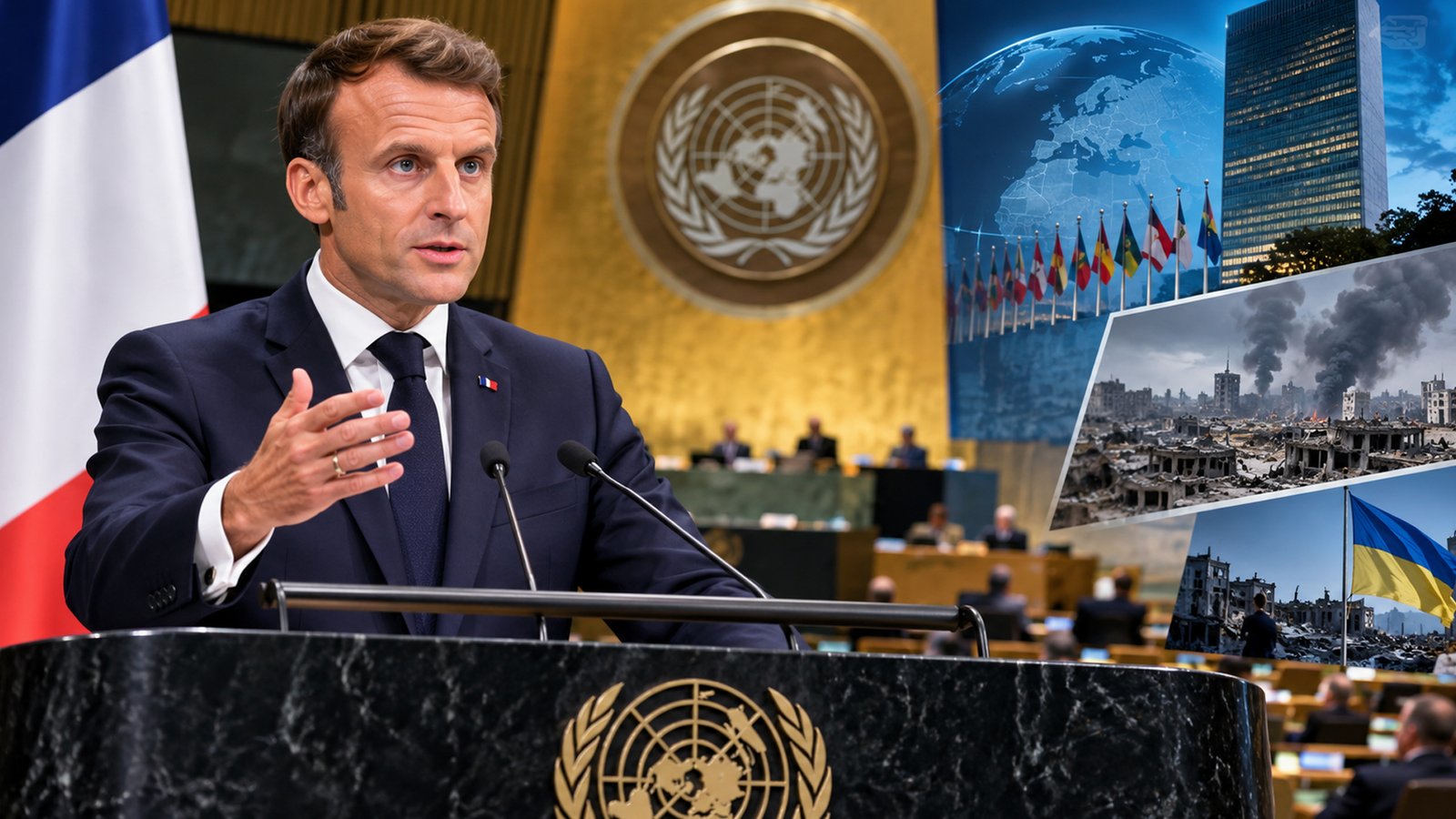
French President Emmanuel Macron used his final address to the United Nations General Assembly to call for a stronger international system, warning that the world risks returning to a system where military and economic power determines the fate of weaker countries.
Speaking in New York on September 22, Macron urged governments to stand behind the United Nations and international law instead of accepting what he described as a return to the “law of the jungle”. He said countries faced a basic choice between an international order governed by rules and one shaped largely by force.
Macron’s speech came at a tense moment for global diplomacy, with wars and political disputes stretching from Gaza and Ukraine to the Middle East and Africa. He argued that the United Nations remains necessary despite its shortcomings and called for renewed multilateral cooperation to address common problems.
“International law” cannot by itself end conflicts, Macron said, but it sets limits on what states should be allowed to do. He warned that the erosion of those limits was contributing to a period of growing violence and impunity.
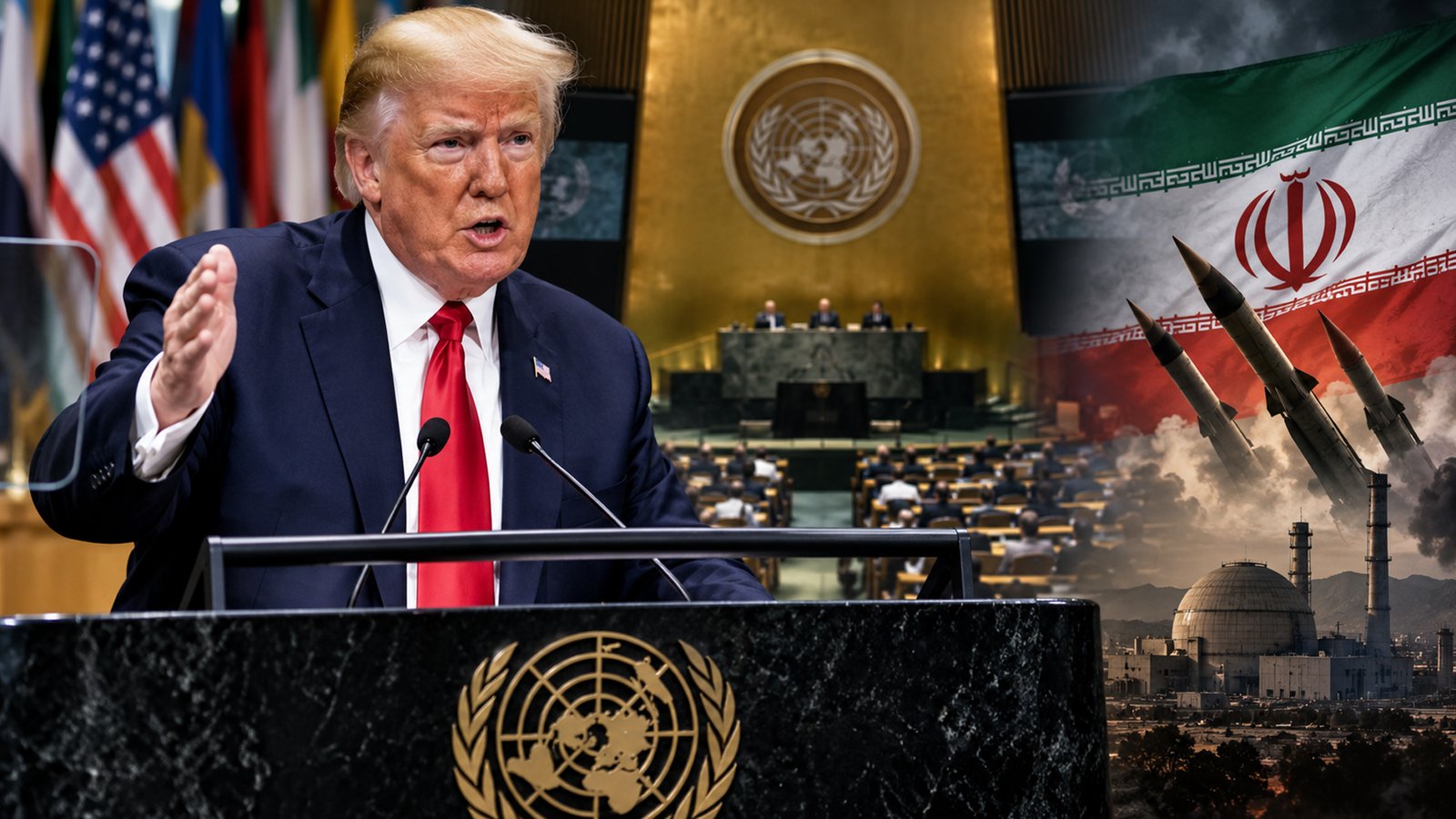
Gaza was one of the strongest parts of Macron’s address. He directly challenged US President Donald Trump’s description of his Gaza initiative as a diplomatic success, saying the situation on the ground did not match claims that peace had been achieved.
Macron pointed to the continued humanitarian crisis and said humanitarian corridors had not been reopened despite declarations of peace. He described the situation as deeply troubling and questioned what international credibility means if governments remain unable to respond effectively to the suffering of civilians.
His comments came only hours after Trump had addressed the same UN gathering and presented his administration’s approach to Gaza as a major diplomatic achievement. The contrasting speeches highlighted the different positions of Washington and Paris on the conflict and the wider role of international institutions.
Macron also spoke about the West Bank, where he said continuing violations were undermining the possibility of a future Palestinian state. He argued that actions affecting the sovereignty of neighbouring countries do not necessarily make Israel more secure and instead could create longer-term instability.
France has backed a two-state solution and Macron reiterated the need for Palestinian sovereignty. He said the issue could not be separated from wider questions of security and regional stability.
Ukraine was another major focus. Macron reaffirmed France’s support for Kyiv and proposed a temporary halt to attacks on civilian and energy infrastructure by both Russia and Ukraine.
He also called for a moratorium on attacks against commercial shipping in the Black Sea. The waterway is important for the movement of agricultural commodities from the region, making the safety of shipping a wider international concern.
Macron’s proposal came as the Russia-Ukraine war continues to damage civilian infrastructure and disrupt energy and food-related trade. Rather than presenting the proposed moratorium as a complete peace agreement, he framed it as a practical step to reduce harm to civilians and protect essential infrastructure.
The French president also called for reform of the UN Security Council. He argued that the organisation needs to become more effective in responding to major violations of international law and supported expanding its membership, including greater representation for African countries.
The demand for UN reform has gained wider attention as several countries question whether the existing Security Council structure reflects today’s geopolitical realities. The council has five permanent members — the United States, Russia, China, France and the United Kingdom — with veto powers, alongside 10 elected members.
Macron also used his speech to address the growing influence of artificial intelligence. His position differed from Trump’s approach to global AI governance.
While Trump has argued against international rules that could slow American technological development, Macron called for international cooperation on advanced AI. He suggested that countries should work together on an open-source frontier AI model rather than becoming dependent on either the United States or China for critical technology.
He also raised concerns about the impact of technology and social media on children and teenagers. Macron argued that governments should act before the social consequences become harder to control, pointing to the need for stronger safeguards for young users.
The speech marked Macron’s last appearance at the UN General Assembly as French president. He first addressed the gathering in 2017 and has consistently presented France as a supporter of multilateralism, international institutions and European cooperation.
His final UN appearance therefore carried a broader message beyond individual conflicts. Macron argued that countries cannot address climate change, public health, development, war and emerging technologies by acting alone.
He ended by reaffirming France’s commitment to the United Nations and urging countries not to accept what he sees as an emerging order based on impunity and coercion.
Macron’s address also showed the growing differences among major powers over how international crises should be handled. While the United States has increasingly emphasised military strength, national sovereignty and direct negotiations, France continues to argue for collective action through international institutions.
The debate is likely to remain central as the UN General Assembly continues, with Gaza, Ukraine, Iran, AI governance and Security Council reform among the major issues facing world leaders.
For Macron, the final UN speech was ultimately a defence of the rules-based international system at a time when its authority is being tested by several simultaneous conflicts and geopolitical rivalries.