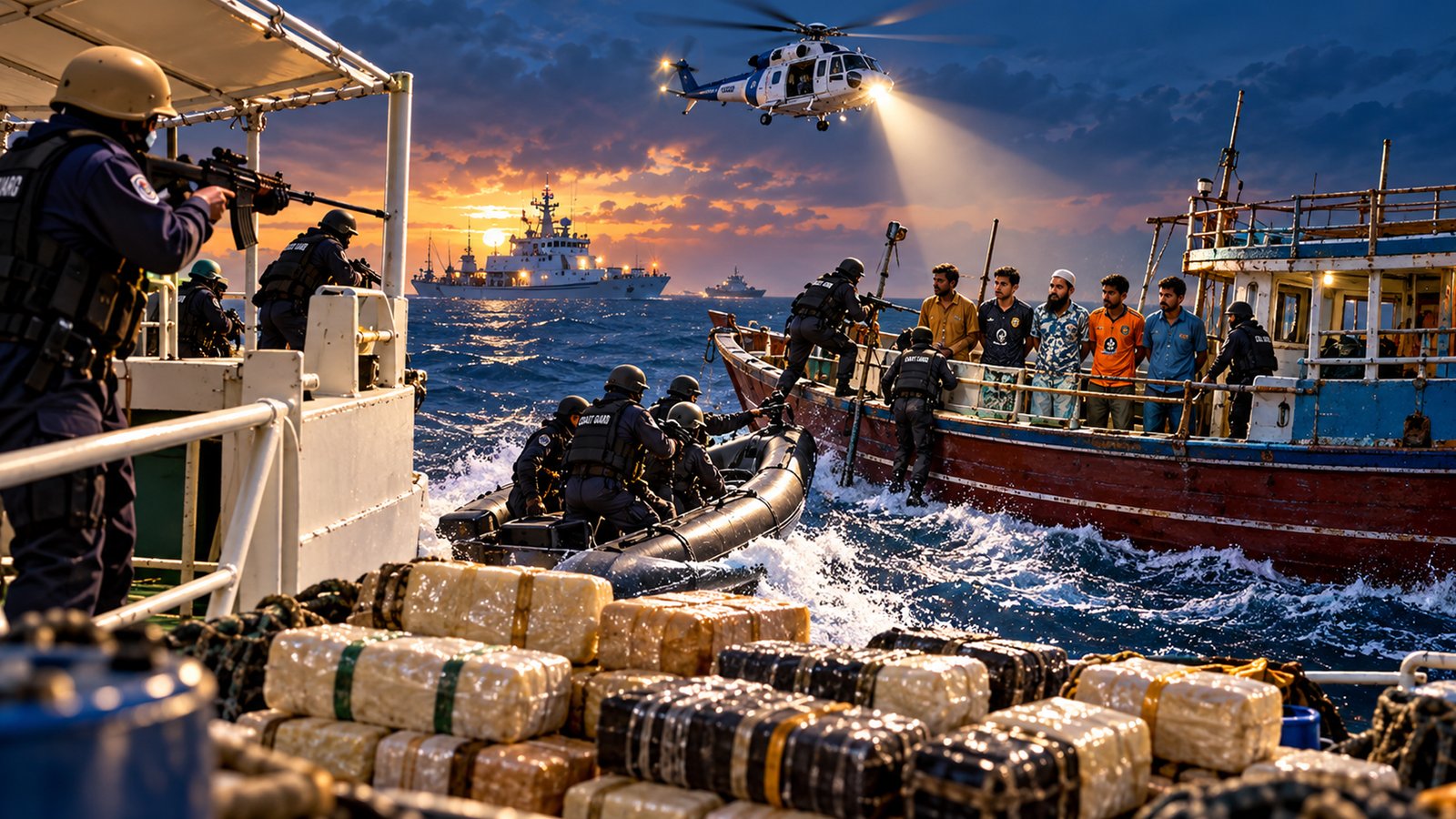
Indian security agencies have seized around 526 kg of heroin and methamphetamine from an Iranian dhow in the Arabian Sea and detained five Pakistani nationals in a major anti-drug operation near Lakshadweep.
The narcotics, described as high-grade drugs, are estimated to be worth more than ₹3,000 crore in the international market. The interception was carried out on September 25 by the Indian Coast Guard in coordination with the Gujarat Anti-Terrorism Squad (ATS), following intelligence about the movement of a suspicious vessel.
The operation involved coordinated sea and air surveillance. Coast Guard units tracked the dhow before launching a hot pursuit and boarding the vessel west of Lakshadweep. Five Pakistani nationals operating the boat were taken into custody during the operation.
The vessel, the crew and the seized contraband were later brought to Mumbai under armed escort. They are now being examined as part of a multi-agency investigation into the suspected international drug trafficking network behind the shipment. Further legal proceedings are expected to follow.
The seizure included methamphetamine and heroin, two narcotics that are widely trafficked through international criminal networks. Authorities are investigating the source of the consignment, its intended destination and the people or organisations involved in arranging its movement.
The operation is significant because the suspected smuggling attempt involved a maritime route and an overseas-registered vessel. The Arabian Sea has increasingly been used by international trafficking networks to move narcotics between South Asia, the Middle East and other markets, making maritime surveillance an important part of India’s drug-control efforts.
The Gujarat ATS had provided intelligence that helped identify the suspicious movement. Coast Guard assets were then deployed to maintain surveillance and track the vessel before the interception. The operation highlights how intelligence sharing between state-level and central agencies can support action against drug trafficking at sea.
Officials are now examining the five detainees and the vessel for information that could help establish the wider supply chain. Investigators are expected to look at communication records, navigation details, documents and other material recovered during the search.
The focus will also be on identifying the intended receivers of the drugs. Establishing who financed the shipment, who arranged the vessel and where the consignment was supposed to be delivered could help investigators trace the larger network.
According to details emerging from the investigation, the drugs were suspected to have been part of a planned transfer at sea. Authorities are examining whether another vessel was expected to receive the consignment after it entered Indian maritime waters. The exact role of other individuals or vessels, however, remains under investigation.
The Coast Guard said the operation was aimed at preventing illicit activities in Indian maritime zones and disrupting transnational narcotics trafficking. The seizure also demonstrates the role of maritime interdiction in stopping illegal consignments before they reach the mainland.
The scale of the haul makes the case particularly significant. A consignment of more than half a tonne of narcotics represents a substantial suspected trafficking operation, while the international market valuation of over ₹3,000 crore underlines the financial stakes involved in such networks.
The latest seizure also comes amid continued efforts by Indian agencies to strengthen coastal and offshore surveillance. The Coast Guard regularly works with intelligence and law-enforcement agencies to track suspicious vessels and prevent smuggling of narcotics, weapons and other illegal goods through maritime routes.
The involvement of the Gujarat ATS reflects the wider geographic reach of investigations into drug trafficking. Although the interception took place far from the Gujarat coast, intelligence gathered by agencies operating across different regions can help identify movements at sea and connect them with suspected trafficking networks on land.
The five Pakistani nationals are currently facing investigation in India. Their nationality and presence aboard the Iranian vessel are part of the circumstances being examined by the authorities, while their individual roles in the alleged smuggling operation will have to be established through the investigation and subsequent legal proceedings.
The vessel and seized drugs have been secured in Mumbai, where agencies are conducting further questioning and examination. Investigators are also expected to coordinate with other agencies to establish the international links involved in the case.
With the investigation continuing, authorities will now focus on tracing the origin and intended destination of the seized narcotics and identifying other members of the suspected network. The seizure has prevented a large quantity of heroin and methamphetamine from reaching its intended market, while the ongoing probe could provide further leads into the trafficking chain operating through the Arabian Sea.