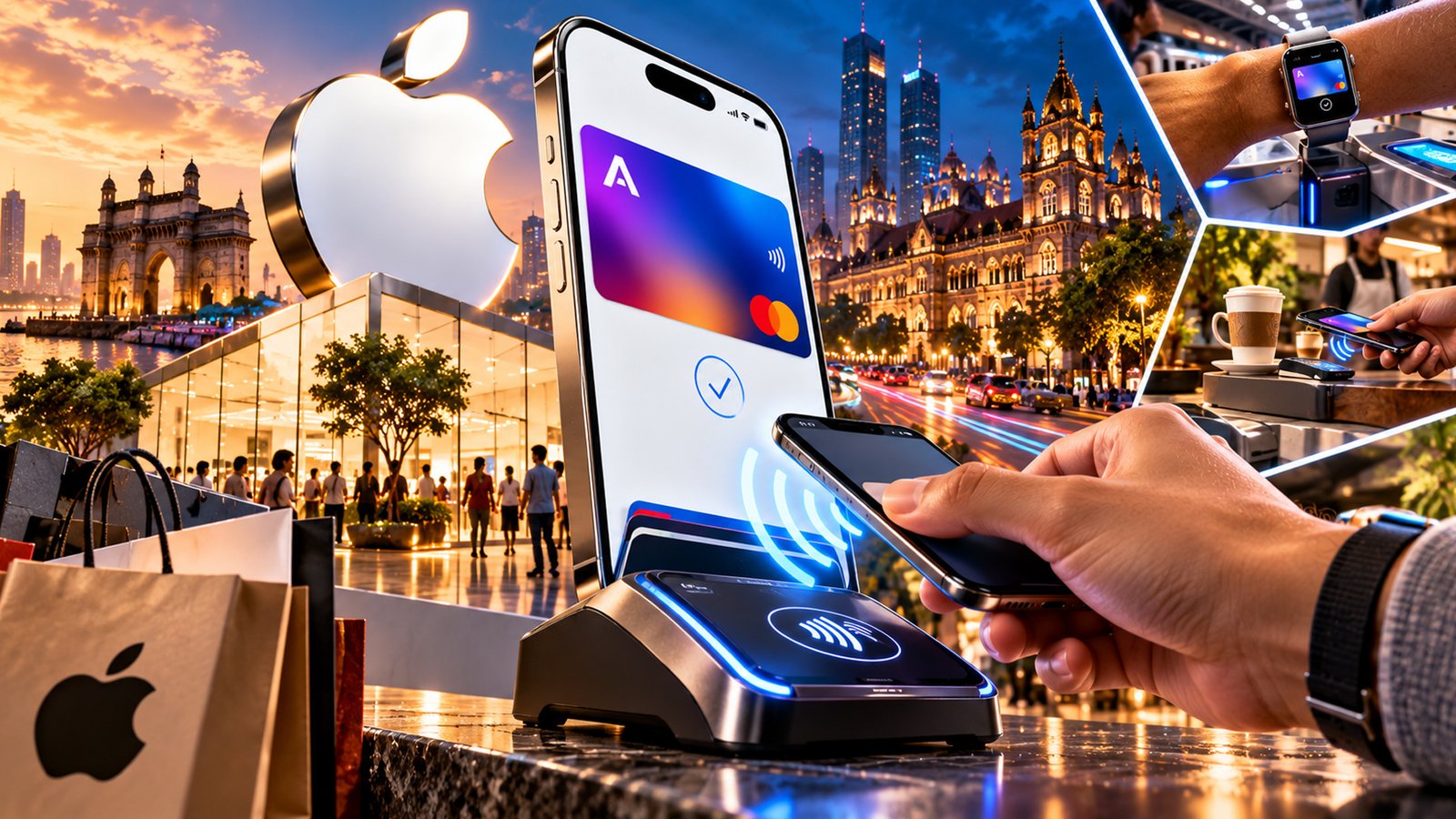
Apple has officially launched Apple Pay in India, bringing its digital wallet and contactless payment service to one of the world’s largest digital payments markets. The service went live on September 30, initially supporting eligible Axis Bank-issued Visa and Mastercard credit cards. Apple Pay is available on iPhone, iPad and Apple Watch, while Mac support is expected to be added soon.
The launch comes after years of anticipation and puts Apple’s payment platform into a market where digital transactions are already deeply integrated into everyday life. Unlike India’s widely used Unified Payments Interface (UPI), Apple Pay is built around linked payment cards rather than direct bank-to-bank transfers. The initial rollout is therefore focused on contactless and online card payments rather than UPI transactions.
How Apple Pay works
With Apple Pay, eligible users can add their Axis Bank credit card to the Apple Wallet app and use their iPhone or Apple Watch to make payments at supported contactless terminals. On an iPhone, users can double-click the side button and authenticate with Face ID, Touch ID or their device passcode before holding the device near the payment terminal.
Apple says users can also make purchases in supported apps and on websites without repeatedly entering card information. At checkout, they can select Apple Pay and authenticate the payment directly on their device. The company says customers do not need to enter a PIN or OTP at checkout when using Apple Pay.
The service is not limited to physical stores. Apple says it can be used at participating retailers of different sizes, as well as within apps and on the web. Acceptance, however, depends on whether the merchant and its payment terminal or payment infrastructure supports Apple Pay. This means an NFC-enabled terminal may not necessarily accept Apple Pay unless the relevant payment provider has enabled the service.
Axis Bank is the first partner
Axis Bank is Apple’s first banking partner for the India launch. At present, only eligible Axis Bank credit cards running on the Visa and Mastercard networks can be added to Apple Pay.
India’s domestic RuPay network is not supported at launch. Major issuers including HDFC Bank, ICICI Bank and SBI Card are also not part of the initial rollout, although Apple has indicated that it intends to expand the service to more banks as their technical readiness and card portfolios allow.
The limited launch reflects the technical and commercial requirements involved in integrating Apple Pay with banks, card networks and payment infrastructure. TechCrunch reported that negotiations with some large Indian banks have involved commercial terms, including Apple’s transaction fee.
Apple’s first banking partnership gives it access to Axis Bank’s large credit-card customer base. According to Reuters, Axis Bank had 16.3 million credit cards in circulation as of August, making the lender an important player in India’s credit-card market.
Where users can pay
Apple Pay is being introduced across a range of merchants and services in India. Apple has said the service will work across millions of merchant locations, with companies including Blinkit, Croma, Ixigo, Reliance brands, Tata 1mg and Zomato among those supporting the rollout.
Apple has also worked with payment service providers including Cashfree, JusPay, Mswipe, Paytm, PayU, Pine Labs, Razorpay and Worldline to enable Apple Pay acceptance across their merchant networks. More merchants are expected to be added as adoption expands.
The service can also be used internationally wherever compatible contactless payments are accepted, subject to the user’s card and merchant support.
Security and Privacy
Security is a major part of Apple’s Apple Pay offering. Rather than sharing the actual card number with merchants, Apple Pay uses a unique Device Account Number associated with the card. Payment information is protected through the device’s Secure Element, while transactions are authenticated using Face ID, Touch ID or the device passcode.
This means users can make payments without exposing their physical card details during each transaction. Apple also says card information is not stored on its servers.
If an iPhone is lost or stolen, users can use Apple’s Find My service to place the device in Lost Mode and suspend Apple Pay payments.
Apple Pay vs UPI
Apple Pay’s entry into India comes at a time when UPI dominates the country’s digital payments ecosystem. UPI allows users to transfer money directly between bank accounts, usually through a mobile app and QR code, without requiring a credit card.
Apple Pay works differently. It tokenises and stores an eligible payment card in Apple Wallet and uses NFC for contactless transactions. The two systems therefore serve different payment use cases at launch. Apple Pay does not support UPI or RuPay cards in its initial India rollout.
Apple Pay is already available in more than 90 countries and regions and works with more than 11,000 bank and network partners globally. India’s launch adds another major market to that network, although the initial domestic rollout remains limited to Axis Bank Visa and Mastercard credit cards.
The next phase will depend largely on how quickly Apple adds more banks, card networks and merchants. Apple executives have said the company is looking to expand its issuer partnerships, making wider card compatibility a key part of the service’s India roadmap.