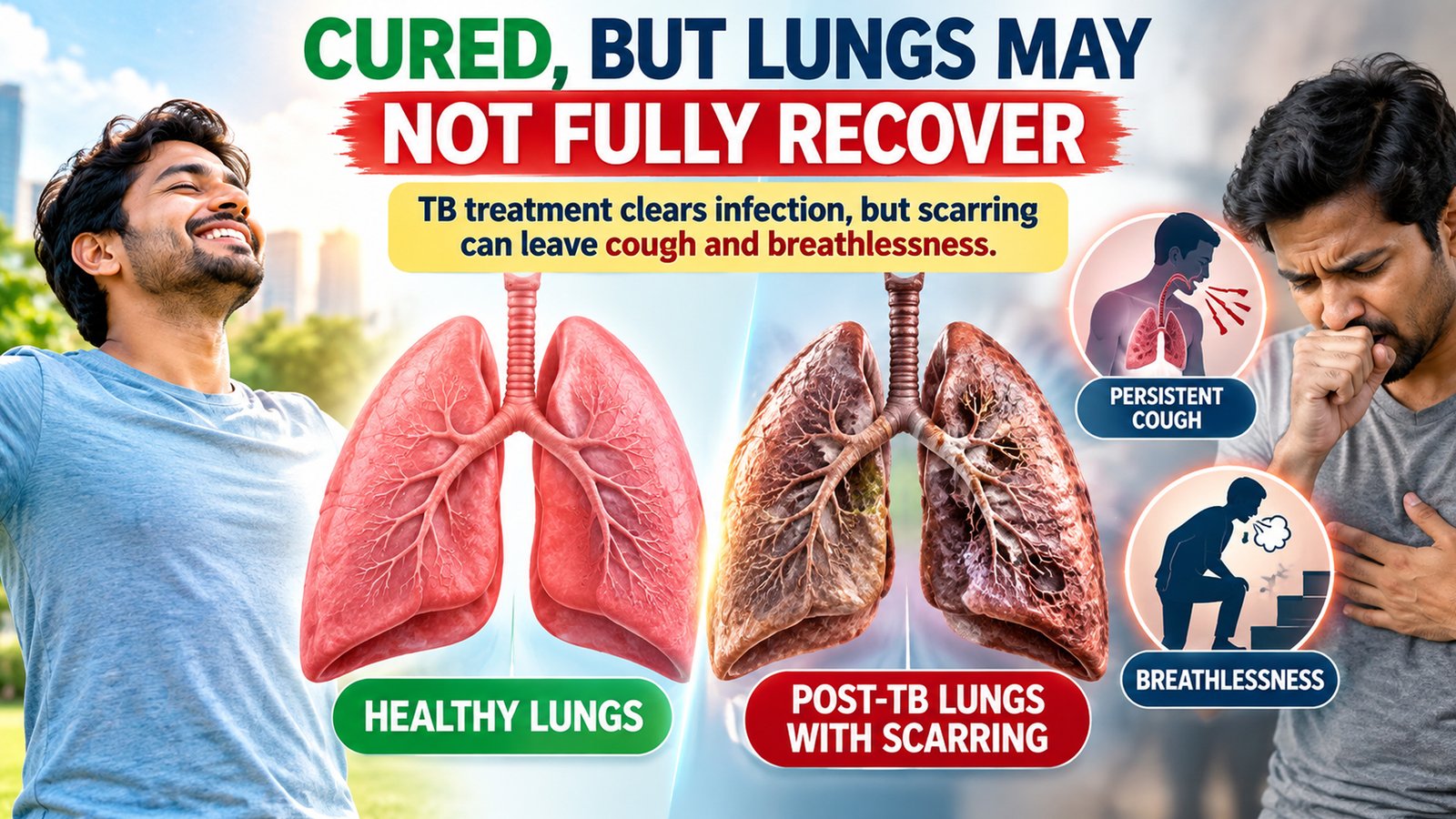
The last tablet is taken, the treatment card is signed, and the family can finally breathe easier. Then the patient walks up a flight of stairs and has to stop halfway. Or a cough that seemed to be improving never quite disappears. Has the tuberculosis returned? Sometimes it has. Often the infection is gone, but the lungs still bear its marks.
Tuberculosis (TB) treatment is one of medicine’s great successes. Yet a certificate of treatment completion answers a narrow question about the infection; it cannot promise that airways, air sacs and blood vessels have recovered. Doctors call the lasting changes post-tuberculosis lung disease (PTLD). It can be mild enough to go unnoticed or serious enough to limit work, exercise and daily life.
The scale behind the quiet aftermath
This matters particularly in India. In the latest published global TB estimates, India accounted for about 25% of people who developed TB worldwide in 2024. That figure describes new illness, not the number living with damage after treatment. Those survivors are much harder to count because follow-up often ends when TB treatment ends.
A 2025 analysis of 19 studies compared lung tests from 7,447 people with previous pulmonary TB against those of people without it. On average, the former group blew out about 0.41 litres less air in the first second of a forceful breath. The studies differed substantially, so this is a pooled comparison, not a prediction for any one patient. It does show why “cured” and “breathing normally” cannot be treated as synonyms.
What the infection can leave behind
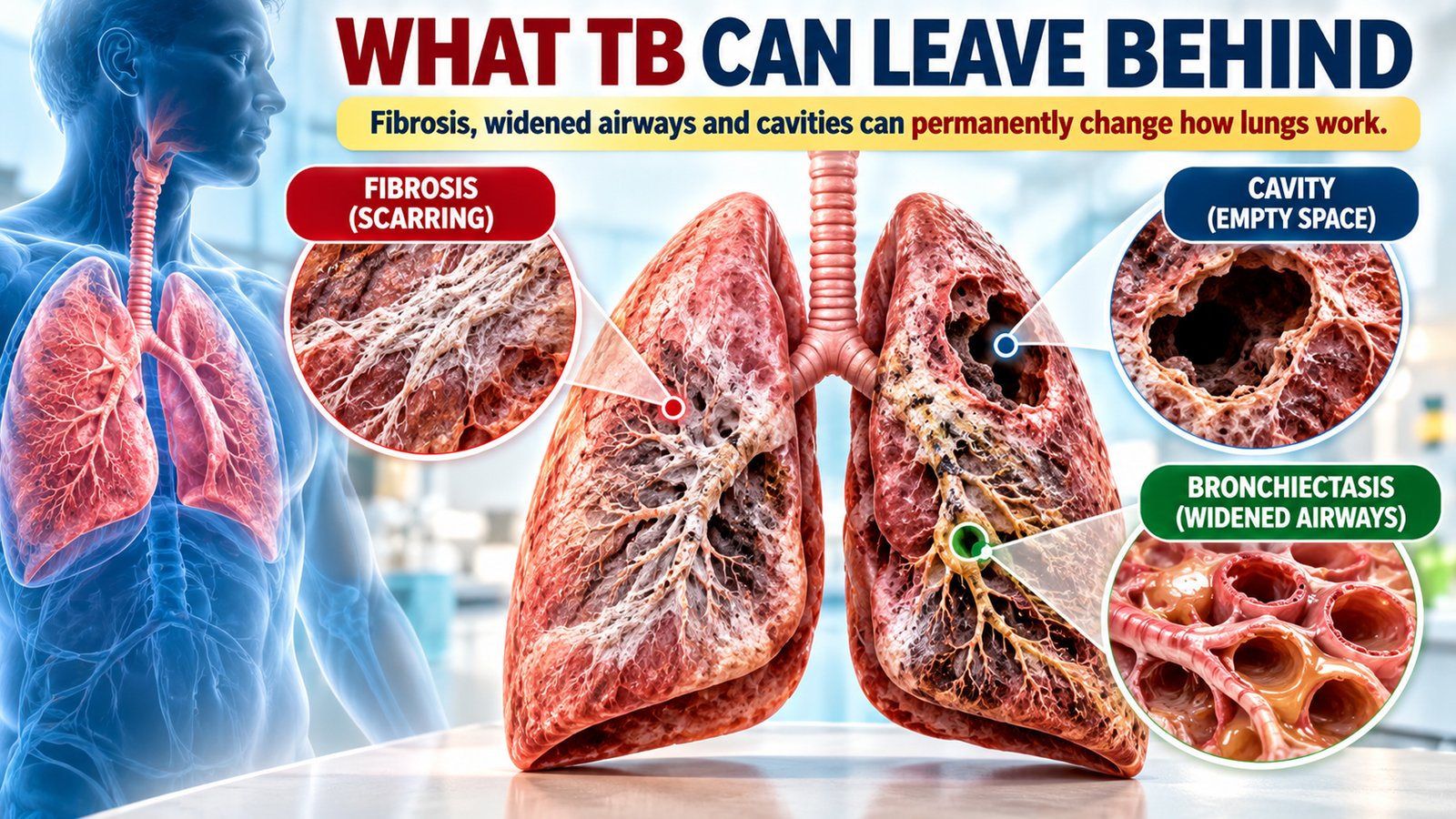
TB is caused by bacteria, but much of the injury comes from the body’s prolonged inflammatory battle with them. Lung tissue may heal with fibrosis, or scarring. Some air spaces are destroyed; others become stretched, distorted or separated from healthy tissue. The lining around the lung can thicken. When a portion of the lung cannot expand freely, drawing a full breath becomes harder.
Other people develop bronchiectasis: permanently widened and damaged breathing tubes. Healthy airways move mucus upwards for disposal. Distorted tubes clear it less effectively, allowing mucus to collect and infections to recur. This can cause a daily productive cough, chest infections and, occasionally, blood in the sputum. Bronchiectasis is a description of airway structure; finding it does not mean TB bacteria are still present.
Small airways can also narrow after TB. Air gets into the lungs but is harder to push out, producing wheeze or breathlessness that resembles chronic obstructive pulmonary disease (COPD), even in someone who has never smoked. Others have a “restrictive” pattern because the lungs or chest cannot hold as much air. Both patterns can occur together. A simple blowing test, called spirometry, measures how much and how quickly a person exhales; a low result suggesting restriction sometimes needs full lung-volume testing to confirm its cause.
A remaining cavity—an empty space left by destroyed tissue—may later harbour a fungus called Aspergillus. In some people this develops into chronic pulmonary aspergillosis, a separate condition that may bring worsening cough, fatigue, weight loss or bleeding. Old TB can also coexist with asthma, smoking-related disease, pollution-related injury, heart disease or another cause of breathlessness. One old scar on an X-ray does not explain every new symptom.
A returning cough needs a fresh diagnosis
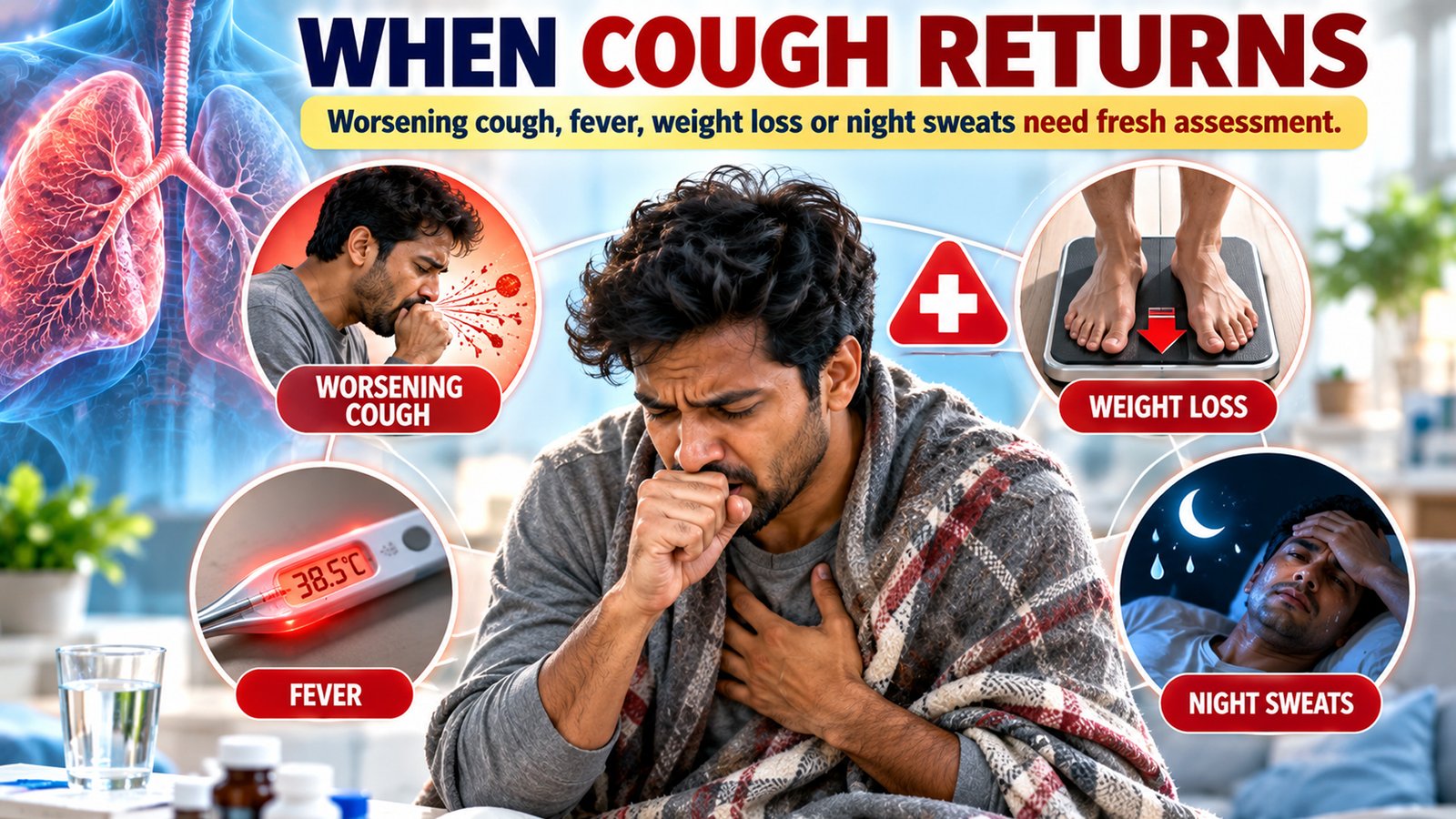
A stable cough after TB may reflect damaged airways. A cough that returns after a period of recovery, becomes worse, or comes with fever, night sweats or weight loss demands a new assessment. TB recurrence must be considered, alongside bacterial infection, bronchiectasis flare-ups, fungal disease and other diagnoses. Starting another TB course merely because an old X-ray looks abnormal risks treating the wrong problem.
The risk is real. In a recent Maharashtra follow-up trial, TB was detected again in 75 of 1,076 adults—7%—during the year after treatment. The study included people treated for different forms of TB and followed a particular group at six public clinics; 7% is not a universal recurrence rate. It is a reminder that new symptoms deserve attention. The study also found that home visits detected more recurrent cases among survivors than phone screening.
Clinicians may request sputum tests and imaging if recurrence is suspected. Interpreting results requires care: a very sensitive molecular test can occasionally detect DNA from non-viable TB bacteria after successful treatment. Symptoms, timing, imaging, culture and drug-resistance testing may all matter. A positive result should be interpreted by the treating team, rather than read in isolation as proof of active disease.
What a useful review looks like
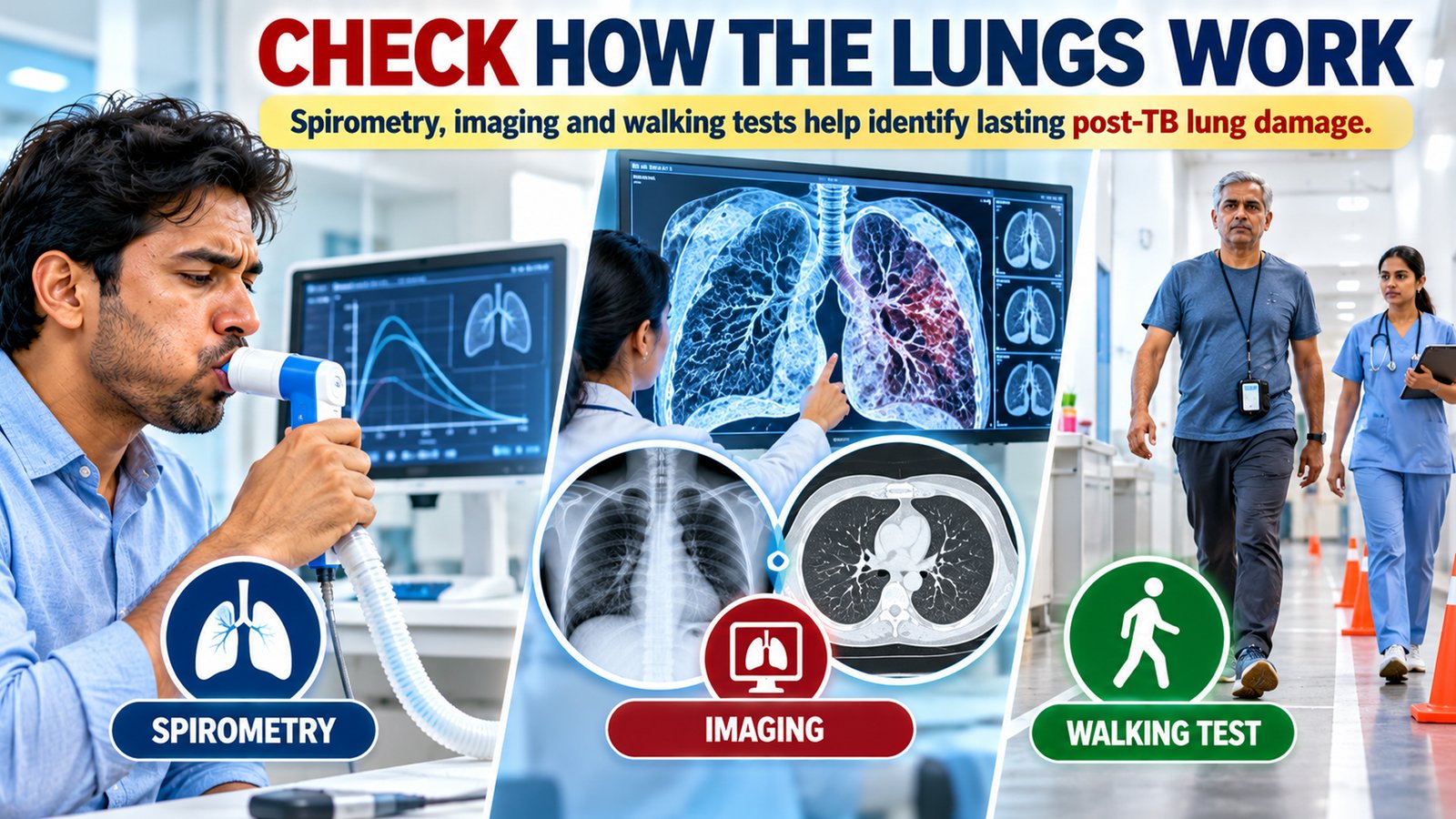
At or after treatment completion, a practical review asks what the person can actually do: Can they climb stairs? Do they wake with cough? Is sputum produced every day? Have there been chest infections, wheeze, fatigue or bleeding? The examination may include oxygen saturation and a comparison with earlier chest images. Clinical standards recommend assessing symptoms and function, rather than allowing the treatment outcome alone to close the file.
For persisting breathlessness, spirometry before and after an inhaled airway-opening medicine can identify airflow limitation and show whether it improves. A chest X-ray is often the starting image; a CT scan gives more detail when bronchiectasis, a cavity, unexplained bleeding or another complication is suspected. A walking assessment can reveal exertional limits or a fall in oxygen that is absent at rest. Further tests, including oxygen transfer across the lungs, are selected for the clinical question. The assessment is tailored; everyone does not need every scan or test.
Can breathing improve after the damage is done
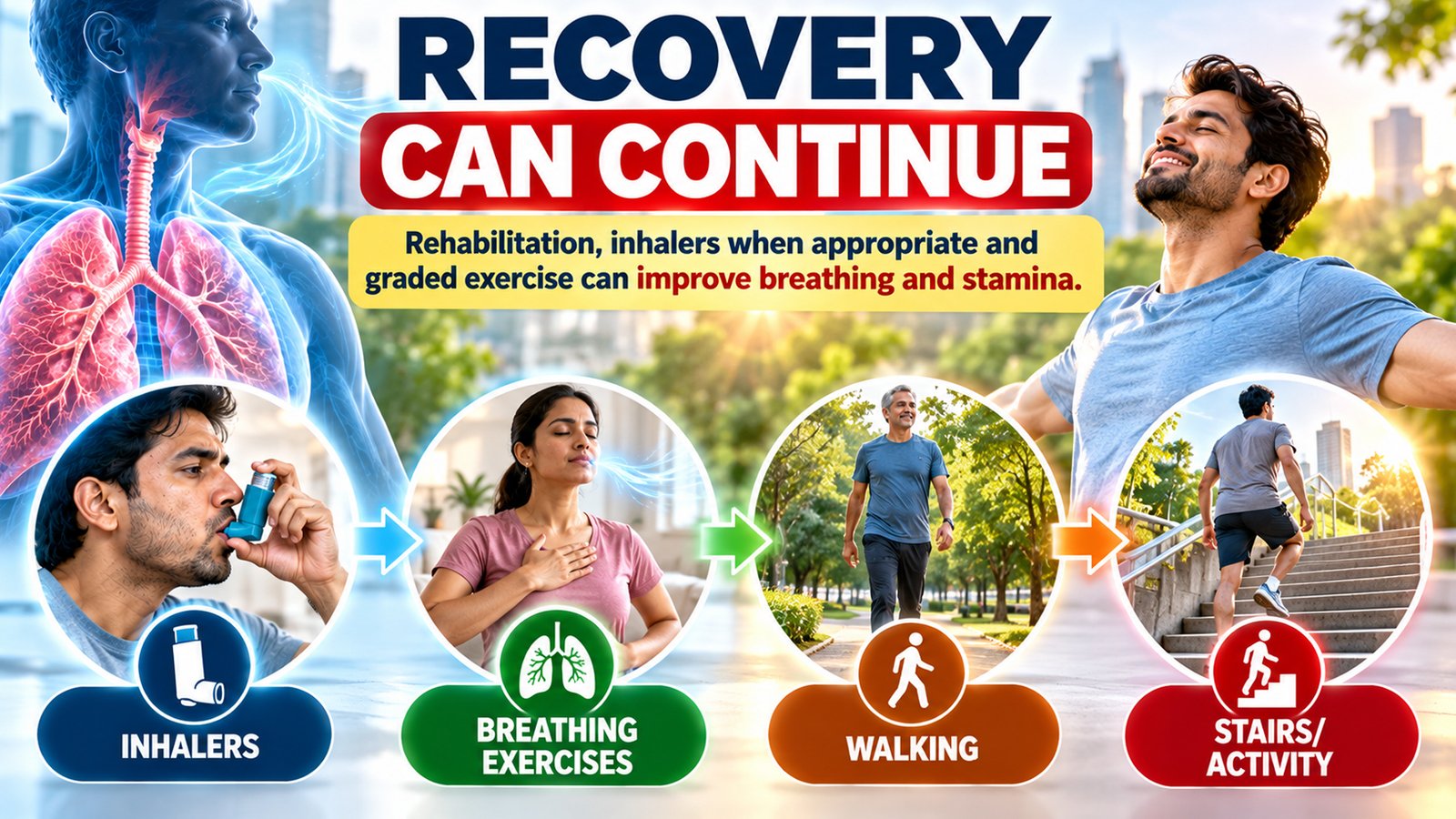
A scar cannot simply be erased, but symptoms and function can often improve. Treatment depends on the finding. Someone with confirmed airflow obstruction may benefit from a carefully chosen bronchodilator—an inhaled medicine that relaxes airways—with technique and response checked. An inhaled steroid is not automatically indicated for every survivor of TB; it may be appropriate for a separate diagnosis such as asthma. Persistent sputum and bronchiectasis may call for taught airway-clearance methods and assessment of recurrent infections. Specific bacterial or fungal disease requires its own diagnosis and treatment.
Pulmonary rehabilitation combines supervised, individually adjusted exercise with education and support. It aims to improve stamina, confidence and the ability to manage breathlessness; it is not a promise to restore scarred tissue. Evidence in PTLD is growing, although the best timing and the size of long-term benefit still need clearer trials. Where formal programmes are unavailable, a clinician or physiotherapist can still help create a safe, graded activity plan.
Protecting the lung that remains matters too: stop smoking, reduce exposure to indoor smoke and workplace dust where possible, address nutrition and diabetes, and discuss influenza, pneumococcal and COVID-19 vaccination according to individual advice. Recent respiratory guidance places these alongside follow-up and rehabilitation. Oxygen is for measured low oxygen levels when clinically indicated, not simply for a feeling of breathlessness.
When to seek help
Arrange a review for a cough or breathlessness that persists, worsens or interrupts ordinary activity after TB treatment. Seek prompt assessment for fever, renewed weight loss, night sweats, repeated chest infections or blood-streaked sputum. Coughing up more than a small amount of blood, severe or sudden breathlessness, fainting, chest pain or blue-grey lips warrants urgent medical care.
Finally, lung damage left by successfully treated TB is not itself a contagious infection. That distinction matters to patients and families who may still carry the stigma of a disease they have finished treating. The right question after the cure is not only “Is the TB gone?” It is also “How are the lungs working now, and what can we do to help?”
This article provides general health information and is not a substitute for individual medical assessment.
(The author is an interventional pulmonologist and respiratory medicine consultant in Bengaluru.)