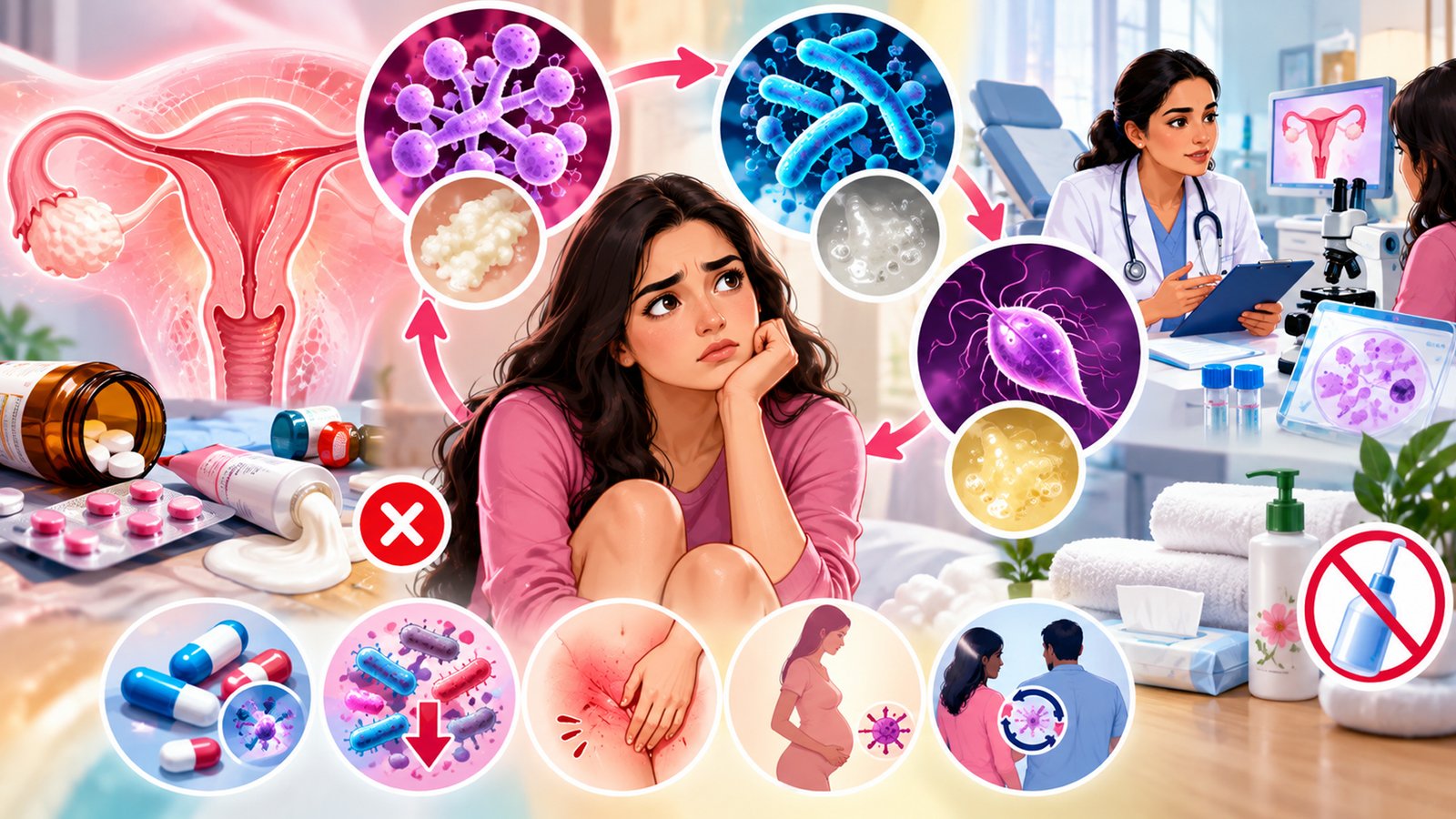
The itching settles after a cream. A few weeks later it returns, perhaps with a different discharge or an unfamiliar smell. The old prescription comes out again. By the third episode, the question becomes: why will this infection not go away?
The first question should be whether it is the same condition. Symptoms alone cannot reliably identify the cause, and some apparently recurrent “infections” are actually skin irritation or hormonal changes. Repeating treatment without reassessing the diagnosis can prolong that uncertainty.
Discharge is part of normal health
The vagina is not meant to be dry or sterile. Normal discharge helps keep it clean and moist; clear or white fluid can become wetter and more noticeable around ovulation, when an egg is released. “White discharge” by itself is not a diagnosis requiring medicine.
In many reproductive-age women, bacteria called lactobacilli help maintain an acidic vaginal environment. This microbial community is part of normal biology. Attempts to disinfect it can be counterproductive: washing inside the vagina, or douching, increases the risk of bacterial vaginosis.
Changes accompanied by itching, soreness, an unpleasant smell or bleeding deserve assessment. The aim is to understand what has changed, rather than eliminate all discharge.
Similar symptoms can have different causes
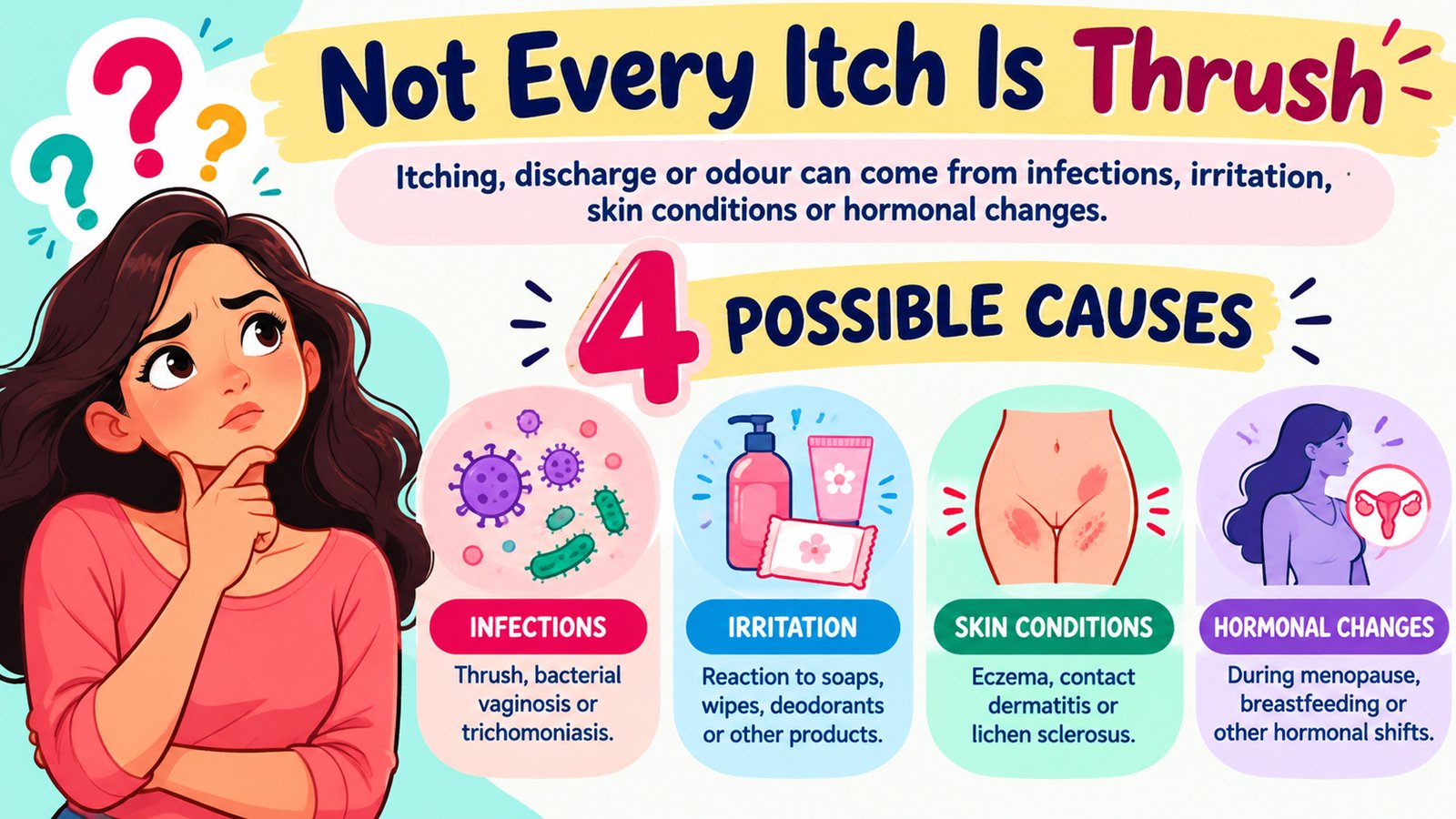
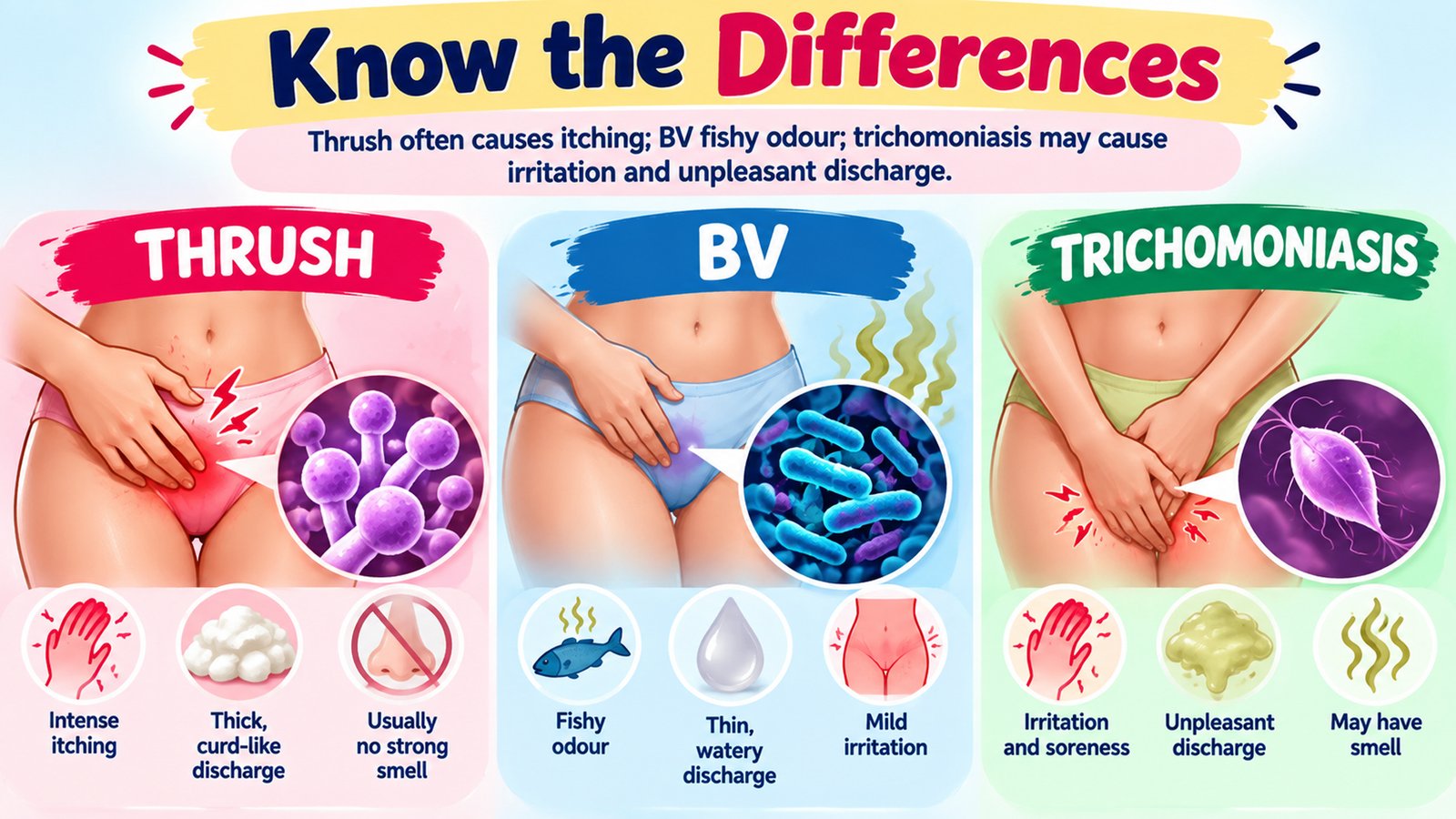
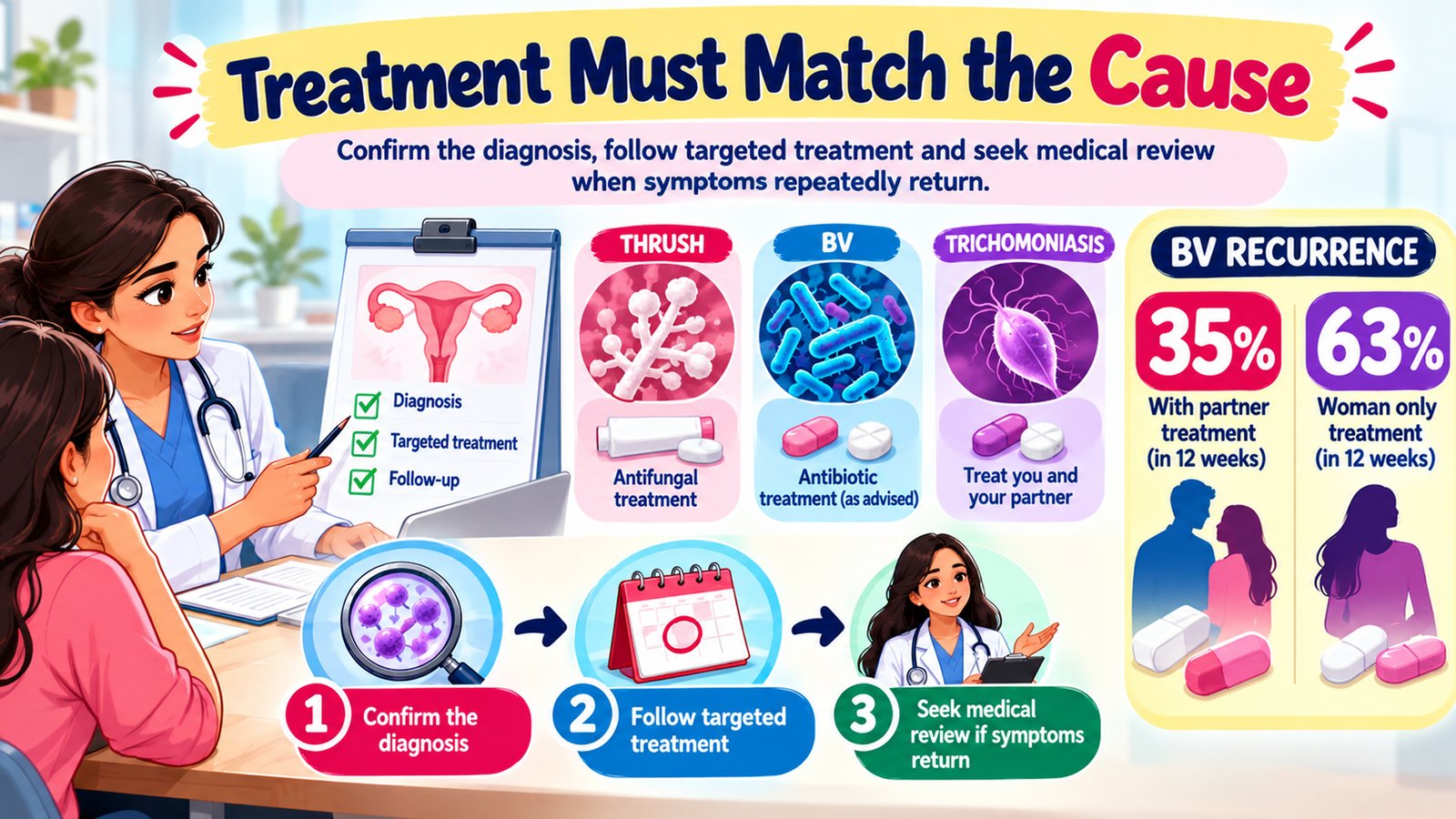
Thrush, or vulvovaginal candidiasis, is caused by overgrowth of Candida yeast, a type of fungus. It can produce intense itching, soreness and thick, curd-like discharge. The vulva is the external genital skin; the vagina is the internal canal. Thrush discharge usually lacks a strong smell, although appearances vary.
Bacterial vaginosis, or BV, is a change in the balance of vaginal bacteria. A thin discharge and fishy odour are characteristic. Its scale is striking: WHO’s November 2025 fact sheet cites global prevalence estimates of 23–29% among reproductive-age women. These are international estimates, not an India-specific rate.
Trichomoniasis is different again: a sexually transmitted infection caused by a microscopic parasite. It may cause irritation and malodorous discharge, yet many people have few or no symptoms. Inflammation of the cervix, the neck of the womb, can also cause abnormal discharge and may require testing for sexually transmitted infections.
Then there are conditions without an infectious cause. Contact dermatitis—skin inflammation caused by irritation or allergy—can follow exposure to products used around the vulva. Eczema and lichen sclerosus, an inflammatory skin disorder, can also cause persistent itching. Hormonal changes around menopause or during breastfeeding may produce dryness, burning and painful sex. Antifungals do not treat those causes.
Why symptoms return
With thrush, antibiotic use, poorly controlled diabetes, pregnancy or reduced immunity can make yeast overgrowth more likely. However, most women with recurrent thrush have no obvious underlying condition. Recurrence does not automatically mean poor hygiene or a failing immune system.
Recurrent candidiasis is generally defined as three or more confirmed symptomatic episodes within a year. Some cases involve Candida species that respond less well to usual medicines; resistance, meaning a medicine no longer works reliably against the yeast, can also occur. Identifying the yeast becomes important when treatment repeatedly fails.
BV has its own reasons for returning. Bacteria can form a biofilm, a community attached to the vaginal lining. Persistent microbial imbalance and exchange of BV-associated bacteria between partners can contribute to recurrence. This exchange can occur within an ongoing relationship and does not establish infidelity.
In trichomoniasis, recurrence often means reinfection from an untreated partner, although incomplete treatment and drug resistance are other possibilities. These distinctions matter because each calls for a different response.

When self-treatment adds to the problem
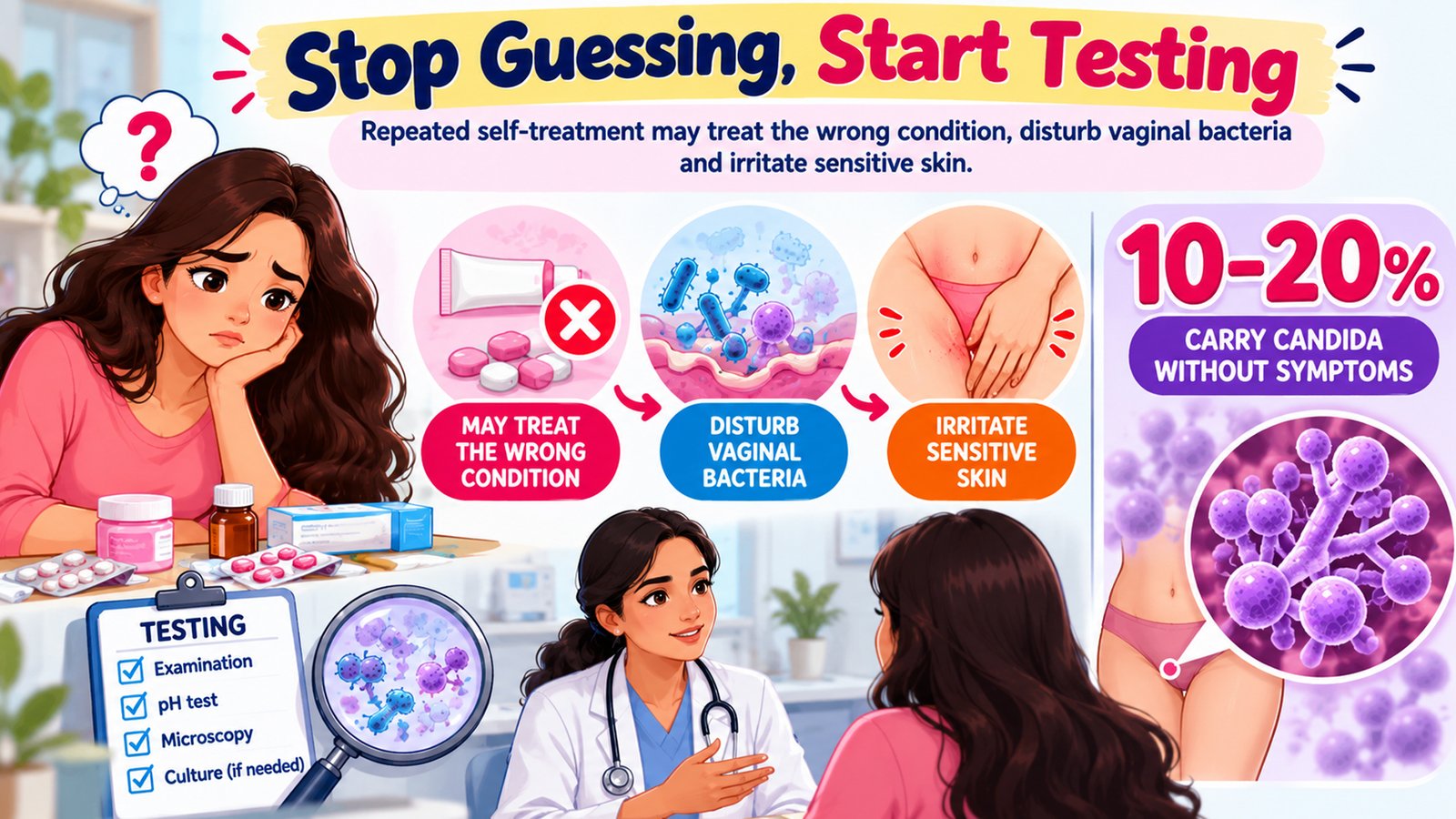
A familiar symptom can tempt someone to buy the same tablet or cream from a pharmacy. But an antifungal will not treat BV, and an antibiotic is not a treatment for thrush. Unnecessary antibiotics may themselves disturb the microbial balance and encourage Candida overgrowth.
Repeated creams can also irritate sensitive skin. Meanwhile, treating the wrong condition delays appropriate care. The US Centers for Disease Control and Prevention (CDC) advises assessment and testing when suspected thrush persists after an over-the-counter treatment or returns within two months. There is no need to wait for several more episodes.
“Natural” does not make a vaginal product harmless. Herbs and other substances inserted into the vagina can increase BV risk. Boric acid has selected specialist uses, but it is toxic if swallowed and should not be used in pregnancy. It is not an everyday cleansing product.
Probiotics are also marketed for vaginal health. There is no substantial evidence for treating thrush with probiotics, and commercial probiotic products should not replace established BV treatment. A plausible idea about “good bacteria” is not proof that a particular product works.
What a useful consultation should establish
Bring previous reports and the names of everything used, including washes, creams and tablets. Note whether symptoms relate to periods, sex or antibiotic courses. A medical and sexual history helps guide testing; these questions are part of routine care, not a judgement.
Examination should include the external skin as well as vaginal discharge. Depending on the findings, testing may involve vaginal pH and microscopy—measuring acidity and examining a sample under a microscope. A pH result alone cannot name the infection, and a negative microscope examination does not exclude every infection.
For suspected recurrent thrush, a fungal culture grows organisms from a sample to confirm the yeast and identify its species. Persistent cases may need susceptibility testing, which checks which medicines inhibit it. Molecular tests for trichomoniasis detect the parasite’s genetic material and are more sensitive than routine microscopy.
Tests need interpretation. About 10–20% of women carry vaginal Candida without symptoms; a positive result alone does not mean treatment is needed. Where laboratory facilities are unavailable, clinicians may use symptom-based treatment, but repeated failure should prompt reassessment and testing or referral where possible.
A treatment plan that matches the diagnosis
Confirmed recurrent thrush may require treatment over several months, rather than repeated isolated doses. The choice depends on the organism, previous response and pregnancy status. Suppressive treatment reduces episodes but does not guarantee a lasting cure. Partners do not routinely need thrush treatment unless they have symptoms.
Recurrent BV may require a clinician-directed suppressive vaginal treatment after the initial course. There is also an important change in partner care. In the Australian StepUp trial, published in 2025, women received standard BV treatment; in one group, their ongoing male partners also received oral and topical antibiotics. Within 12 weeks, BV recurred in 35% of women in the partner-treatment group, compared with 63% when only the woman was treated.
Those findings informed October 2025 guidance from the American College of Obstetricians and Gynecologists (ACOG), which recommends considering concurrent treatment of male partners for adults with recurrent, symptomatic BV. New York State guidance published in 2026 also supports partner treatment. This is a discussion for confirmed BV with a clinician; the trial does not establish that every partner of everyone with vaginal symptoms needs antibiotics.
For trichomoniasis, treatment of all current sexual partners is essential. Avoid sex until everyone has completed treatment and symptoms have resolved; sexually active women should be retested at about three months because reinfection is common.
Pregnancy changes medicine choices. For thrush, a seven-day course of a vaginal azole antifungal—a medicine such as clotrimazole—is recommended; oral fluconazole should not be used. Seek obstetric advice rather than repeating an earlier prescription.
Gentle care and timely help
Wash the external skin gently, avoid scented wipes and deodorants, and do not wash inside the vagina. Dry carefully and change out of damp gym clothes. More cleaning is not necessarily better care.
Arrange review for recurrent symptoms. Seek prompt assessment for fever or pelvic pain, and for bleeding between periods or after sex. Bleeding after menopause always needs checking. In pregnancy, report unusual discharge, itching or soreness to your maternity clinician.
The useful next step is a diagnosis and a follow-up plan. Ask what has been confirmed, why it may be returning and what to do if treatment fails. No woman should have to keep guessing which medicine to buy next.
This article provides general health information and is not a substitute for individual medical assessment.
(The author is a consultant obstetrician and gynaecologist based in Bengaluru.)