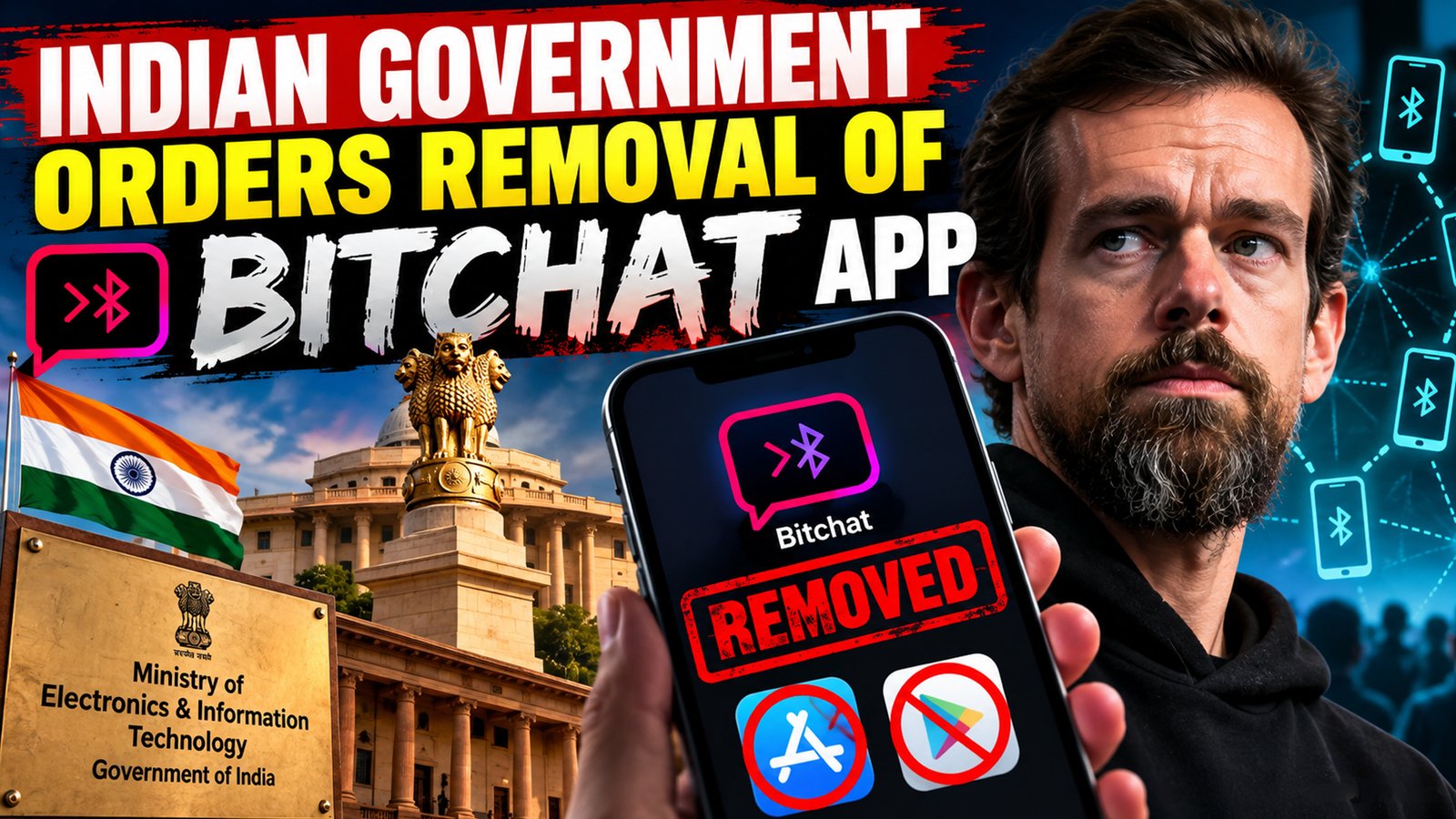
The Indian government has moved against Bitchat, the decentralised messaging application backed by Twitter co-founder Jack Dorsey, citing concerns over the platform’s ability to operate outside conventional internet networks. The move has triggered fresh debate over internet shutdowns, digital privacy, national security and freedom of communication.
The Ministry of Electronics and Information Technology (MeitY) directed action against the application under Section 69A of the Information Technology Act, 2000. Following the government demand, Apple removed Bitchat from its India App Store, making the application unavailable to users seeking to download it through Apple’s official marketplace.
The government’s intervention is significant because Bitchat was specifically designed to function without mobile data or Wi-Fi. Unlike conventional messaging platforms, the app uses Bluetooth mesh networking, allowing nearby smartphones to connect directly and relay encrypted messages between devices.
That feature can become particularly useful when internet services are restricted. Phones running Bitchat can form a local network, allowing messages to move from one device to another within Bluetooth range. The system does not depend on a central server to route every message.
This decentralised design is also at the heart of the government’s concerns.
Authorities have been increasingly focused on communication platforms that can continue functioning during internet shutdowns. Such applications can make it more difficult for conventional monitoring mechanisms to operate and could potentially be used to coordinate activities when mobile internet services have been suspended.
Bitchat had already attracted regulatory attention in India earlier this year. Authorities sought the removal of repositories associated with the application from GitHub after the platform gained visibility during protests in Delhi. The app was reportedly used by some protesters when internet connectivity was restricted around Jantar Mantar.
The issue has resurfaced amid fresh demonstrations in Delhi. Internet services were suspended around Jantar Mantar during protests on October 2, highlighting once again the importance of alternative communication tools capable of working without conventional connectivity.
Bitchat’s popularity had grown sharply during earlier protests. India accounted for a substantial majority of the application’s global downloads during a period in July, indicating strong interest in the technology at a time when access to normal internet-based communication was uncertain.
The government action reflects concerns that such popularity could grow whenever internet restrictions are imposed. From the authorities’ perspective, decentralised communication creates an additional challenge in maintaining security and enforcing lawful restrictions.
The move has nevertheless raised questions among digital rights advocates, who argue that restrictions on technology must be proportionate and transparent. Critics have questioned whether an entire application should be blocked because of the way its underlying technology works.
The Internet Freedom Foundation has criticised the action and argued that Section 69A should not be used to restrict an entire communication service simply because it has technical characteristics that make monitoring more difficult. It has also called for greater transparency around the government’s order.
The government has not publicly disclosed all the details surrounding the demand, leaving questions about the specific legal or security concerns that prompted the action.
Apple’s role came after the government request. The company removed Bitchat from the India App Store and also made its TestFlight version unavailable for testing in the country.
Dorsey drew attention to the development by sharing an Apple App Review notice. The notice referred to a demand from MeitY under Section 69A and stated that the application did not meet Apple’s requirements because it included content considered illegal in India.
Apple’s action means that Indian iPhone and iPad users can no longer download Bitchat through the company’s official Indian marketplace. The removal also demonstrates how global technology companies can become the enforcement point for government decisions involving digital platforms.
The episode is different from a conventional social media ban because Bitchat’s underlying technology is designed to reduce dependence on central infrastructure. Blocking an application through an app store can restrict mainstream access, but the broader question of decentralised communication is more difficult to resolve.
The development could therefore have implications beyond Bitchat. Developers are increasingly experimenting with peer-to-peer messaging, encrypted communication and decentralised networks that can continue operating when traditional internet infrastructure is unavailable.
The challenge for the policy makers is to balance legitimate security concerns with the rights of users to communicate. Internet shutdowns themselves have long been debated because of their impact on businesses, emergency communication, journalism and ordinary citizens.
The Bitchat case adds another layer to that debate. If communication applications can bypass conventional networks, governments may increasingly seek mechanisms to regulate or restrict them. At the same time, stronger restrictions could raise concerns about privacy and freedom of expression.
The immediate consequence is clear: Bitchat has lost access to Apple’s Indian App Store following government intervention. The larger implications, however, are still unfolding.