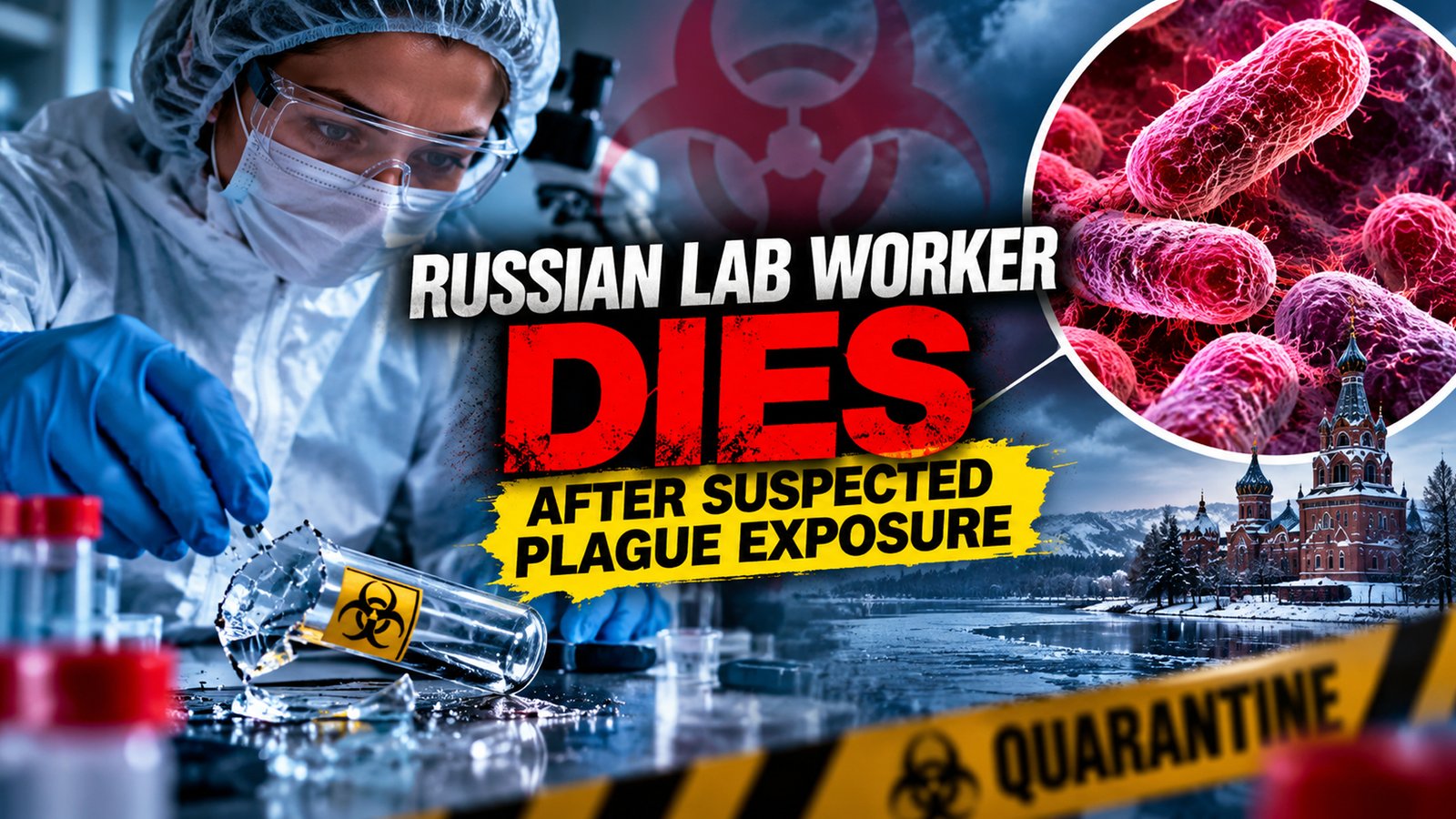
A laboratory worker’s death in Siberia has triggered fears of a possible pneumonic plague infection, prompting Russian authorities to place nearly 200 people under medical observation and introduce precautionary measures in parts of the Irkutsk region.
The 28-year-old woman, identified in local reports as Darya Shipilova, worked at the Irkutsk Research Anti-Plague Institute in Shelekhov, a town near Irkutsk in southeastern Siberia. She died on October 2 after developing severe pneumonia.
Russian health authorities have not confirmed that she had plague. The country’s consumer and public-health watchdog, Rospotrebnadzor, said she had been diagnosed with “pneumonia of unknown etiology”. Testing conducted after her illness did not detect microorganisms linked to her professional work, while officials said no laboratory accident involving pathogenic microorganisms had been recorded at the institute.
The uncertainty has nevertheless fuelled concern because of the woman’s workplace and reports of a possible laboratory exposure. Unofficial accounts have claimed that she accidentally broke a test tube containing Yersinia pestis, the bacterium that causes plague, while working at the facility on September 25. Russian authorities have not publicly confirmed that account.
The case has led to a cautious public-health response. People who had close contact with the woman are being monitored, while the hospital in Shelekhov where she was treated has faced quarantine restrictions. Some medical facilities in the wider region have also introduced tighter controls, according to local reports.
Reports indicate that around 197 contacts were identified, with nearly 200 people placed under observation. Officials have said those being monitored have not shown signs of the disease and that initial testing did not establish plague infection. Two contacts were reportedly found to have COVID-19, while two others tested positive for rhinovirus, a common cause of cold symptoms.
Authorities have repeatedly urged people not to panic. Rospotrebnadzor has described the sanitary and epidemiological situation in Irkutsk and Shelekhov as stable. Russia’s Kremlin has also urged the public to rely on official health information rather than unverified reports circulating online.
The situation has attracted attention beyond Siberia because pneumonic plague is one of the most serious forms of plague. Unlike the more familiar bubonic form, which is usually associated with swollen lymph nodes following flea bites, pneumonic plague affects the lungs and can spread between people through respiratory particles.
The disease is caused by Yersinia pestis, a bacterium normally associated with small mammals and fleas. According to the World Health Organization, pneumonic plague can develop rapidly and can become fatal if treatment is delayed. At the same time, early diagnosis and appropriate antibiotic treatment can significantly improve the chances of recovery.
That medical reality explains why authorities have moved quickly despite the lack of a confirmed plague diagnosis. Identifying and monitoring close contacts is an important part of controlling any suspected case of pneumonic plague, particularly when the source of infection remains unclear.
The incident has also raised questions about laboratory biosafety. Anti-plague institutes work with dangerous pathogens as part of disease surveillance, research and outbreak prevention. Such facilities require strict containment procedures because accidental exposure can have serious consequences for workers and, depending on the pathogen involved, the wider community.
The Irkutsk institute is an important public-health facility responsible for monitoring and preventing dangerous infectious diseases across Siberia and Russia’s Far East. The reported incident has therefore placed unusual attention on the safeguards used inside laboratories handling high-risk pathogens.
Precautionary measures have extended into everyday life. An aluminium plant in Shelekhov introduced a mask requirement for workers, while concern over the possible infection has contributed to rumours and anxiety among residents.
International health authorities are also watching the situation. The European Union has said it is monitoring reports of a suspected pneumonic plague case closely, while US officials have indicated that they are aware of the reports and are following developments with health agencies.
The most important distinction remains between suspected exposure and confirmed infection. At present, there is no publicly confirmed evidence of a wider pneumonic plague outbreak in Irkutsk. Russian authorities say the epidemiological situation remains stable, while testing and monitoring continue.
The coming days will be important in determining whether the laboratory worker’s death was connected to Yersinia pestis or another infection. Until clearer laboratory evidence emerges, health officials are treating the situation cautiously, balancing containment measures with efforts to prevent unnecessary public alarm.