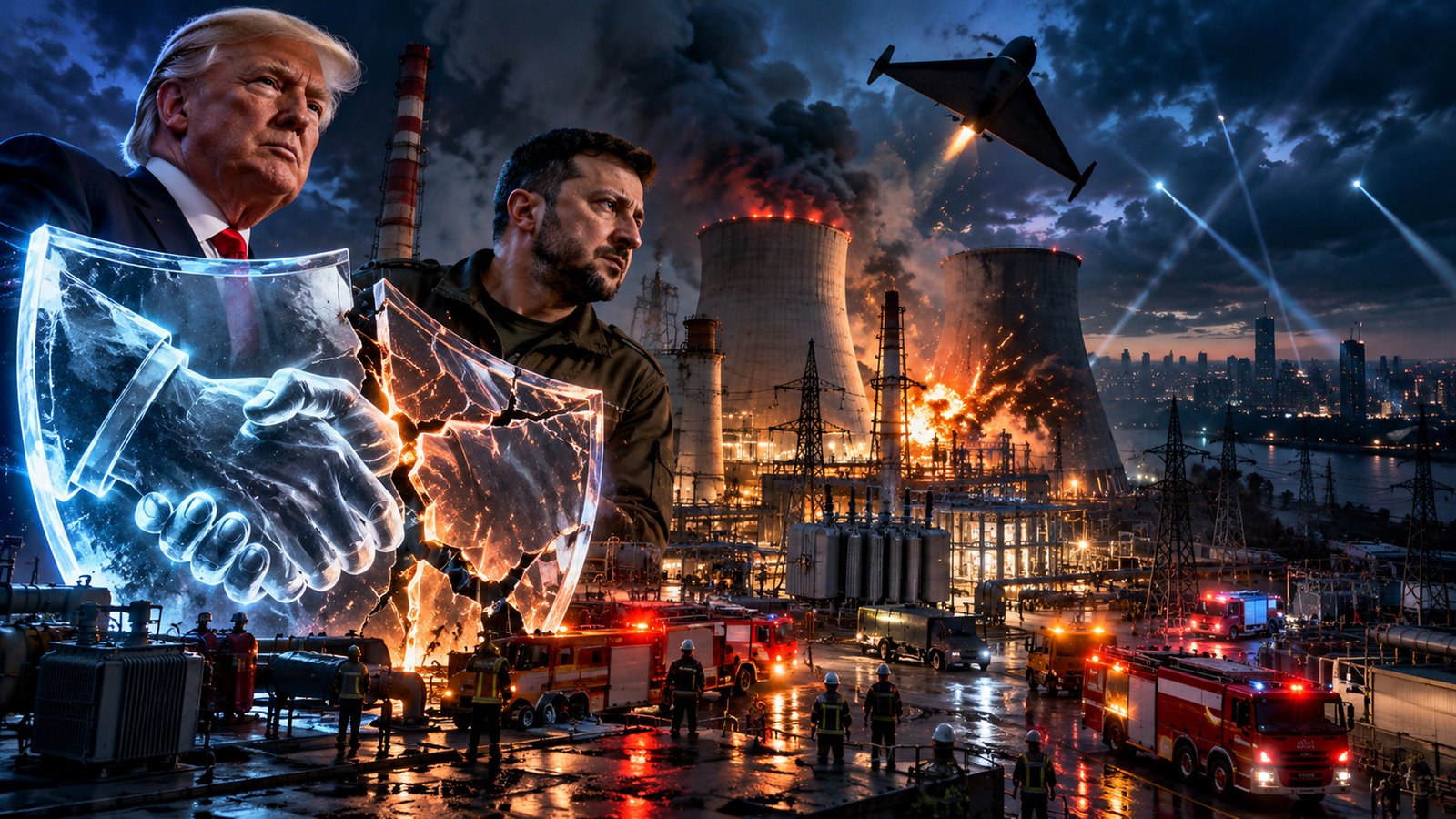
Russian strikes hit power plants in Ukraine on Sunday, hours after US President Donald Trump announced that Moscow and Kyiv had agreed to an immediate ceasefire covering energy infrastructure. Ukrainian President Volodymyr Zelensky said attacks continued in Kyiv and Kharkiv, raising fresh doubts about whether the proposed truce had been agreed upon by both sides.
Trump announced the so-called energy ceasefire on social media on October 11, saying both countries had agreed to stop attacking each other’s energy facilities. He provided no further details about the arrangement, including its terms or how compliance would be monitored.
The announcement was quickly overshadowed by reports of fresh Russian attacks. Zelensky said a drone struck a power plant in Kyiv, causing power outages in the Ukrainian capital. Another strike hit energy infrastructure in the northeastern city of Kharkiv, where a thermal power plant was reportedly struck at least twice, triggering a fire.
Ukraine said the attacks occurred after Trump’s announcement. Moscow had not publicly confirmed its participation in the proposed ceasefire at the time of the reports, leaving the status of the agreement uncertain.
Zelensky expressed surprise at Trump’s declaration, saying Kyiv had not received formal confirmation of an agreement from Russia. However, he indicated that Ukraine was prepared to stop targeting Russian energy infrastructure if Moscow agreed to reciprocal restrictions.
“Ukraine is ready to refrain from striking Russian energy infrastructure — and we count on the same readiness from Russia,” Zelensky said.
The Ukrainian president has repeatedly called for an end to attacks on energy facilities, arguing that a halt must apply equally to both countries. He also urged Washington to press Moscow to demonstrate that it was prepared to honour the proposed arrangement.
The developments have exposed the difficulties facing diplomatic efforts to limit the damage caused by the four-and-a-half-year war, which began with Russia’s full-scale invasion of Ukraine in February 2022.
Power plants, electricity networks and other energy facilities have been central to the conflict because attacks can disrupt essential services far beyond the immediate battlefield.
Russia’s repeated strikes on Ukrainian energy infrastructure have damaged power generation and distribution systems, leaving communities vulnerable to outages. Such attacks have raised concerns about access to electricity, heating and water, particularly as colder weather approaches.
Ukraine has also targeted Russian energy infrastructure, including oil refineries and other facilities that contribute to Moscow’s economy and military operations. Kyiv views these strikes as a way to weaken Russia’s ability to finance and sustain its war effort.