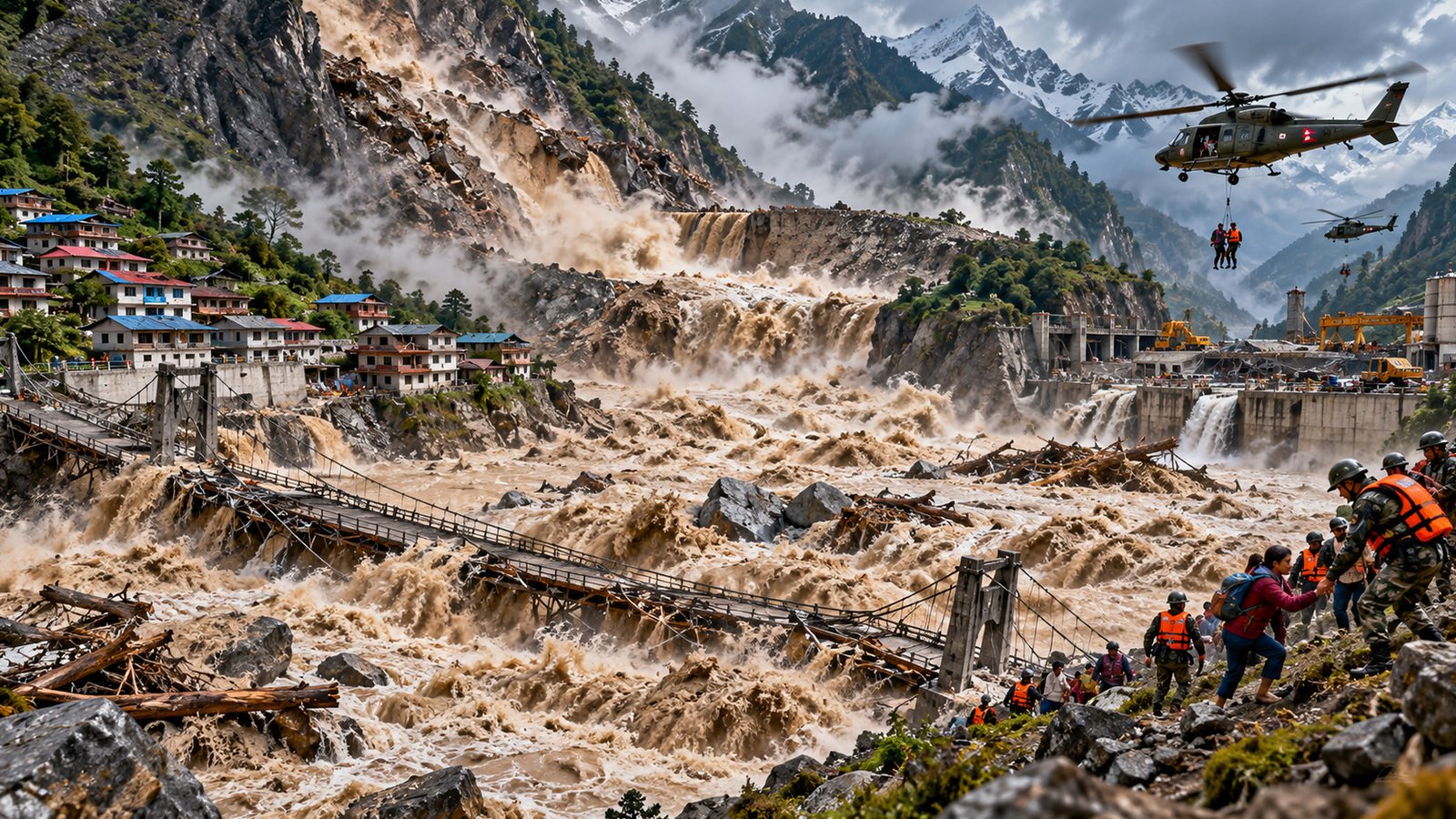
A devastating flash flood along Nepal’s Budhi Gandaki River has left at least five people missing, destroyed homes and bridges, and damaged hydropower infrastructure in the country’s Gorkha district. Rescue teams are searching for those unaccounted for, while residents have been evacuated from vulnerable riverside settlements and more than 100 foreign trekkers have reportedly been stranded after floodwaters damaged routes in the mountainous region.
The flood struck on Sunday, October 11, after a landslide near Chumchure village temporarily blocked the river. Water accumulated behind the natural barrier before breaking through, releasing a powerful surge downstream. The sudden flow carried mud, rocks and debris through settlements, damaging buildings and infrastructure along the riverbanks.
The missing people were reported to include two women and three men. Authorities had not confirmed any deaths in the initial reports, but the scale of destruction raised concerns about the safety of residents in remote communities. Officials were continuing to assess the situation as rescue workers reached affected areas.
The flood swept away houses and bridges, damaged electricity infrastructure and communication towers, and disrupted transport links. Reports on the number of homes affected varied as officials worked to establish the full extent of the damage. The loss of bridges has made it difficult to reach some settlements and could delay the delivery of essential supplies.
Hydropower infrastructure along the Budhi Gandaki River was also affected. Construction sites, equipment and parts of work camps were damaged or swept away by the rushing water. The damage could disrupt ongoing projects and add to the cost of rebuilding infrastructure in the region. Authorities were assessing the extent of the losses.
Nepal’s army and emergency personnel have been deployed for search, rescue and evacuation operations. Ground teams are helping residents move to safer locations, while helicopters have been used to reach areas where roads and bridges have been damaged. Food, medicines, tents and other relief supplies are being arranged for affected families.
Reports indicated that around 95 to 96 people, including nine foreign nationals, had been rescued. The search for the missing continued, with difficult terrain and damaged access routes complicating rescue efforts.
Authorities have urged people living along the Budhi Gandaki and other vulnerable riverbanks to move to higher ground. Warnings have also been issued for downstream areas, including parts of Gorkha, Tanahun, Chitwan, and East and West Nawalparasi districts, where rising water levels could pose further risks.
Early-warning messages helped some residents leave before conditions deteriorated. Officials issued alerts to downstream communities after receiving information about the flood. However, the speed and force of the water left little time for people in some locations to protect their homes and belongings.
The disaster has also disrupted trekking routes in the Manaslu region, a popular destination for international visitors. More than 100 foreign trekkers were reported stranded after bridges and trails became impassable. Some were waiting for assistance, while others remained in safer locations until authorities could determine whether routes could be used.
Rescue teams and local authorities have been working to establish the trekkers’ locations and assess the safest way to bring them out. The disruption is particularly concerning because visitors travelling through remote mountain areas depend on footbridges, narrow trails and local accommodation to move between settlements.
The incident highlights the risks faced by communities and visitors in Nepal’s mountainous terrain, where landslides can block rivers and trigger sudden floods. Such events can cause extensive damage even when the immediate area has not experienced prolonged heavy rainfall. Once a natural barrier gives way, the sudden release of accumulated water can sweep away structures and carry large amounts of debris downstream.
Nepal remains vulnerable to floods and landslides, particularly during periods of heavy rain. The country has faced repeated weather-related emergencies in recent months, placing pressure on emergency services and local administrations. Earlier disasters have damaged homes, roads and other essential infrastructure, leaving some communities struggling to recover.
The latest flood adds to those challenges, particularly in remote districts where difficult geography can delay rescue operations and rebuilding. Damaged bridges and roads are not only transport problems; they also affect access to healthcare, education, markets and emergency supplies.
Officials continue to monitor river conditions and have advised residents to stay away from riverbanks and other high-risk areas until conditions are safe. The number of people affected and the full extent of the destruction may change as assessment teams reach more remote locations.
The coming days will be critical for the search operation and relief efforts. The disaster has once again exposed the vulnerability of Nepal’s mountain communities to sudden flooding and landslides, underscoring the importance of reliable early-warning systems, safer infrastructure and rapid evacuation plans.