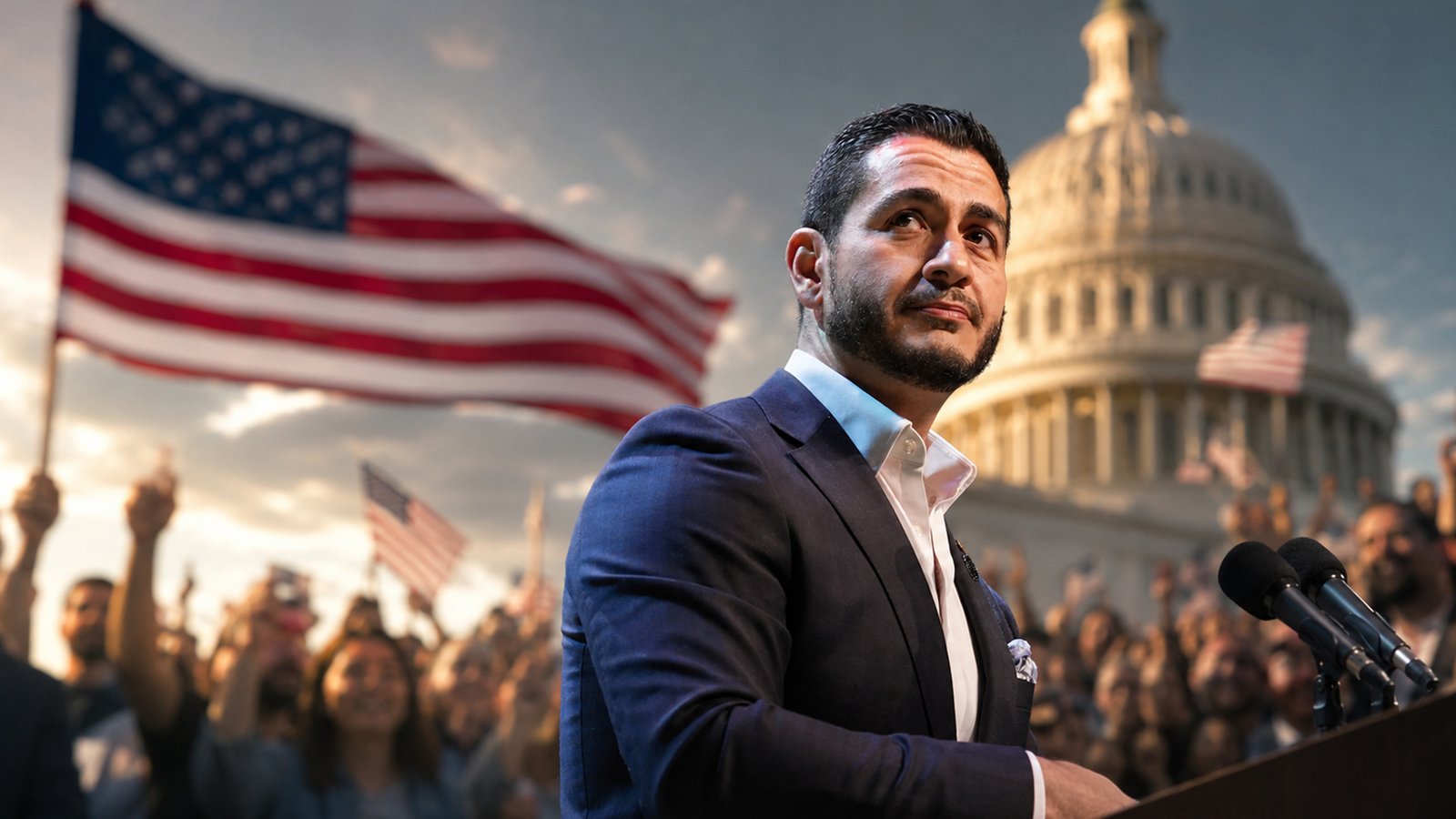
Abdul El-Sayed has won the Democratic nomination for the US Senate in Michigan, defeating establishment-backed Congresswoman Haley Stevens in a closely fought primary that exposed deep divisions within the Democratic Party.
The victory is a major boost for the party’s progressive wing and a setback for powerful pro-Israel groups that spent heavily to stop El-Sayed. The former Detroit-area public health official will now face Republican former Congressman Mike Rogers in the November 2026 midterm election. The Michigan Senate race could play an important role in determining control of the US Senate.
The Democratic primary remained too close to call for hours after polls closed on Tuesday. Major news organisations called the race for El-Sayed on Wednesday, after almost all ballots had been counted. He finished with only about a one-percentage-point advantage over Stevens, underlining just how competitive the contest had become.
The result was especially notable because El-Sayed was heavily outspent. More than $60 million was spent in the race, much of it by groups opposing his candidacy. AIPAC, through its political network, backed Stevens and spent more than $30 million in an effort to defeat El-Sayed, according to Al Jazeera.
Despite that spending, El-Sayed built a campaign around healthcare, economic concerns and a more critical approach to US policy towards Israel. He also argued that American resources should be directed towards issues such as healthcare, housing and infrastructure at home.
The Israel-Gaza conflict became one of the defining issues of the Michigan Senate primary. El-Sayed has sharply criticised US support for Israel and called for an end to unconditional military assistance. His position helped him attract support from progressive voters and parts of Michigan’s large Arab American community.
For AIPAC and other groups that supported Stevens, the result represents a significant setback. The primary was widely watched as a test of whether large-scale outside spending could prevent a progressive candidate from winning a Democratic nomination.
El-Sayed’s victory suggests that money alone was not enough to settle the contest. His campaign relied heavily on grassroots organising and a message focused on issues that mattered to voters in Michigan, including healthcare and the economy.
The result also carries historic significance. If El-Sayed wins the November Senate election, he would become the first Muslim senator in US history. He is of Egyptian descent and has previously served as Detroit’s health director and Wayne County’s chief health strategist.
His primary victory, however, is only the first step. Michigan is a politically competitive state, and the November contest against Mike Rogers is expected to be closely watched. Rogers, a former Republican congressman, is seeking to return to the Senate after narrowly losing a 2024 Senate race.
For Democrats, the challenge now is to turn a divisive primary victory into a united general-election campaign. Stevens had received support from prominent Democratic figures, including Michigan Governor Gretchen Whitmer and Senator Gary Peters, before the primary. Both have since backed El-Sayed for November.
Stevens herself also endorsed El-Sayed after the race was called. She described him as a doctor, community health official and dedicated Michigander and said she would support his campaign against Rogers. Her endorsement could help Democrats begin repairing divisions created during the primary.
El-Sayed appeared aware of that challenge. After declaring victory, he urged his supporters not to dwell on the bitter primary and called for Democrats to come together. His message was aimed at voters who had supported Stevens as well as those who backed his progressive campaign.
“This is a very different race now,” his campaign effectively signalled as it turned its attention towards November. Instead of continuing to fight fellow Democrats, El-Sayed will now focus on Rogers and the Republican Party.
President Donald Trump, meanwhile, welcomed El-Sayed’s victory, arguing that it would benefit Republicans in the general election. Trump sharply criticised the Democratic nominee after the result was announced.
The Michigan Senate race is therefore likely to become an important national political contest. Democrats are hoping to regain control of the Senate, while Republicans will try to hold their position and expand their influence during the 2026 midterm elections.
For El-Sayed, the immediate task is clear: broaden his appeal beyond the progressive voters who carried him through the Democratic primary. His campaign will need to win over moderates, independents and voters who supported Stevens.
For Democrats, the primary result is both an opportunity and a warning. It shows the strength of the party’s progressive base, but it also highlights the political disagreements over Israel, foreign policy and the direction of the party.
The November election will ultimately determine whether El-Sayed’s upset victory becomes a historic breakthrough or simply a striking moment in the 2026 Democratic primary season.