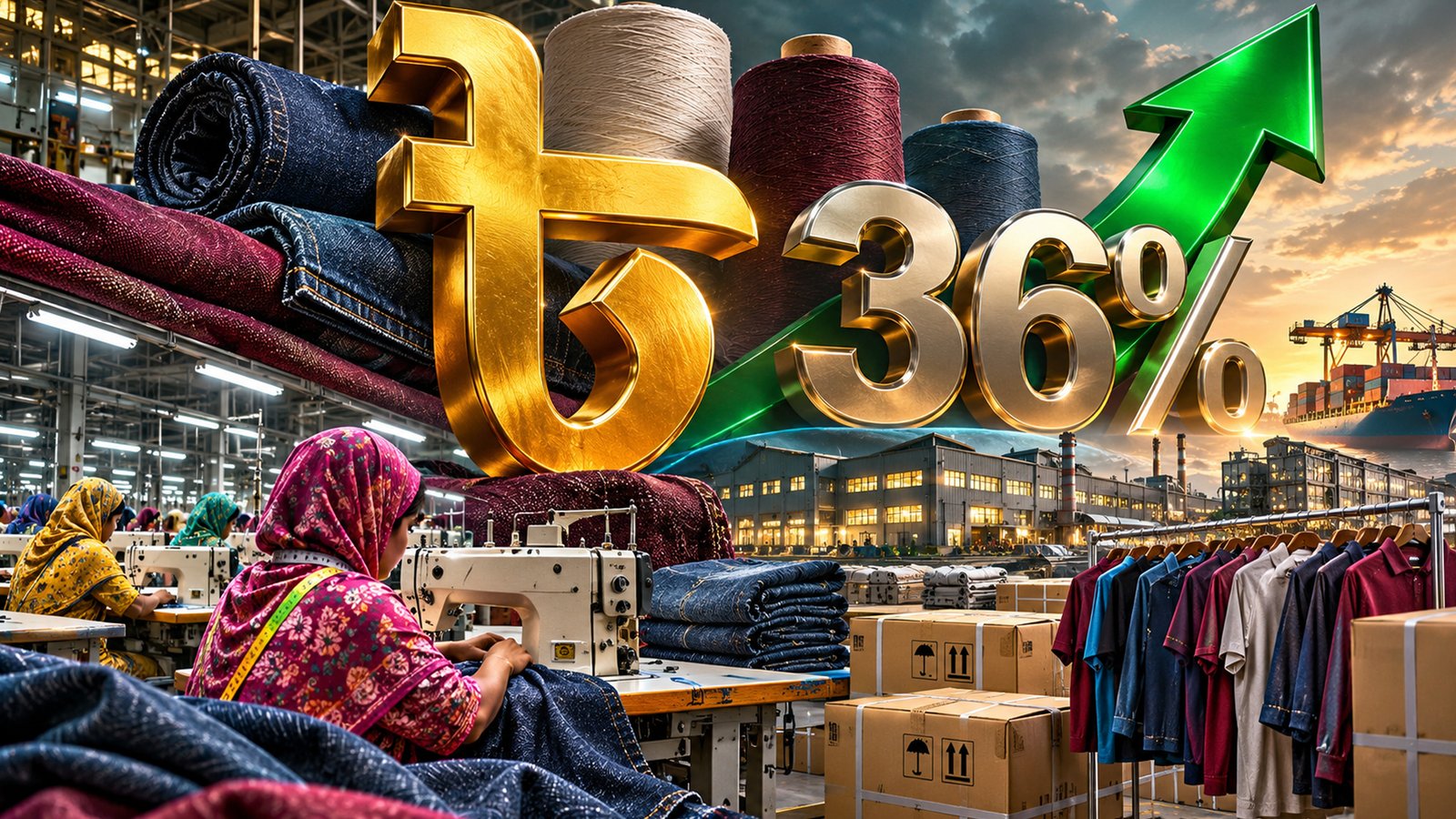
Bangladesh has raised the minimum monthly wage for garment workers to Tk 17,000, marking a 36% increase from the existing Tk 12,500. The decision follows weeks of labour unrest, demonstrations and negotiations between worker representatives and garment manufacturers. However, the revised wage has not fully addressed workers’ demands, with sections of the workforce continuing to seek higher salaries to cope with rising living costs.
The government-appointed Minimum Wage Board approved the revised amount on November 25 after nearly 12 hours of discussions. The six-member board considered proposals from both workers and employers before reaching a decision. Four members supported the Tk 17,000 proposal, while two favoured a higher monthly minimum of Tk 18,000.
The workers’ representative, Babul Akhtar, had argued for better compensation, pointing to the increasing cost of food, housing, healthcare, transportation and other essential expenses. Workers had initially demanded a minimum monthly salary of Tk 32,000 when the wage board began its consultations.
The employers’ representatives, meanwhile, sought to limit the increase, citing the financial pressures facing garment manufacturers and the need to maintain competitiveness in international markets.
The previous minimum wage of Tk 12,500 came into effect in December 2023. The latest revision increases the monthly payment by Tk 4,500, offering some relief to workers who have repeatedly raised concerns about their purchasing power.
The wage board is preparing the draft gazette notification detailing the revised salary structure and different worker grades. Once the draft appears in the official gazette, workers and employers will have 14 days to submit objections or recommendations in writing. The board will consider these representations before the government issues the final notification.
The revised wage structure is scheduled to take effect from December 1, 2026. Workers are expected to receive salaries under the new rates from January 2027.
Protests continue despite wage increase
The announcement has not brought an immediate end to labour unrest across Bangladesh’s garment manufacturing centres. Workers in Gazipur, Ashulia, Savar and Mirpur have continued to express dissatisfaction with the revised amount.
On November 26, police used tear gas and sound grenades to disperse garment workers attempting to block a major highway in Gazipur. Some protesters also reportedly set fire to a police motorcycle, highlighting the continuing tension between workers and authorities.
Labour organisations have argued that Tk 17,000 remains inadequate to meet the everyday expenses of garment workers and their families. They have also questioned whether the revised wage structure sufficiently recognises workers’ experience, skills and contribution to the country’s export economy.
The protests reflect a wider debate over wages and working conditions in Bangladesh’s garment industry. Although the sector has expanded significantly over the years, many workers continue to face financial difficulties despite long working hours and demanding production targets.
The government must now ensure that factories implement the revised wage structure without further disruption. Any delay in implementation could trigger additional demonstrations and affect industrial operations.
Garment industry faces cost pressures
Bangladesh’s ready-made garment (RMG) industry is one of the country’s largest sources of employment and foreign exchange earnings. It employs more than four million people, a large proportion of whom are women, and supplies clothing to major international brands and retailers.
The wage increase will raise operating expenses for manufacturers, particularly smaller factories that work with limited profit margins. Industry representatives will need to balance higher labour costs with production efficiency and competitive pricing.
However, better wages could also help improve worker satisfaction, reduce labour unrest and support greater stability in the manufacturing sector.
The coming weeks will be important for Bangladesh’s garment industry as the government completes the gazette process and factories prepare to implement the revised rates. The effectiveness of the increase will ultimately depend on timely payments, proper enforcement and whether the new salary structure provides meaningful relief to workers.