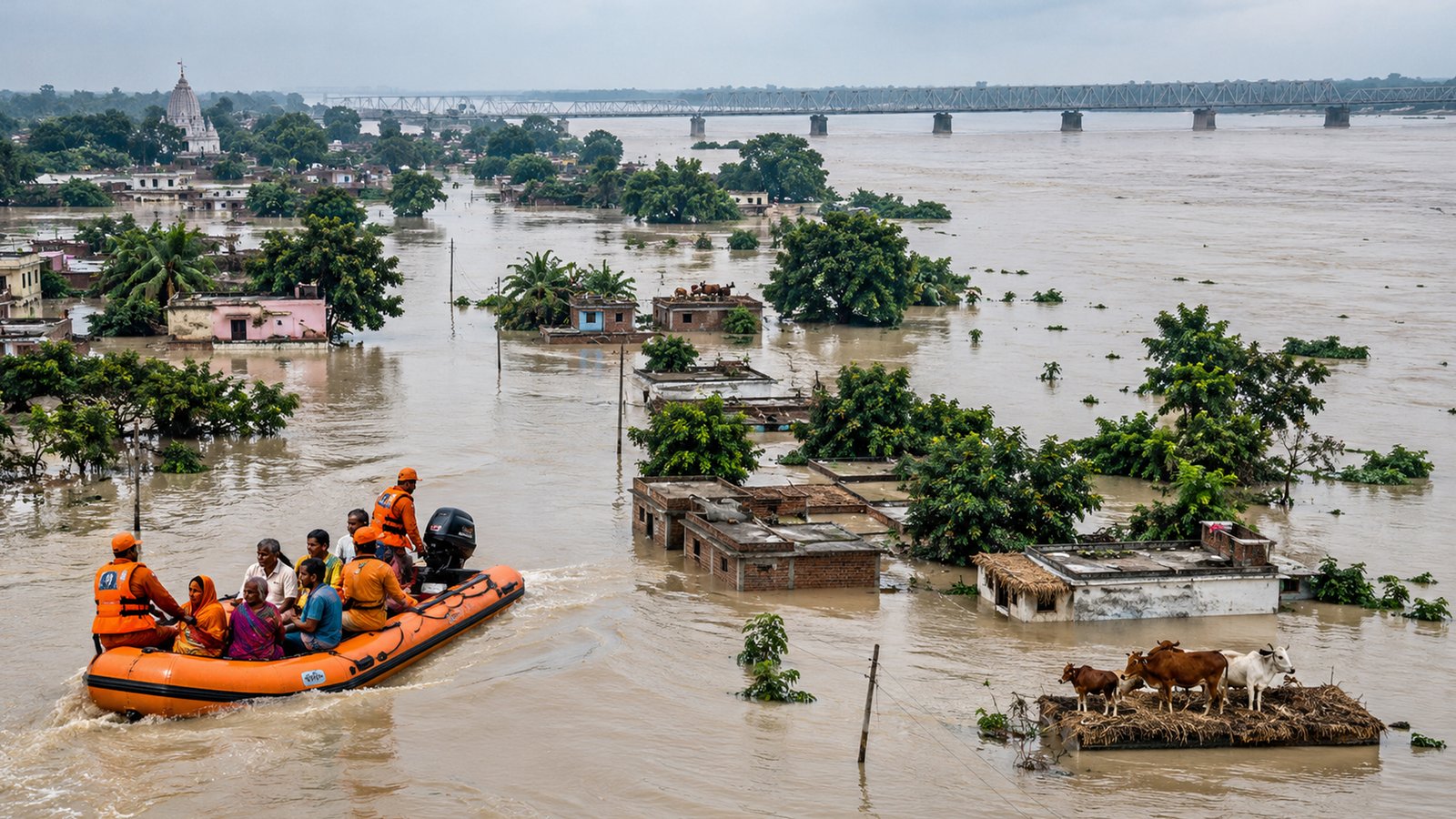
Bihar’s flood situation has worsened, with more than 27 lakh people now affected across 13 districts as the Ganga and several other rivers remain swollen after heavy monsoon rainfall. The crisis has expanded beyond the 19.57 lakh people reported affected across 11 districts earlier, prompting authorities to intensify rescue, relief and monitoring operations.
The Ganga remains a major concern, particularly in Patna. At Gandhi Ghat, the river was flowing at 50.41 metres at 6 am on Monday, around 1.57 metres above the danger level. The river had earlier crossed its previous highest flood level at the same location, raising the risk of further inundation in low-lying areas and communities downstream.
The rising water has brought fresh pressure on several districts along the Ganga and its tributaries. Patna, Bhojpur, Saran, Vaishali, Bhagalpur, Begusarai, Buxar, Samastipur, Munger, Katihar and Araria were among the districts affected in the earlier phase of the flooding. The latest reports indicate that the situation has since expanded to 13 districts.
The rising water has turned ordinary routines into a daily struggle, for people living close to the riverbanks,. Floodwaters have entered homes and settlements in several places, while roads and local routes have been submerged or cut off. Families in vulnerable areas are being moved towards safer locations as authorities keep a close watch on river levels and embankments.
Begusarai has emerged as one of the badly affected areas, with nearly 3.8 lakh people impacted across 37 panchayats as the Ganga approached its highest flood level there. Authorities have opened community kitchens and expanded local relief measures to provide food to families affected by the flooding.
The administration has also stepped up emergency services. National Disaster Response Force (NDRF) and State Disaster Response Force (SDRF) teams are involved in rescue and evacuation operations, using boats to reach communities surrounded by floodwater. Authorities are keeping additional resources ready in vulnerable areas in case the situation deteriorates further.
Food and healthcare have become immediate priorities for displaced and stranded families. The state has expanded community kitchens to ensure people in flood-hit areas receive cooked meals. Boat ambulances and other emergency transport arrangements are also being used to help residents reach medical facilities and maintain access to essential services.
The floods have also disrupted transport in parts of the state. Rail services on the Patna-Gaya route have been affected by waterlogging, creating additional difficulties for commuters and residents trying to travel through affected areas. With several local roads also submerged, boats have become an important link for communities cut off by floodwaters.
The threat is not limited to the Ganga. Rivers including the Punpun, Dardha and other tributaries are adding to the pressure in and around Patna. Authorities are particularly concerned about downstream areas as the Ganga continues to remain above the danger level from Patna towards Bhagalpur.
Official river monitoring data on Monday showed the Ganga continuing above danger levels at several locations. At Gandhi Ghat in Patna, the water level was recorded at 50.40 metres at 2 pm, compared with a danger level of 48.60 metres. The river was also above the danger mark at Hathidah, Kahalgaon and Bhagalpur, highlighting the continuing flood risk along the river’s course.
There are, however, some signs of movement in individual river systems. The Sone’s discharge has fallen, which could help ease pressure around parts of Patna. Even so, officials remain cautious because water levels in the Ganga are still high and the flood threat has spread downstream.
Weather conditions remain another concern. Further rainfall could push already swollen rivers higher and complicate rescue efforts. The India Meteorological Department has forecast heavy rain in Bihar and several other parts of the country, keeping authorities on alert.
The flooding is also threatening agriculture and livestock. Large stretches of farmland in affected districts have been inundated, raising concerns about crop damage and losses for farmers. Prolonged flooding could also affect roads, local infrastructure and drinking-water supplies, adding to the challenges once the immediate emergency begins to ease.
The focus is now on preventing loss of life, evacuating people from vulnerable areas and ensuring that food, drinking water and medical assistance reach those who remain stranded. Authorities are also monitoring embankments and river levels closely as the floodwaters move downstream.
The latest escalation shows how quickly Bihar’s flood situation has changed. What began with more than 19 lakh people affected across 11 districts has now expanded to over 27 lakh people across 13 districts. With the Ganga still above danger levels and more rain possible, officials are maintaining heightened vigilance across the state.
Rescue teams, boats, community kitchens and emergency medical services are providing a crucial lifeline as Bihar confronts one of its most serious flood situations of the monsoon season.