
The Summaries

Trump warns Iran over 2026 World Cup participation
Donald Trump said Iran’s football team should avoid the 2026 FIFA World Cup, warning it could endanger players due to rising Middle East tensions. Iran has already qualified, but the remark sparked debate over politics influencing international sports participation.

Iran threatens Strait of Hormuz oil blockade
Iran’s Islamic Revolutionary Guard Corps has warned it will prevent any oil shipments through the Strait of Hormuz if linked to the U.S., Israel, or their allies. Officials say this could push crude prices toward $200 per barrel, as the waterway handles roughly one‑fifth of the world’s oil.

Drone attack sparks fire at Salalah port, Oman
A suspected drone strike triggered a fire at oil storage tanks in Port of Salalah. Firefighters are working to control the blaze, officials said, while no injuries have been reported so far.
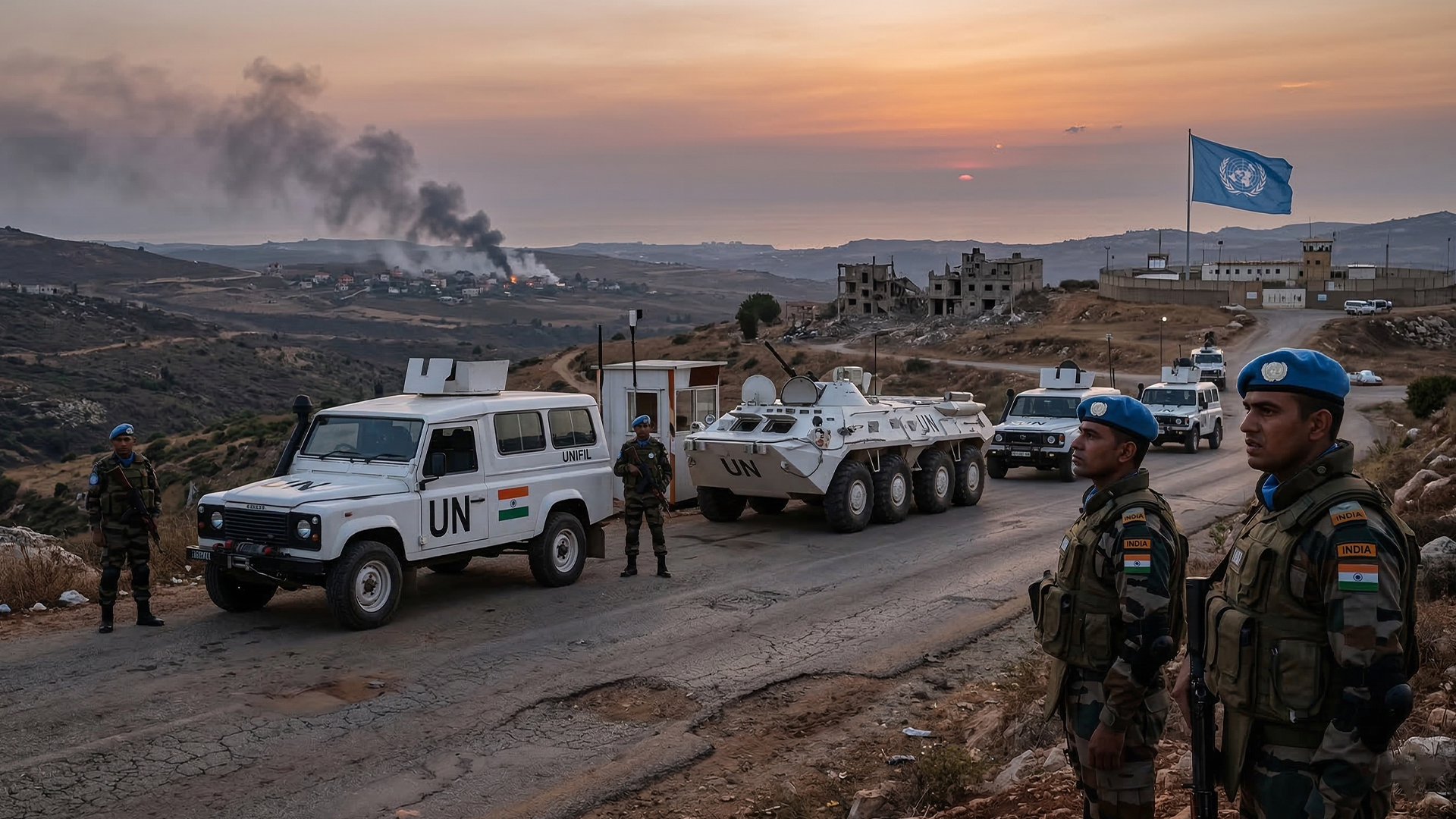
India joins global alarm over Lebanon hostilities
India, along with 30 UN member states, expressed serious concern over rising hostilities in Lebanon, condemning Hezbollah’s actions, urging a ceasefire, and emphasizing the safety of civilians and UN peacekeepers.

Kumbh fame Monalisa marries a muslim
Monalisa Bhosle, known for her Kumbh Mela fame, married businessman Farman Khan in Kerala. She rejected “love jihad” claims, saying their marriage is based on love and mutual respect, drawing congratulations from fans across India.

Air India adds 58 West Asia flights
Air India and its subsidiary will operate 58 flights to and from West Asia on March 12. The move aims to assist travelers amid ongoing geopolitical tensions affecting the region’s air travel.

Census 2027 to include transgender heads
The government told the Rajya Sabha that the Census of India 2027 will record household heads as male, female or transgender. The move aims to ensure better representation and more inclusive data collection in the upcoming national census.

Sara Arjun is the brand ambassador for McDonald’s
McDonald’s India (North and East) has named Sara Arjun its brand ambassador. She recreates her popular childhood “boyfriend-girlfriend” advertisement in a new campaign promoting the ₹119 Buddy Meal.

Nick Jonas’ friend Maya Kibbel dies at 30
Singer Nick Jonas mourns his childhood friend and “sister,” Maya Kibbel, who passed away at 30 due to the rare genetic condition Wilson’s disease, which damages the liver and other organs.

India secures 30 million barrels of Russian oil
India has purchased 30 million barrels of Russian crude after a US waiver, as the Middle East conflict disrupts oil supplies, ensuring continued refinery operations and easing short-term energy shortages.
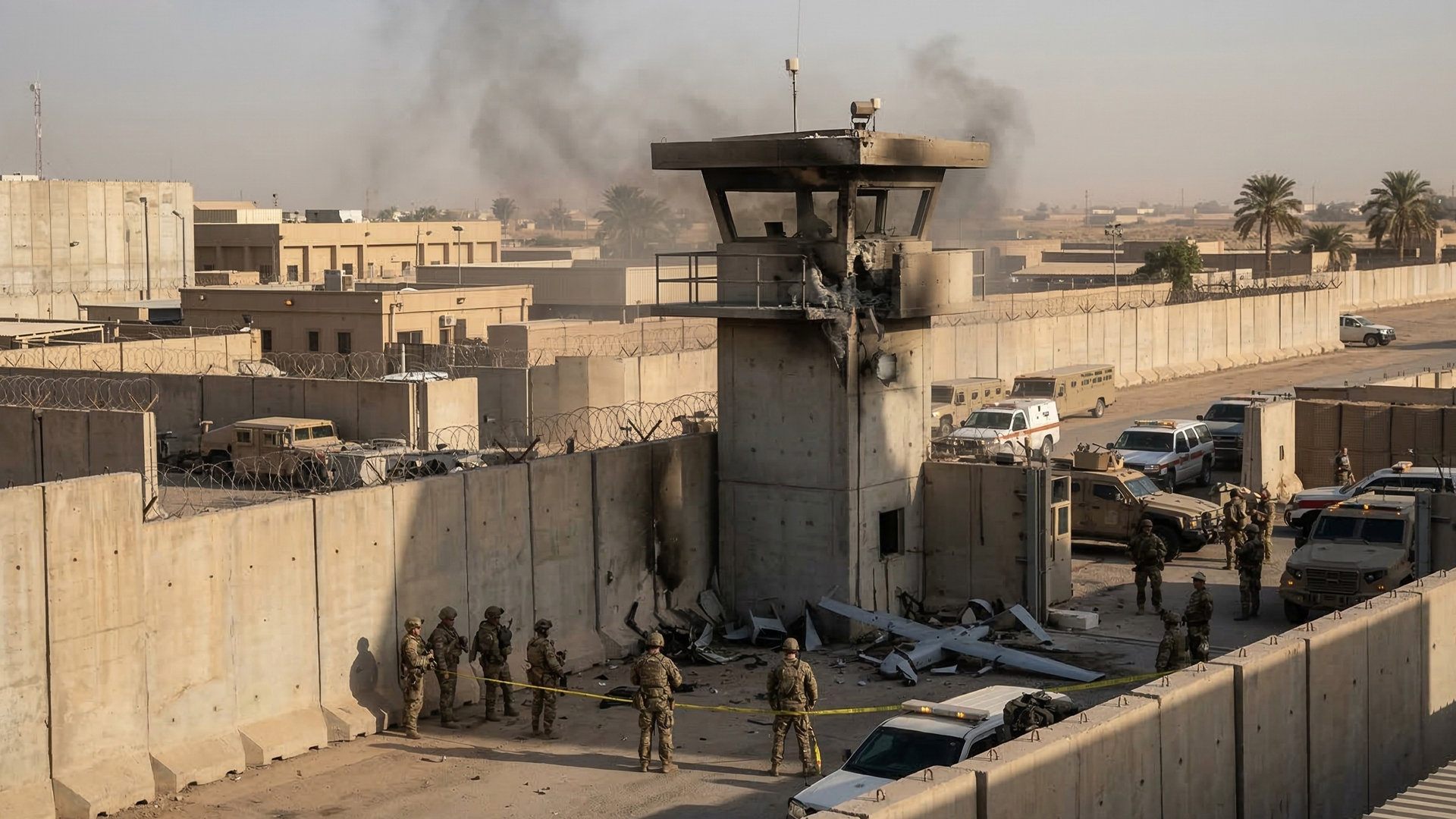
Drone hits US diplomatic facility in Iraq
A drone struck the US diplomatic center near Baghdad International Airport. Iraqi air defenses shot down most drones, and no one was injured. Iran-backed militias are suspected, highlighting rising tensions amid the ongoing Middle East conflict.

7 workers killed in Gurugram site collapse
Seven workers were killed and four injured when a mound of soil gave way at a construction site in Sidhrawali, Gurugram. Police have arrested two supervisors, and authorities have launched an investigation into safety violations at the site.
About This Category
The Format Is the Editorial Argument
The name of this publication is The Summary. This section is where that philosophy is most directly expressed. The Summaries are not abbreviated versions of longer articles. They are complete pieces of journalism — reported, edited, and published at a length that respects both the story and the reader's time. The decision to keep them short is not a constraint. It is a position: that most news can be communicated clearly in 150 words, and that padding it to 600 words rarely improves it.
The editorial discipline required to produce a good summary is different from, and in some ways harder than, writing at length. Every sentence has to do real work. Nothing survives that doesn't belong there.
What Ends Up Here
The range is genuinely broad — and deliberately so. On any given day, The Summaries might carry a Karnataka cabinet resignation, a hospital fire in Bihar, a CBSE policy recommendation, a Kerala toddler death that has triggered public outrage, and a Cockroach Janta Party founder's plans to protest at Jantar Mantar. These are not thematically related stories. They are simply the news, treated with consistent brevity.
That breadth is the point. A reader who follows The Summaries doesn't need to choose a category to monitor. National politics, health research, civic tragedies, civil society, lifestyle news — it all comes through this section at a pace that doesn't require hours of reading to stay current.
The Judgment That Goes Into 150 Words
Selection is where the editorial work happens. Not everything becomes a Summary. Stories make it here when the core fact is clear, the significance is demonstrable, and the full picture can be honestly conveyed at short length without stripping context that the reader actually needs. A story like the Muzaffarpur hospital fire — four lives lost, a state inquiry ordered, families to be compensated — can be told completely in under two minutes. Stretching it doesn't add information; it adds length.
Some stories don't work as summaries because the context is too dense to compress responsibly. Those go elsewhere on the site. The Summaries is not a catchall; it's a format with specific requirements, and not every story meets them.
A Different Kind of Archive
Over time, The Summaries has become a reliable daily record of what happened in India and across the world — told concisely, sourced from official announcements and credible reporting, and published without the delay that often accompanies longer-form analysis. Readers who have followed the section consistently say it functions as a news briefing they can consume in a single sitting. That is more or less exactly what it was designed to do.
Frequently Asked Questions
Q1. What is The Summaries format and how is it different from other sections?
The Summaries are short, complete news pieces — typically under 150 words — covering a single event or development clearly and accurately. Unlike the full-length articles in sections like National, Business, or Health, these are written to be read in under a minute. The format is intentional: the goal is to report the news completely, not briefly for brevity's sake.
Q2. Does The Summaries cover all topics or only specific beats?
All topics. A single scroll through The Summaries on any given day might include political news, health research, a civic disaster, an education policy decision, and a human interest story. The connective thread is the format, not the subject. Readers who want to stay across multiple beats without tracking several sections will find everything here.
Q3. Are The Summaries just shortened versions of longer articles on the site?
No. They are standalone pieces written specifically for this format. Occasionally, a major developing story will have both a full article and a Summary — but they are written separately, for different purposes. The Summary version is complete on its own terms, not a teaser or a preview of something longer.
Q4. How does The Summary decide what becomes a Summary versus a full article?
If a story can be told accurately and completely at short length without stripping essential context, it's a candidate for The Summaries. If the background, timeline, or stakeholder complexity genuinely requires more room, it gets a full article. The test is whether the reader comes away informed — not whether the piece meets a word count.
Q5. How often is The Summaries section updated?
Throughout the day as news develops. There is no fixed publishing schedule — stories are published when they are ready. Readers who check in once or twice daily will typically find several new pieces each visit. The pace reflects the news cycle, not a content calendar.
Q6. Is The Summaries a good starting point for readers new to the site?
It is probably the most efficient way to understand the full scope of what The Summary covers. Because the section spans every beat — politics, business, health, lifestyle, science, national, world news — a few minutes in The Summaries gives a reader a clearer picture of the publication's range than browsing any single category section would.