
The Summaries
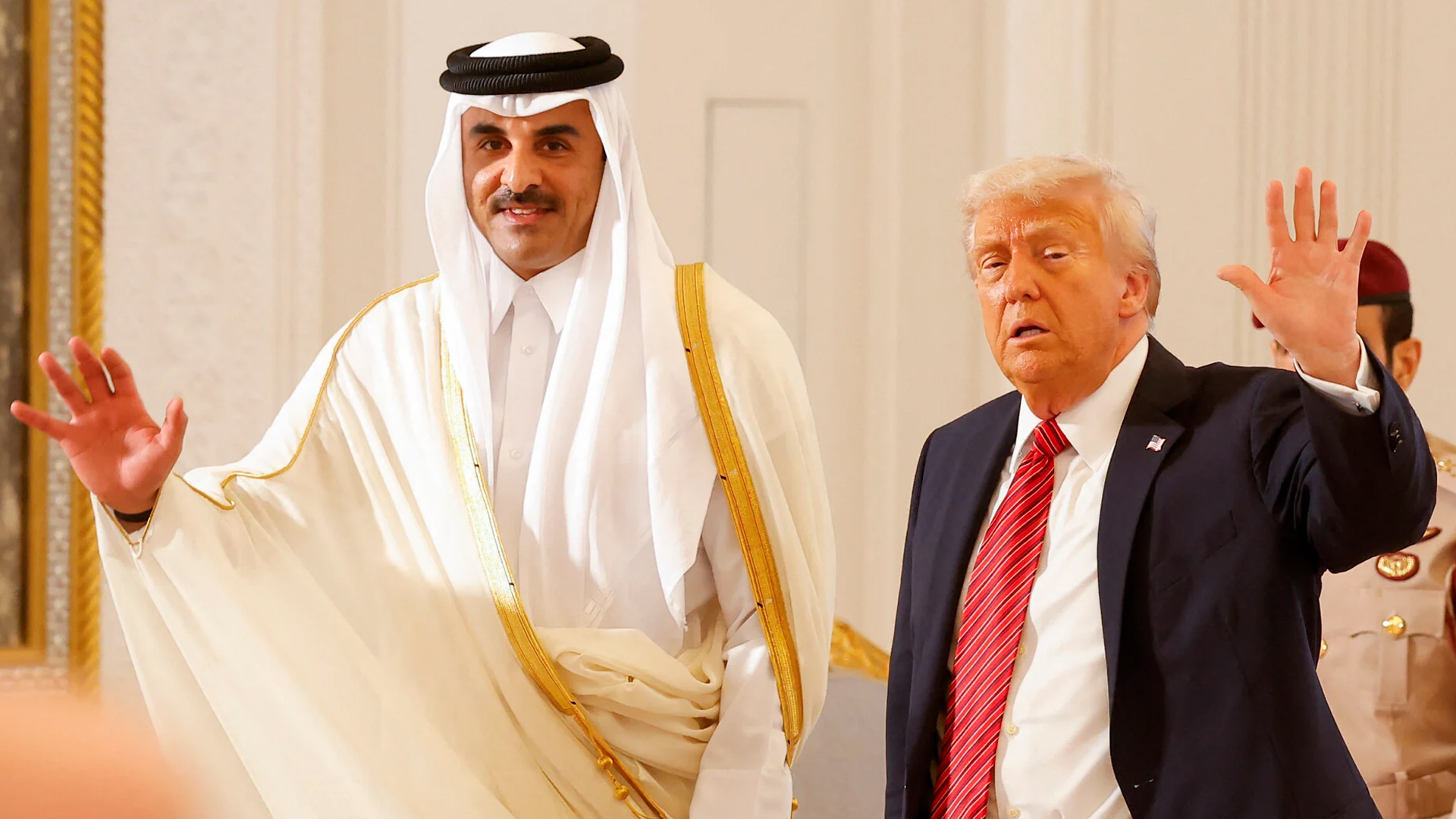
Qatar’s Emir, Trump talk regional de‑escalation
Qatar’s Emir Sheikh Tamim spoke with former US President Donald Trump by phone, discussing ways to ease Middle East tensions and promote stability. The conversation supports ongoing US.-Iran diplomacy ahead of Trump’s planned meeting with Israel’s Netanyahu.
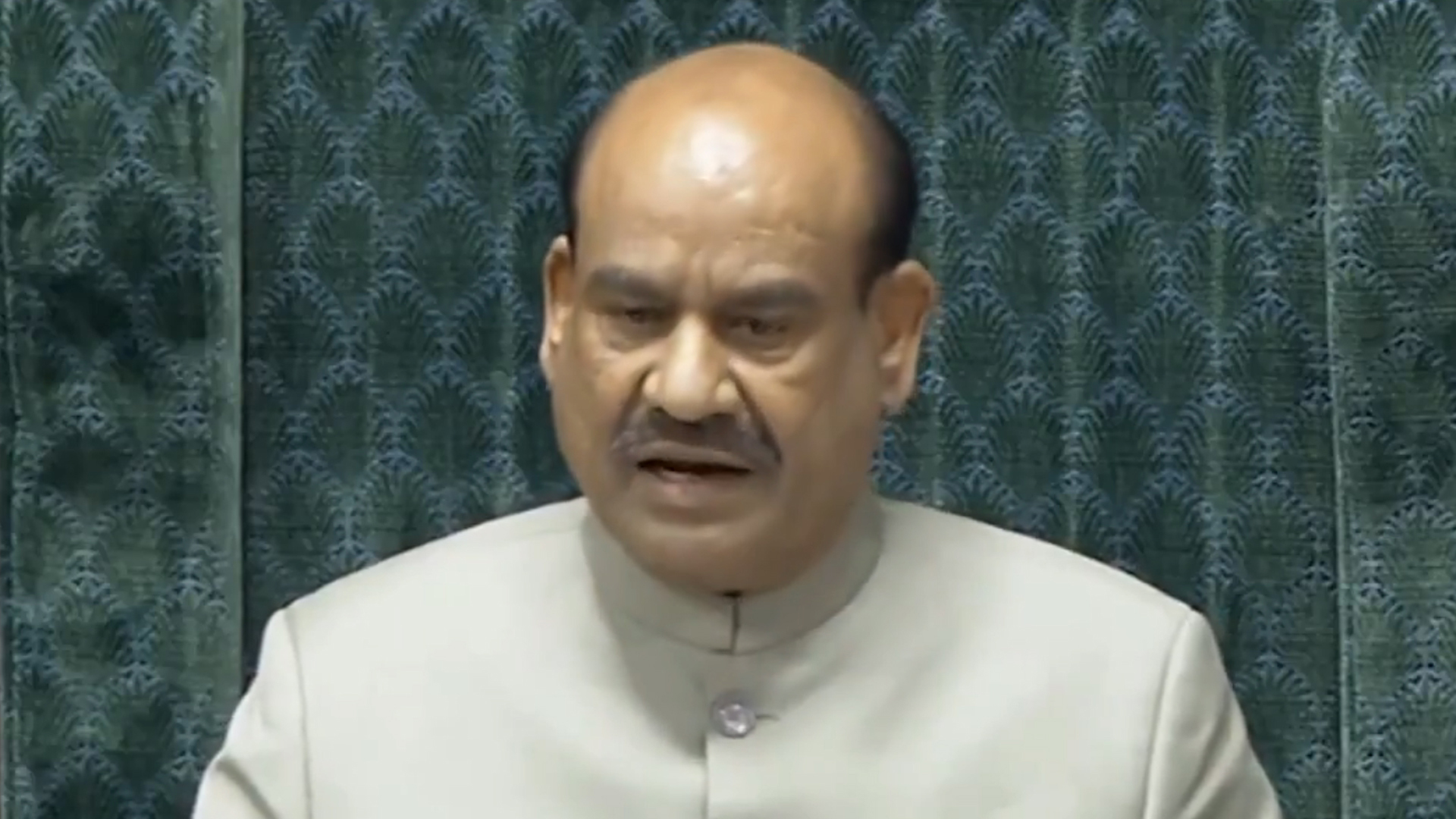
Om Birla allows correction of removal notice
A no-confidence notice against Lok Sabha Speaker Om Birla had procedural errors. Birla allowed the Opposition to correct it, directing the Secretariat to ensure compliance. The motion is expected to be listed in the second phase of the Budget Session.

Bengaluru techie kills navy captain father, dentist mother
In a tragic incident, a Bengaluru man allegedly stabbed his retired Navy officer father and dentist mother to death at home. Police arrested him following the shocking family dispute that left the city in grief.

India speeds up online content removal
India has amended its IT Rules, requiring social media platforms to remove unlawful content within three hours of notice, down from 36 hours. The new rules, effective 20 February 2026, also mandate clear labelling of AI-generated content.
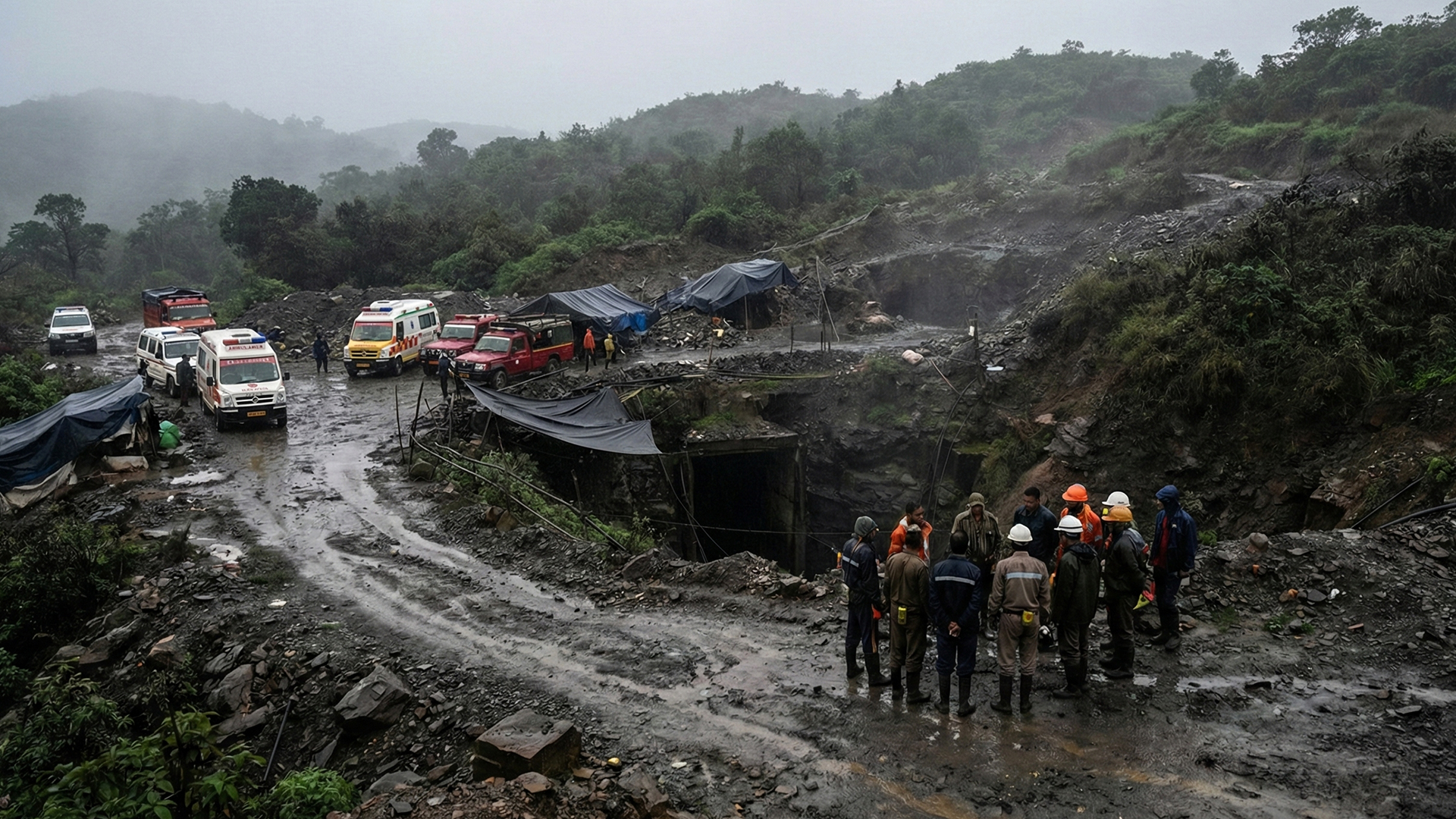
Death toll rises to 30 in Meghalaya mine blast
Thirty workers have died following a dynamite explosion at an illegal coal mine in Meghalaya’s East Jaintia Hills. Rescue efforts have been concluded. The state government has announced compensation and ordered a judicial inquiry to investigate the cause of the fatal accident.

Mohammed Deepak gains nationwide support
Kotdwar gym owner Deepak Kumar, who identified as “Mohammed Deepak” while defending a Muslim shopkeeper, saw memberships fall from 150 to 15. His act of communal harmony has sparked widespread support from citizens and leaders across India.

Sairang–Silchar rail link opens in Mizoram
Mizoram’s new Sairang–Silchar rail link began operations, improving connectivity with Assam. CM Lalduhoma called it the state’s economic gateway, boosting trade, market access, and growth under the Act East Policy.

India’s oil imports guided by national interest
Foreign Secretary Vikram Misri said India’s oil import decisions are guided solely by national interest, including energy security and affordability. He did not directly refute US President Donald Trump’s claim on Russian oil, stressing India’s right to choose suppliers.

Rouble Nagi wins 2026 Global Teacher Prize
Rouble Nagi. a teacher from Mumbai, received the 2026 Global Teacher Prize at Dubai’s World Government Summit. She established 800+ learning centres, using murals and creative teaching methods to educate and uplift over one million children in slums and underserved communities.

Iran jails Nobel laureate Narges Mohammadi
Iran has sentenced Nobel Peace laureate Narges Mohammadi to six years in prison for “collusion” and propaganda. She also faces a travel ban and internal exile. Mohammadi is known for her human rights activism and criticism of the regime.

Hong Kong jails media tycoon Jimmy Lai
Hong Kong media mogul Jimmy Lai, 78, was sentenced to 20 years for national security violations, including collusion with foreign forces. His Apple Daily newspaper closed under Beijing’s pressure, drawing criticism from rights groups worldwide.

India likely to clear 114 Rafale deal
India is expected to approve the purchase of 114 Rafale fighter jets from France in the coming days. The Defence Acquisition Council may clear the proposal ahead of French President Emmanuel Macron’s visit, strengthening defence cooperation between the two countries.
About This Category
The Format Is the Editorial Argument
The name of this publication is The Summary. This section is where that philosophy is most directly expressed. The Summaries are not abbreviated versions of longer articles. They are complete pieces of journalism — reported, edited, and published at a length that respects both the story and the reader's time. The decision to keep them short is not a constraint. It is a position: that most news can be communicated clearly in 150 words, and that padding it to 600 words rarely improves it.
The editorial discipline required to produce a good summary is different from, and in some ways harder than, writing at length. Every sentence has to do real work. Nothing survives that doesn't belong there.
What Ends Up Here
The range is genuinely broad — and deliberately so. On any given day, The Summaries might carry a Karnataka cabinet resignation, a hospital fire in Bihar, a CBSE policy recommendation, a Kerala toddler death that has triggered public outrage, and a Cockroach Janta Party founder's plans to protest at Jantar Mantar. These are not thematically related stories. They are simply the news, treated with consistent brevity.
That breadth is the point. A reader who follows The Summaries doesn't need to choose a category to monitor. National politics, health research, civic tragedies, civil society, lifestyle news — it all comes through this section at a pace that doesn't require hours of reading to stay current.
The Judgment That Goes Into 150 Words
Selection is where the editorial work happens. Not everything becomes a Summary. Stories make it here when the core fact is clear, the significance is demonstrable, and the full picture can be honestly conveyed at short length without stripping context that the reader actually needs. A story like the Muzaffarpur hospital fire — four lives lost, a state inquiry ordered, families to be compensated — can be told completely in under two minutes. Stretching it doesn't add information; it adds length.
Some stories don't work as summaries because the context is too dense to compress responsibly. Those go elsewhere on the site. The Summaries is not a catchall; it's a format with specific requirements, and not every story meets them.
A Different Kind of Archive
Over time, The Summaries has become a reliable daily record of what happened in India and across the world — told concisely, sourced from official announcements and credible reporting, and published without the delay that often accompanies longer-form analysis. Readers who have followed the section consistently say it functions as a news briefing they can consume in a single sitting. That is more or less exactly what it was designed to do.
Frequently Asked Questions
Q1. What is The Summaries format and how is it different from other sections?
The Summaries are short, complete news pieces — typically under 150 words — covering a single event or development clearly and accurately. Unlike the full-length articles in sections like National, Business, or Health, these are written to be read in under a minute. The format is intentional: the goal is to report the news completely, not briefly for brevity's sake.
Q2. Does The Summaries cover all topics or only specific beats?
All topics. A single scroll through The Summaries on any given day might include political news, health research, a civic disaster, an education policy decision, and a human interest story. The connective thread is the format, not the subject. Readers who want to stay across multiple beats without tracking several sections will find everything here.
Q3. Are The Summaries just shortened versions of longer articles on the site?
No. They are standalone pieces written specifically for this format. Occasionally, a major developing story will have both a full article and a Summary — but they are written separately, for different purposes. The Summary version is complete on its own terms, not a teaser or a preview of something longer.
Q4. How does The Summary decide what becomes a Summary versus a full article?
If a story can be told accurately and completely at short length without stripping essential context, it's a candidate for The Summaries. If the background, timeline, or stakeholder complexity genuinely requires more room, it gets a full article. The test is whether the reader comes away informed — not whether the piece meets a word count.
Q5. How often is The Summaries section updated?
Throughout the day as news develops. There is no fixed publishing schedule — stories are published when they are ready. Readers who check in once or twice daily will typically find several new pieces each visit. The pace reflects the news cycle, not a content calendar.
Q6. Is The Summaries a good starting point for readers new to the site?
It is probably the most efficient way to understand the full scope of what The Summary covers. Because the section spans every beat — politics, business, health, lifestyle, science, national, world news — a few minutes in The Summaries gives a reader a clearer picture of the publication's range than browsing any single category section would.