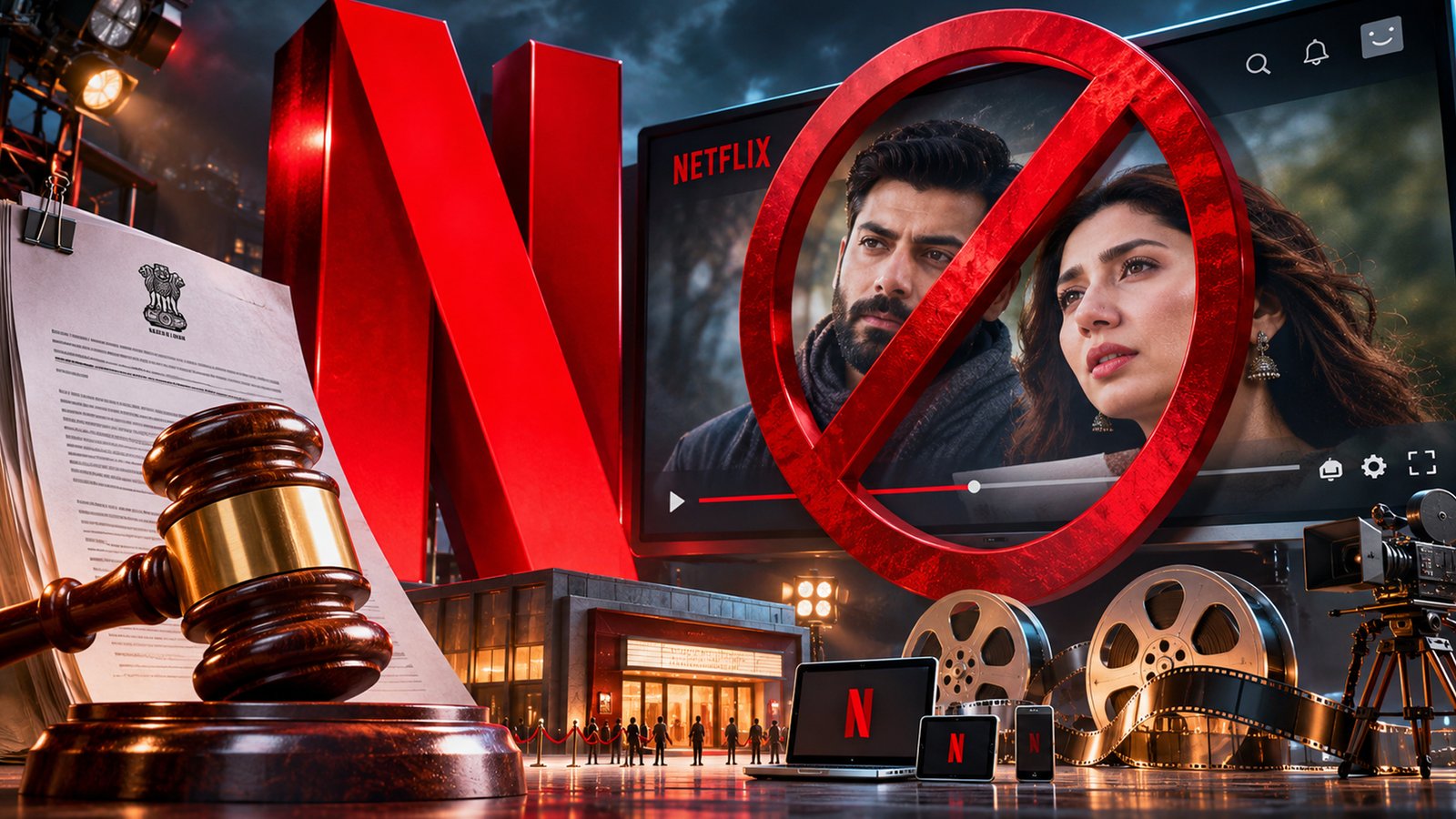
The Centre has asked Netflix to ensure that Pakistani-origin content is not streamed in India, bringing renewed attention to the government’s restrictions on entertainment content from the neighbouring country. The directive follows complaints over the possible Indian release of the Pakistani web series Jo Bachay Hain Sang Samait Lo, which is scheduled to premiere globally on December 4.
The Ministry of Information and Broadcasting has reminded Netflix of its May 8, 2025 advisory, asking the streaming platform to maintain its earlier position that no films or series originating in Pakistan would be made available to Indian subscribers. The latest communication comes after several complaints and representations were received by the ministry regarding the possible release of the upcoming series in India.
According to officials cited in media reports, Netflix had informed the ministry in June 2025 that it had not made any Pakistani-origin film or series available to viewers in India. The government has now asked the platform to honour that commitment and continue following the position it had communicated last year.
The development has raised questions about the legal framework governing OTT platforms in India and the government’s authority to restrict content produced outside the country.
Why has the government intervened?
The immediate trigger is the trailer launch of Jo Bachay Hain Sang Samait Lo, which features several popular Pakistani actors, including Fawad Khan, Mahira Khan, Sanam Saeed and Hania Aamir. The series is based on the bestselling Urdu novel of the same name by Pakistani author Farhat Ishtiaq.
The trailer was unveiled at an event in Karachi earlier this week, generating interest among audiences familiar with Pakistani television and its actors. The series is directed and produced by Momina Duraid and is expected to be released on Netflix on December 4.
However, it remains unclear whether the Indian market will be included in the release. Netflix has not publicly confirmed whether Indian subscribers will be able to watch the series.
The issue gained momentum after the All Indian Cine Workers Association (AICWA) and the Federation of Western India Cine Employees (FWICE) approached Prime Minister Narendra Modi, urging the government to prevent the series from being streamed in India.
The organisations argued that making the Pakistani production available to Indian audiences would go against the government’s May 2025 advisory. FWICE also warned that it could take action against Netflix productions in India if the platform went ahead with the release. The federation represents several film industry associations and workers across different entertainment-related professions.
What is the legal basis for restricting Pakistani content?
The government’s position is linked to the Information Technology (Intermediary Guidelines and Digital Media Ethics Code) Rules, 2021, which establish the regulatory framework for digital news publishers and online curated content platforms, including OTT services.
Part III of the IT Rules contains a Code of Ethics for OTT platforms. It requires streaming services to exercise caution and discretion when selecting content that could affect India’s sovereignty and integrity, threaten national security, damage relations with foreign countries or disturb public order.
The rules do not impose an automatic prohibition on all foreign-produced entertainment. Instead, they require platforms to consider the possible implications of content under the specified categories.
The government can also issue advisories to streaming platforms and intermediaries based on complaints or national security concerns. In this case, the Centre has reiterated its May 8, 2025 advisory, which asked OTT platforms, media streaming services and intermediaries operating in India to discontinue Pakistani-origin web series, films, songs, podcasts and other streaming content.
The advisory was issued during Operation Sindoor, India’s military operation following the April 2025 Pahalgam terror attack. It cited national security concerns and called for the immediate discontinuation of Pakistani-origin content, whether available through subscription services or other streaming arrangements.
Another important provision is Section 69A of the Information Technology Act, 2000. It empowers the Central Government to direct the blocking of public access to online information on specified grounds, including the sovereignty and integrity of India, defence, security of the state, friendly relations with foreign countries and public order.
The IT Rules also provide for emergency blocking powers through the Information and Broadcasting Ministry. These provisions give the government mechanisms to restrict access to online material when the prescribed legal conditions are met.
However, the distinction between an advisory and a formal blocking order is important. The latest communication to Netflix reiterates the existing advisory and asks the platform to honour its earlier commitment. It is not the announcement of a separate, show-specific blocking order against the series.
What does this mean for Netflix and Indian viewers?
The latest intervention reinforces the government’s position that Pakistani-origin entertainment should not be made available to Indian subscribers. It also places responsibility on Netflix to maintain the commitment it had previously communicated to the ministry.
The controversy has also drawn a response from Pakistan. Planning and Development Minister Ahsan Iqbal criticised the opposition to the series, accusing India of using art and culture as a political instrument.
For Indian viewers, the immediate question is whether Jo Bachay Hain Sang Samait Lo will be accessible when it premieres on December 4. Until Netflix clarifies its India release plans, its availability remains uncertain.
The episode highlights the growing intersection of national security, diplomatic relations and digital entertainment regulation. As OTT platforms expand their international catalogues, they must navigate different regulatory requirements across markets.