A powerful storm swept across large parts of the United States during Thanksgiving, bringing torrential rain, strong winds, coastal flooding and heavy snowfall. The severe weather disrupted one of the country’s busiest holiday travel periods, leaving nearly one million homes and businesses without electricity and causing widespread flight cancellations, road closures and transport disruptions.
The storm, which battered communities along both the East and West coasts, also forced organisers to postpone New York City’s iconic Macy’s Thanksgiving Day Parade until Saturday. The decision marked an unprecedented weather-related postponement in the event’s 100-year history.
According to power outage tracking website PowerOutage.us, more than 900,000 homes and businesses were without electricity on Thursday evening, with the majority of outages reported across eastern states. Pennsylvania, Virginia, Maryland, New Jersey and parts of New York were among the worst affected.
The disruption extended to air travel, with FlightAware reporting more than 2,200 flight delays and over 400 cancellations involving US airports by Thursday evening. Strong winds, poor visibility and heavy rainfall affected airport operations, creating additional difficulties for thousands of passengers travelling to spend the holiday with family and friends.
Flooding triggers emergency rescues
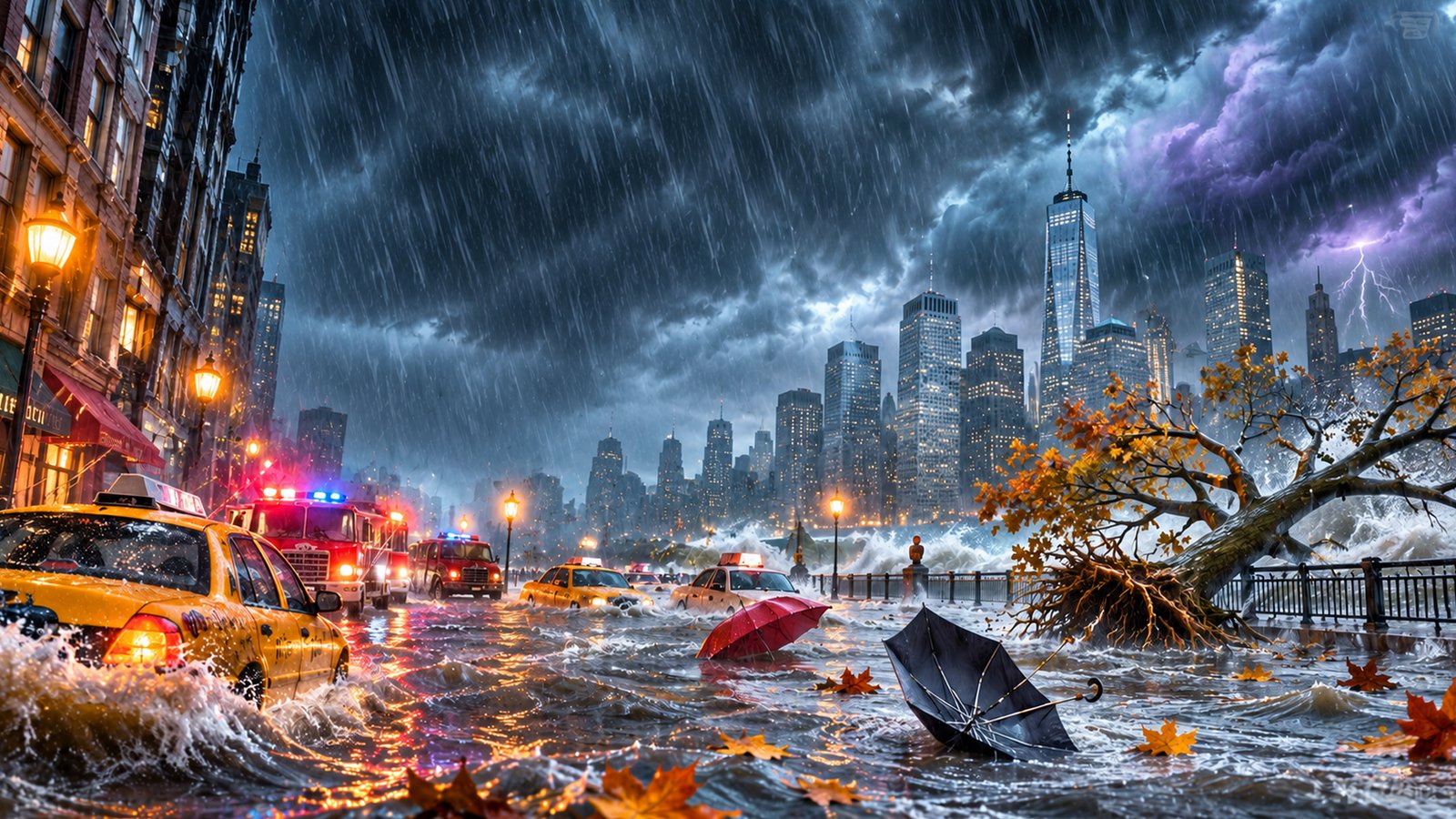
The East Coast experienced some of the storm’s most severe impacts as heavy rainfall combined with unusually high tides to inundate coastal communities. Areas stretching from North Carolina to New Jersey witnessed flooded streets, submerged vehicles and water entering homes and businesses.
New Jersey was placed under a state of emergency, while parts of New York also faced emergency measures. Wind advisories were issued across a wide stretch extending from northern Georgia through the Mid-Atlantic region to southern New England.
In New York City, Mayor Zohran Mamdani said two people had been rescued from vehicles trapped in floodwater. He urged residents to avoid unnecessary travel and warned against attempting to drive through flooded streets.
“There is no destination worth your safety,” Mamdani said, emphasising the risks posed by the extreme weather.
The situation was particularly serious in coastal New Jersey. Avalon reported some of the worst flooding in its history, with water and debris covering roads and emergency workers rescuing motorists who had driven into flooded areas despite barricades.
In neighbouring Ocean City, floodwater reached approximately a foot in some residential neighbourhoods. Residents reported difficulties accessing essential supplies, while some homes experienced flooding.
Strong winds, reaching around 112 kmph in parts of the East Coast, brought down trees and power lines, adding to the electricity disruptions. Several highways and bridges were temporarily closed as authorities responded to dangerous road conditions.
The nearly 29-km Chesapeake Bay Bridge-Tunnel in Virginia was shut for several hours because of high winds. North Carolina’s NC 12 highway, the only road connecting Hatteras Island to the mainland, was also closed after seawater crossed the dunes and flooded the route.
Macy’s parade postponed for first time due to weather
The storm also disrupted Thanksgiving celebrations in New York, where organisers postponed the annual Macy’s Thanksgiving Day Parade until Saturday.
The decision was taken because powerful winds between Manhattan’s skyscrapers posed a safety risk to the giant balloons traditionally carried during the procession. The parade attracts millions of spectators and is among the most recognisable features of the American Thanksgiving holiday.
Although the event was suspended for three years during World War II, it had never previously been postponed because of adverse weather.
The postponement added another unusual development to a holiday already marked by widespread travel disruption. Families and visitors who had travelled to New York for the celebrations were forced to adjust their plans.
Heavy snow hits Midwest as California faces coastal flooding
While the East Coast dealt with rain and flooding, parts of the Midwest experienced significant snowfall. Missouri and Illinois were among the states affected by winter weather, with St Louis recording 7.3 inches of snow. Ste Genevieve in Missouri received around 14 inches.
The snowfall created hazardous driving conditions and contributed to further power outages. In Wentzville, Missouri, the roof of an ice arena collapsed early on Thursday morning under the weight of the snow. The building was empty at the time, and no injuries were reported.
The West Coast also faced dangerous conditions as exceptionally high tides, known as king tides, combined with strong winds and powerful waves to produce coastal flooding.
In California, a large wave tore away part of the Pacifica pier, sending sections of the structure into the ocean. Coastal communities from northern California to areas near Los Angeles faced flooding risks, with evacuations ordered in some locations.
Rail services were also affected. Amtrak’s Pacific Surfliner announced several service changes and suspensions after high tides and water damage affected railway infrastructure. Services between Irvine and Oceanside were suspended following washouts, while other routes also experienced disruptions.
Authorities warn of continuing disruptions
Emergency services, utility workers and transport authorities continued responding to the damage as the storm moved across the country. In Maryland, nearly two million water customers in Montgomery and Prince George’s counties were asked to conserve water because intermittent electricity disruptions affected water services.
Weather officials warned that coastal flooding and strong winds could continue in parts of the country into Friday. Travellers were advised to monitor weather alerts, check transport updates and avoid flooded roads.
The storm has highlighted the vulnerability of holiday travel and coastal communities to extreme weather, particularly when powerful winds, heavy rainfall and unusually high tides occur together.
With millions of Americans travelling during the Thanksgiving period, the immediate priority remained restoring electricity, clearing affected roads and ensuring the safety of residents and visitors.