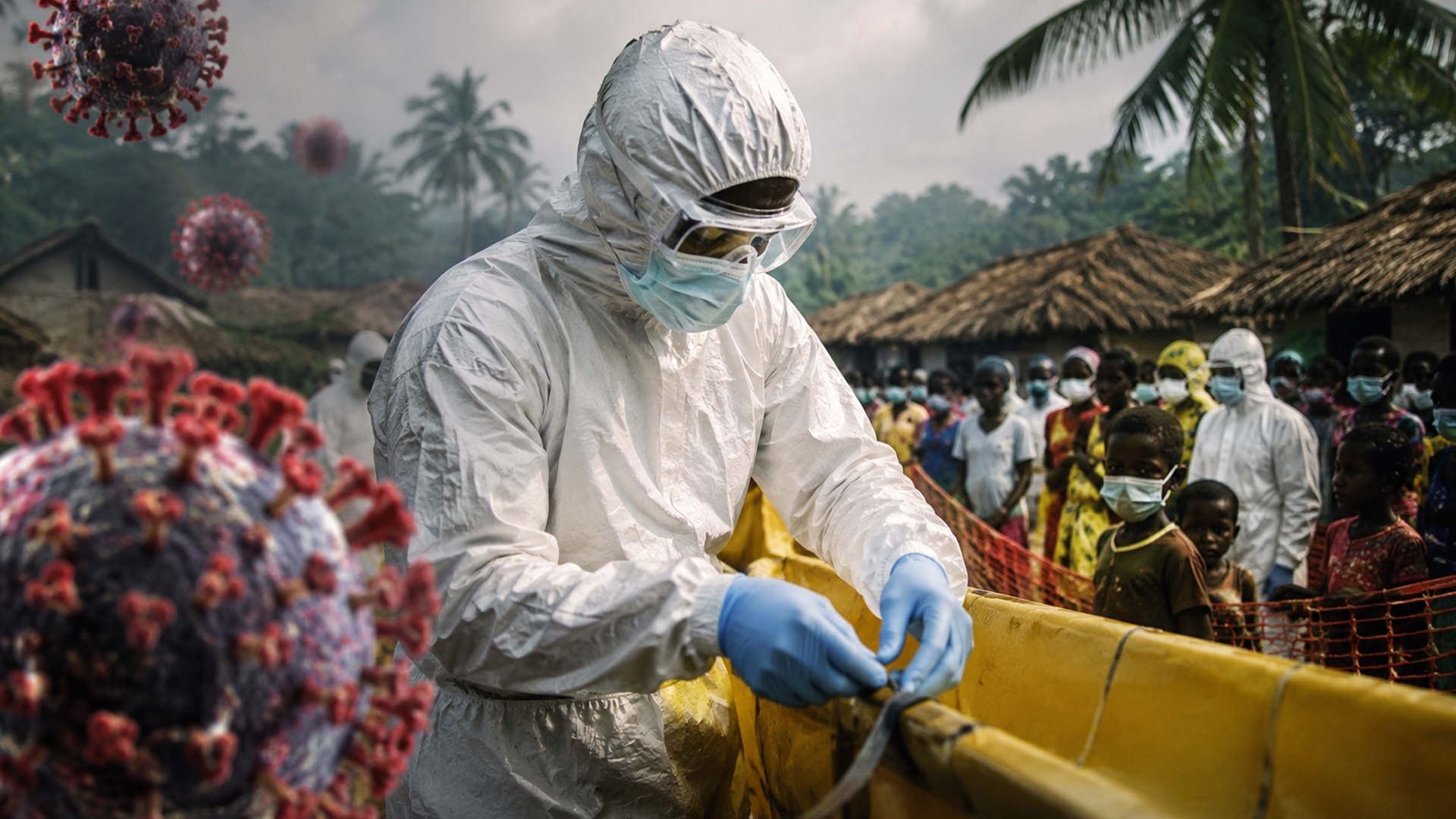
The Ebola outbreak in the Democratic Republic of Congo (DRC) has claimed nearly 1,000 lives, making it one of the country’s deadliest health emergencies in recent years. Health authorities are racing to contain the spread of the highly infectious virus as cases continue to rise in the country’s eastern provinces.
According to the latest official figures, at least 930 people have died, while the total number of confirmed and probable Ebola infections has crossed the 1,300 mark. Medical experts warn that the death toll could continue to increase unless surveillance, treatment and vaccination efforts are strengthened in affected areas.
The outbreak has largely affected eastern Congo, where ongoing armed conflict, displacement of communities and limited access to healthcare have made disease control extremely challenging. Health workers have struggled to reach remote villages because of insecurity, poor roads and frequent violence.
The World Health Organization (WHO), along with Congo’s Ministry of Health and several international humanitarian agencies, has intensified its response by expanding vaccination campaigns, strengthening surveillance systems and deploying additional medical teams to outbreak hotspots.
Authorities are also tracing people who may have come into contact with infected patients. Contact tracing remains one of the most effective methods of preventing further transmission, helping health workers quickly identify and isolate potential cases before they spread the virus.
Ebola is a severe viral disease that spreads through direct contact with the blood or bodily fluids of infected individuals or contaminated objects. The illness often begins with symptoms such as fever, fatigue, headache and muscle pain before progressing to vomiting, diarrhoea and, in severe cases, internal and external bleeding.
Although vaccines and improved treatment options have significantly increased survival rates in recent years, early diagnosis and immediate medical care remain critical. Health officials continue to encourage people experiencing symptoms to seek treatment promptly rather than relying on traditional remedies.
Vaccination efforts have been expanded in high-risk communities using the proven rVSV-ZEBOV Ebola vaccine, which has played a key role in containing previous outbreaks. Frontline healthcare workers, family members of infected patients and individuals identified through contact tracing are being prioritised for vaccination.
Medical teams have also established additional Ebola treatment centres to provide specialised care for infected patients. These facilities help isolate confirmed cases while offering supportive treatment that improves survival chances.
However, the response continues to face major obstacles. Armed conflict involving multiple rebel groups has forced temporary suspension of health operations in some areas. Frequent attacks on healthcare facilities and aid workers have complicated vaccination drives and delayed access to affected communities.
Misinformation and fear have also posed challenges. In some villages, rumours about Ebola and distrust of health authorities have discouraged people from reporting symptoms or cooperating with medical teams. Public awareness campaigns are therefore being intensified to educate communities about how the virus spreads and the importance of early treatment.
The outbreak has also placed enormous pressure on Congo’s already fragile healthcare system. Hospitals and clinics in affected provinces are managing Ebola patients while continuing to treat malaria, cholera, measles and other infectious diseases that remain widespread in the region.
The WHO has described the situation as a major public health concern requiring sustained international support. While the outbreak is currently concentrated within the Democratic Republic of Congo, health authorities continue monitoring neighbouring countries for potential cross-border transmission due to frequent population movement.
Experts say border screening, surveillance and rapid response systems remain essential to prevent the virus from spreading beyond affected regions. Several neighbouring countries have strengthened preparedness measures and trained healthcare workers to identify suspected Ebola cases quickly.
Despite the rising death toll, health officials remain hopeful that the outbreak can be brought under control through coordinated action. Vaccination, early detection, safe burials, community engagement and improved healthcare access remain the pillars of the response strategy.
The Ebola outbreak serves as another reminder of the importance of strong public health systems and international cooperation in responding to infectious disease emergencies. As medical teams continue working in difficult conditions, authorities are urging communities to cooperate with health workers, report symptoms early and follow preventive measures to help break the chain of transmission.
With nearly 1,000 lives already lost, the focus remains on saving more lives, protecting vulnerable communities and preventing the outbreak from spreading further across the region.
Also Read: Sikkim tunnel collapse traps 27 workers