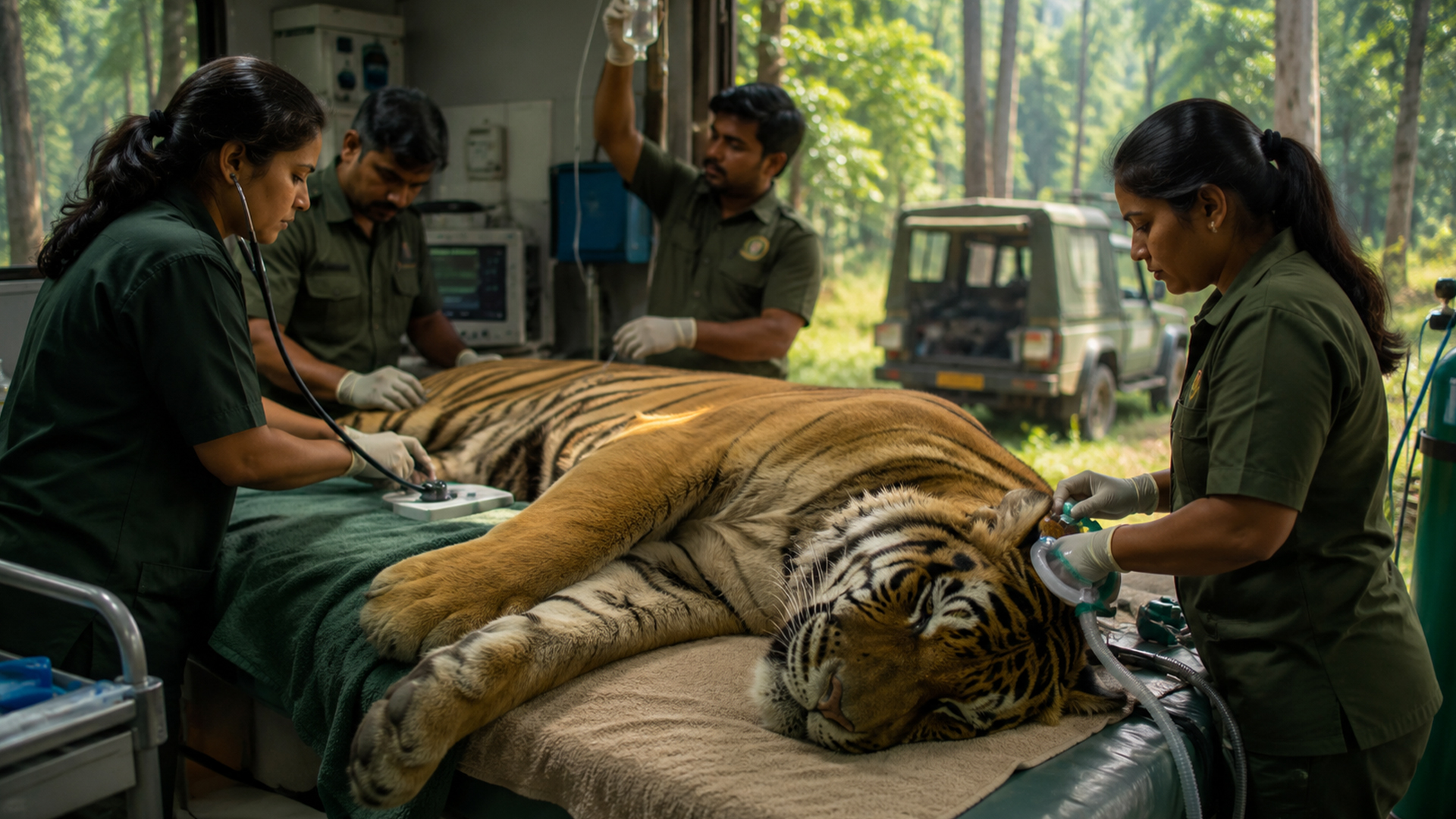
A tigress rescued from Uttar Pradesh’s Pilibhit Tiger Reserve after being found critically injured has died despite intensive medical treatment, dealing another blow to India’s wildlife conservation efforts. Forest officials are now investigating the cause of her injuries while awaiting the post-mortem report, which is expected to provide crucial answers.
The adult tigress was discovered in a severely weakened condition inside the Pilibhit Tiger Reserve, one of India’s most important tiger habitats. Forest staff on routine patrol noticed that the animal was unable to move normally and appeared to be in significant pain. A veterinary team was immediately called in to assess her condition.
After a detailed examination, wildlife veterinarians found multiple serious injuries on the tigress’s body. Officials said the animal was dehydrated, exhausted and suffering from deep wounds, prompting an emergency rescue operation. She was shifted to a treatment facility inside the reserve, where doctors and wildlife experts worked continuously to save her.
Veterinarians administered medicines, fluids and supportive care while closely monitoring her condition. Despite their efforts, the tigress failed to respond to treatment and died during medical care.
Forest officials described the incident as unfortunate, saying every possible effort had been made to save the big cat. They added that wildlife doctors remained with the animal throughout the treatment process, but her injuries were too severe for recovery.
Authorities have not yet confirmed how the tigress sustained the injuries. Preliminary observations suggest the wounds could have resulted from a territorial fight with another tiger, a common occurrence among adult big cats competing for space and dominance. However, officials have not ruled out other possibilities, and the exact cause will be determined only after the post-mortem examination.
Wildlife experts explained that territorial conflicts are a natural part of tiger behaviour, particularly in regions where tiger populations are healthy and breeding successfully. Adult tigers frequently defend their territories against rivals, and such encounters can sometimes lead to severe injuries. However, investigators are also examining whether the animal could have been injured due to human activity or any other external factor.
The tigress’s body has been sent for a detailed necropsy, which will help determine the precise cause of death and whether there were any underlying health issues. Samples have also been collected for laboratory analysis if required.
Senior forest officials said they are following the National Tiger Conservation Authority (NTCA) guidelines during the investigation. The reserve management has begun reviewing camera trap footage from nearby forest areas to understand the tigress’s recent movements and identify any signs of conflict with other wildlife.
Pilibhit Tiger Reserve, located in Uttar Pradesh’s Terai region along the Indo-Nepal border, is recognised as one of India’s leading tiger conservation landscapes. Spread across dense forests, grasslands and wetlands, the reserve supports a thriving population of Royal Bengal Tigers along with leopards, elephants, swamp deer and several other endangered species.
Over the past decade, the reserve has emerged as a major conservation success story, with tiger numbers increasing steadily because of habitat protection, anti-poaching measures and improved wildlife management. At the same time, experts note that a growing tiger population can sometimes result in more territorial encounters among adult animals.
Wildlife conservationists expressed sadness over the tigress’s death, saying that every tiger is vital for maintaining ecological balance. As apex predators, tigers regulate prey populations and play a crucial role in keeping forest ecosystems healthy. The loss of even a single breeding-age tigress can have a long-term impact on the local tiger population.
The incident has also renewed attention on the challenges faced by forest officials in protecting wildlife. Rangers often have to monitor large forest areas, respond to emergencies and ensure injured animals receive immediate medical care while preventing human interference.
Officials have appealed to local communities living near the reserve to promptly report any injured or distressed wildlife to forest authorities instead of attempting a rescue themselves. Early reporting, they said, significantly improves the chances of successful treatment.
The Forest Department has assured that a comprehensive investigation will be completed once the post-mortem findings are available. If any evidence of foul play emerges, strict legal action will be initiated under the Wildlife Protection Act.
For now, the death of the tigress serves as a sobering reminder that wildlife conservation extends beyond increasing tiger numbers. Protecting these magnificent animals also requires continuous habitat management, scientific monitoring, rapid veterinary intervention and sustained efforts to minimise threats in and around protected forests.
As India continues to strengthen tiger conservation, wildlife protection, forest management and biodiversity conservation, officials hope the findings from this case will help improve rescue and treatment protocols for injured big cats in the future.