What if your latest selfie looked like it had been taken four decades ago?
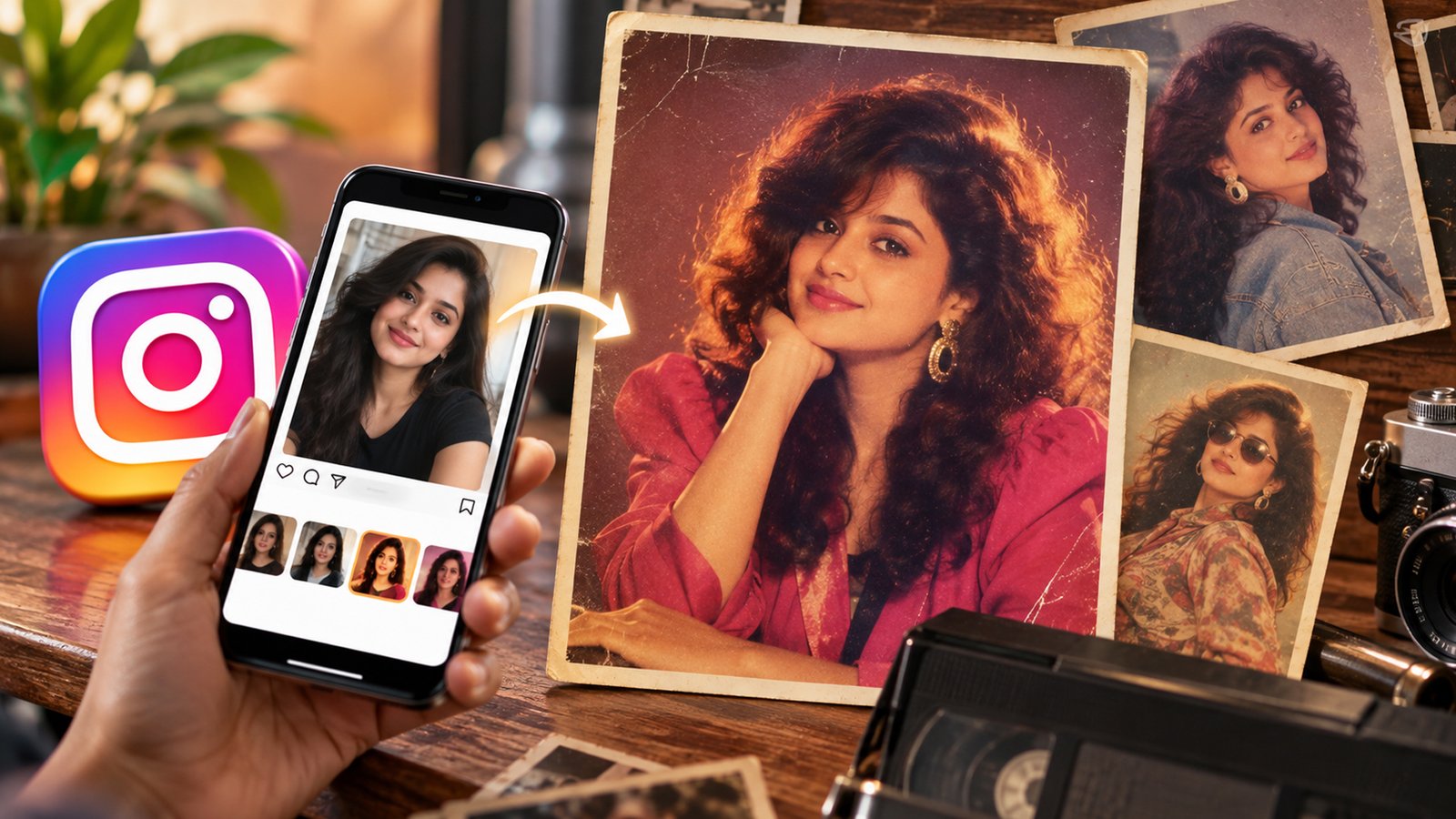
That is the idea behind the latest AI photo craze spreading across Instagram and other social media platforms. Users are taking ordinary photographs and turning them into convincing-looking portraits inspired by the 1980s, complete with vintage hairstyles, old-school outfits, warm lighting and the grainy finish of analogue film.
The appeal is simple: instead of travelling back in time, users are asking artificial intelligence to recreate the look.
The trend, often referred to as the ChatGPT 80s photo trend or the Glorious 80s trend, has quickly become a popular way for people to experiment with their own images. What makes it different from a conventional photo filter is the level of transformation. AI can alter clothing, hairstyles, backgrounds, lighting and overall styling while attempting to retain the person’s original facial features.
Indian users feel that the nostalgia has taken a distinctly desi turn.
Sarees, curled hairstyles, bold jewellery, high-waisted trousers, classic shirts and retro Bollywood-inspired styling are appearing in AI-generated photographs. Some images resemble old family-album pictures, while others are designed to look like film magazine covers, wedding portraits or photographs from vintage studios.
The fascination also extends beyond ordinary users. Several celebrities have joined the wave, sharing their own retro-inspired AI portraits and adding to the visibility of the format online.
Creating one does not require advanced editing skills. Users generally upload a clear photograph and describe the period, clothing, hairstyle, setting, lighting and photographic style they want. The more specific the instructions, the more control users have over the final result.
A simple request can turn a modern portrait into an old-fashioned studio photograph. A more detailed prompt can recreate a particular mood, such as a 1980s Bollywood portrait, family photograph or wedding album picture.
The technology behind these images has also improved considerably. Newer AI image-generation and editing systems are becoming better at maintaining a person’s likeness while changing the surrounding visual details. That has helped make these transformations more convincing than earlier AI-generated portraits.
Still, the results are not always perfect.
AI-generated images can sometimes alter facial details, hands, jewellery or clothing patterns. Text appearing on magazine-style covers can also come out distorted. Users may therefore need to regenerate an image or adjust their instructions several times before getting a result they are happy with.
There is also a more practical concern because of ‘privacy’.
Creating these images means uploading personal photographs to an AI service. Users should therefore understand the relevant privacy and data settings before sharing high-resolution photographs, particularly images containing other people or personal information.
As the excitement grows, the attraction is largely about nostalgia and experimentation. The 80s AI photo trend gives users a way to imagine themselves in another era without needing an old camera, vintage clothes or a professional photographer.
It is also another example of how AI image tools are changing the way people interact with their own photographs. Earlier waves focused on animation, collectible figures and fantasy transformations. This time, the appeal is more familiar, making today’s faces look like memories from yesterday.