Thousands of Jharkhand government job aspirants clashed with police in Ranchi on Monday as they marched towards the state Assembly, escalating a protest over alleged irregularities in recruitment examinations.
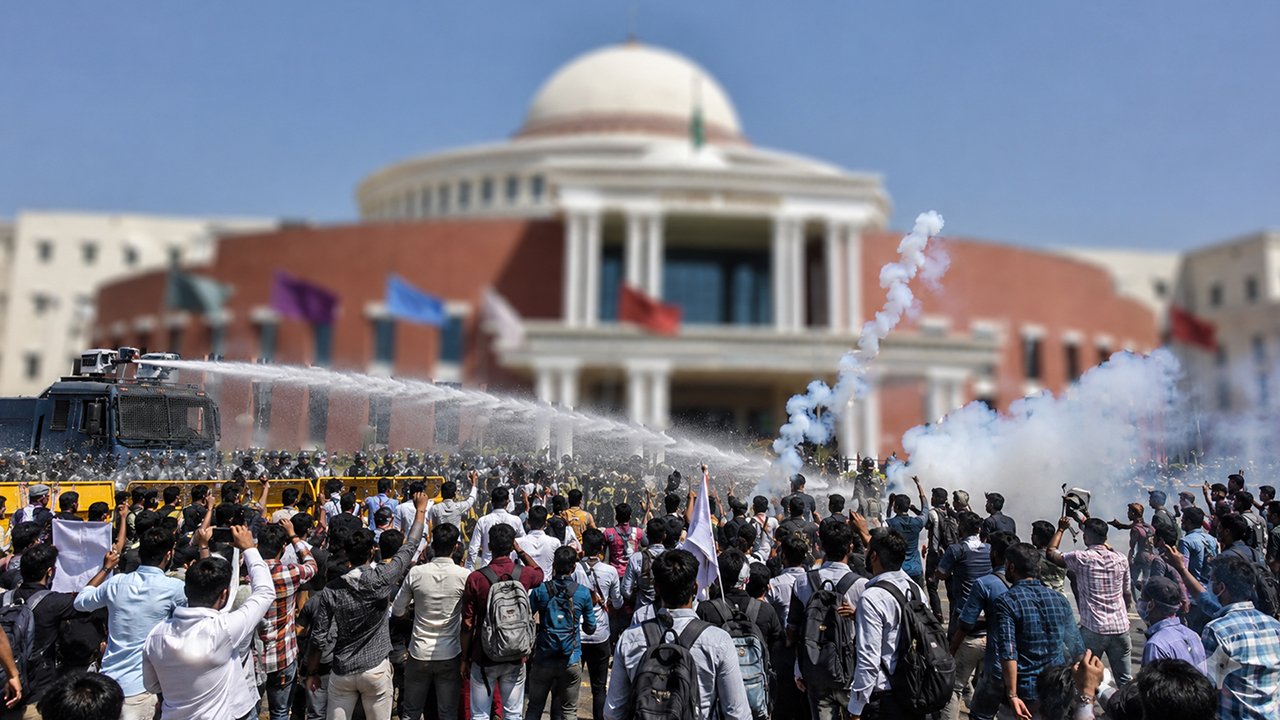
The demonstration, which entered its 17th day, saw protesters breach multiple layers of police barricades while attempting to reach the Vidhan Sabha. Police responded with water cannons, tear gas and lathi charges to stop the march.
The protest has been led by aspirants associated with the JPSC-JSSC Reforms Manch. The students have been demanding action over alleged irregularities in examinations conducted by the Jharkhand Public Service Commission (JPSC) and Jharkhand Staff Selection Commission (JSSC).
Monday’s confrontation came after days of demonstrations and failed talks between student representatives and the state government. The aspirants had announced their plan to march to the Assembly to press their demands and seek accountability over recruitment-related issues.
Security was tightened in Ranchi ahead of the march, with prohibitory orders imposed around the Assembly premises. Police deployed additional personnel and erected multiple barricades along the route to prevent protesters from reaching the legislature.
The situation turned tense when protesters moved past the barricades. Police used water cannons to push the crowd back, while tear gas and batons were also used as the confrontation intensified. Videos and images from the protest showed students continuing to raise slogans and, in some instances, dancing in front of the water cannons.
The scenes echoed recent student protests in Bihar, where demonstrators were also seen dancing while facing police water cannons. The unusual response quickly became one of the most visible moments of the Jharkhand protest.
The students, however, maintained that their concerns were serious and centred on employment and the integrity of competitive examinations. Many government job aspirants in Jharkhand spend years preparing for recruitment tests, making allegations of paper leaks, irregularities or unfair selection particularly sensitive.
The protest has also drawn political attention. BJP leaders were detained while demonstrating outside Chief Minister Hemant Soren‘s residence in connection with the student agitation.
At the Assembly march, protesters repeatedly attempted to move forward despite the police restrictions. The administration maintained that security measures were necessary to prevent the crowd from entering restricted areas around the legislature.
The agitation also coincided with Chief Minister Hemant Soren’s 51st birthday, adding a political dimension to an already tense situation. Student leaders and supporters continued to demand that the government address their grievances rather than relying on police action to contain the demonstrations.
One of the prominent faces of the agitation, Devendra Nath Mahto, also joined the march despite being on hunger strike. He arrived by ambulance and continued participating from a stretcher, underlining the determination of protesters to keep the movement going.
The government recruitment dispute has widened beyond a single examination. Students have raised concerns over the functioning of recruitment agencies and demanded stronger safeguards to ensure transparency in JPSC and JSSC examinations.
The Enforcement Directorate has also begun a PMLA probe into alleged irregularities linked to the JSSC-CGL examination, adding another layer to the controversy. Students had earlier demanded a CBI investigation into the matter.
Meanwhile, Jharkhand CID arrested former JPSC chairman L Khiangte in connection with alleged recruitment irregularities. The development came as the student movement intensified and added to pressure on authorities to investigate allegations surrounding the state’s recruitment process.
Student leaders have repeatedly said they are prepared to end the agitation if their demands are addressed. JLKM MLA Jairam Kumar Mahato said students would stop protesting once their demands were met.
For the aspirants, the issue goes beyond the immediate examinations. Government jobs remain a major source of stable employment for young people, and prolonged recruitment delays or allegations of irregularities can affect candidates who have invested years in preparation.
Monday’s clashes therefore marked a significant escalation in the Jharkhand student protest. What began as a campaign over recruitment examinations has developed into a broader confrontation involving students, the state administration and political parties.
With the agitation continuing, pressure is now on the Jharkhand government to find a political and administrative solution. The protesters are demanding credible action on examination irregularities, while authorities are seeking to prevent further escalation around the Assembly.
The immediate focus will remain on whether the government resumes meaningful talks with student representatives and addresses their demands. Until then, the JPSC-JSSC protest is likely to remain a major flashpoint in Jharkhand, with employment, examination transparency and accountability at the centre of the dispute.