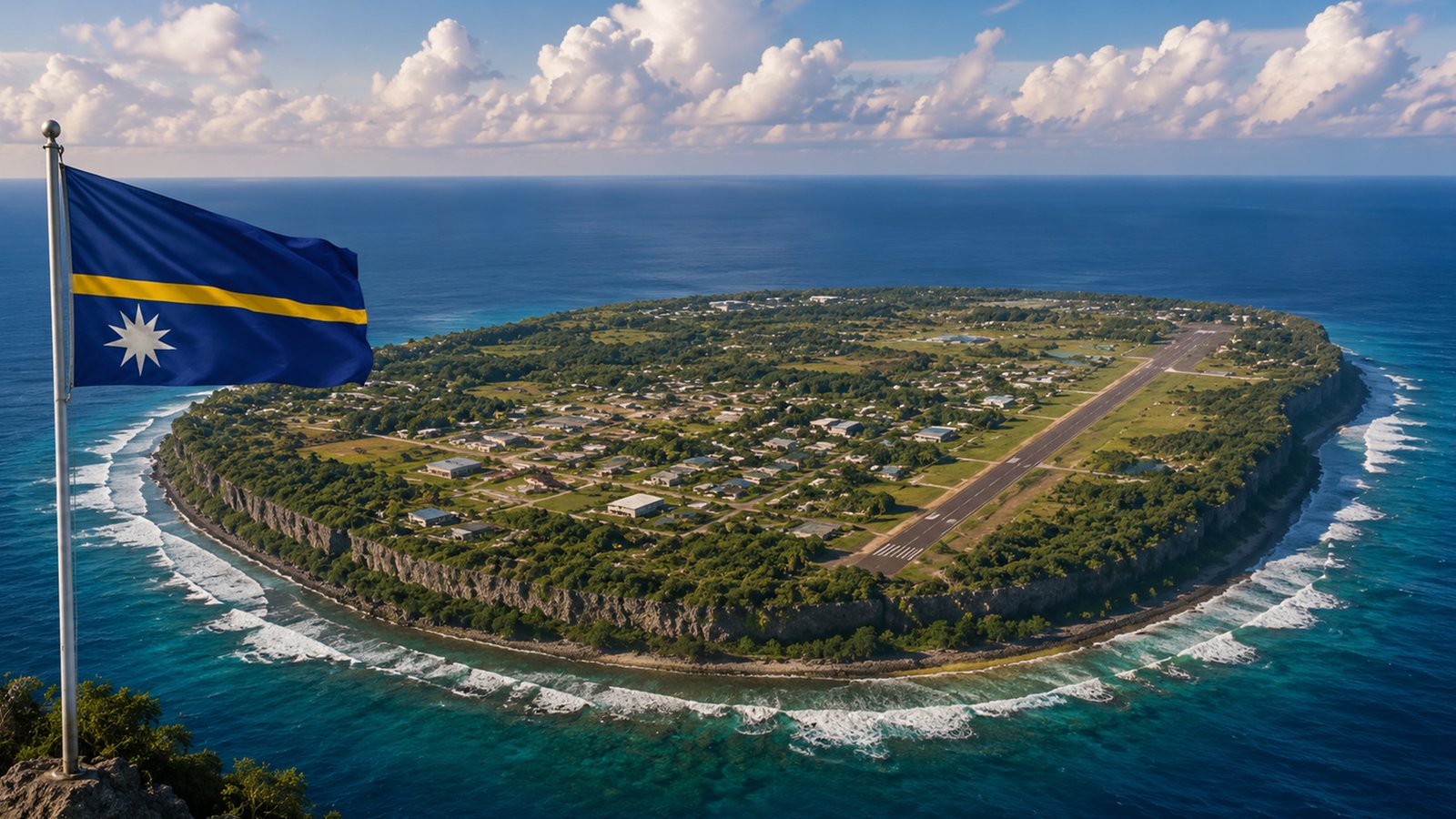
The tiny Pacific island nation of Nauru has officially changed its name to the Republic of Naoero, marking a major step towards reclaiming its traditional identity and language. The name change was announced by President David Adeang after lawmakers approved a constitutional amendment to formally recognise the name used by Nauruans themselves.
The move is more than a change in spelling. The government says Naoero better reflects the country’s indigenous heritage and the way its name has long been used locally. While Nauru has been the internationally recognised name for decades, Naoero has continued to appear on the country’s coat of arms and remains part of everyday usage.
The new name is pronounced roughly as “Now-ero”, rather than the commonly used “Now-roo”. Along with the country’s official name, its international country code will change from NRU to NRO. Citizens will also officially be referred to as dei-Naoero, reflecting the country’s Nauruan language and cultural identity.
President Adeang first proposed the constitutional amendment in January 2026. The proposal was intended to correct what the government viewed as a long-standing mismatch between the country’s internationally used name and its traditional name.
The change was approved by Parliament after the required constitutional process. Lawmakers voted unanimously in favour of the amendment, with the legislation certified in May. Although a referendum had initially been considered, the government later decided that a public vote was not necessary after consultations over the proposal.
The government has described the decision as an important step towards renewed national pride. Officials have stressed that Naoero is not a newly created name but one that has continued to exist within the country despite the widespread international use of Nauru.
The name change is already being reflected in international dealings. The United Nations was informed about the decision in June, while several foreign governments and diplomatic missions have begun adopting Naoero in their official communications and websites. Australia and New Zealand have updated references to the country, while diplomatic missions representing the United States and China have also started using the new name.
The transition will also affect official documents and international systems. The country code NRO will replace NRU, while Naoero’s aircraft and ships are expected to be updated as part of the change.
Despite its tiny size, Naoero has a complex and important history. The island has a population of roughly 12,000 people and is one of the world’s smallest independent countries by both area and population. Located in the central Pacific, it is a raised coral atoll and forms part of the Micronesian region.
Its modern history was heavily influenced by colonialism and phosphate mining. Germany took control of the island in the late 19th century before Australia, New Zealand and Britain became involved in its administration. Nauru achieved independence in 1968 and became a sovereign republic.
Phosphate mining transformed the country’s economy for much of the 20th century. At its peak, Nauru had one of the world’s highest per-capita incomes, with phosphate exports providing enormous revenues. But decades of intensive mining depleted much of the island’s natural resources. The collapse of the phosphate industry subsequently left the country facing severe economic and environmental challenges.
That history adds significance to the decision to restore the name Naoero. For the government, the move is closely connected to preserving indigenous culture and asserting national identity after decades of foreign administration and international influence.
Climate change is another major concern for the Pacific island nation. Naoero is highly vulnerable to rising sea levels, coastal erosion and other effects of a warming planet. Its limited land area and geographic isolation make climate adaptation particularly challenging.
The government is therefore looking for ways to strengthen the country’s economy and prepare for future environmental pressures. It has explored investment and citizenship initiatives as potential sources of revenue for climate adaptation, infrastructure and long-term development.
The name change comes amid a wider global trend in which countries have sought to restore names that better reflect their languages, cultures and historical identities. Several nations have changed or promoted alternative official names in recent years, including Eswatini, which replaced Swaziland in 2018, and Türkiye, which gained wider international adoption of its preferred name in 2022.
For Naoero, however, the government insists the decision is not about inventing a new identity. Instead, it is about formally recognising one that has survived for generations.
The change from Nauru to Naoero may appear small on a map, but it carries considerable cultural significance for the Pacific nation. It places the country’s traditional language and indigenous identity at the centre of its international presence.
As the Republic of Naoero begins updating its documents, country code and official references, the move represents a conscious attempt to ensure that the name used by the world more closely matches the identity maintained by its people at home.